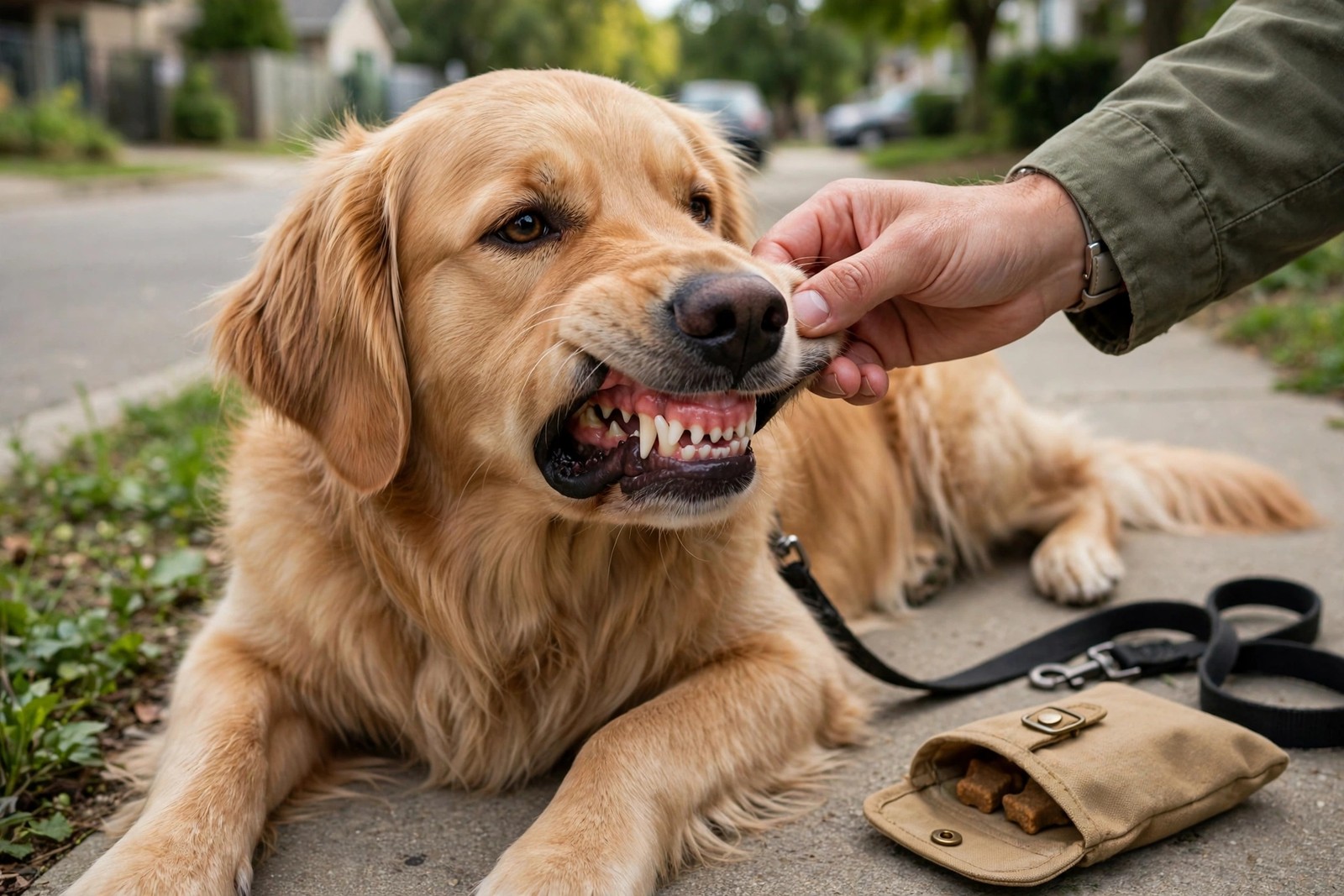
Gums report on circulation as well as on the mouth, which makes a gum check a quick assessment that vets often ask owners about. Three qualities define a healthy gum: colour, moisture, and refill speed after gentle pressure. Learning all three on a day when your dog is well gives you a baseline that turns a vague worry on a bad day into specific observations a vet can use over the phone.
Colour: Pink, With Pigment Allowed
Lift the lip in good light and look at the gum above the teeth. Healthy gum tissue is pink, similar in tone to the inside of your own lower eyelid area, and the surface looks even rather than blotchy. Many dogs carry natural dark pigment in patches or across the whole gum, and that pigmentation is normal for the individual dog. Where pigment covers everything, the tongue and the inner eyelid offer alternative pink tissue to assess, and learning which of her tissues shows colour clearly is part of knowing her baseline. Note her usual gum appearance when she is well, because the judgment that matters later is change from her normal, not a match with another dog's mouth.
Moisture: Slick, Not Sticky
Run a clean fingertip lightly across the gum. A healthy gum feels moist and slick, and your finger glides over it. Gums that feel dry, tacky, or sticky suggest the mouth, and possibly the dog, is drier than it should be. This touch test takes a second and pairs naturally with the pressure test below, since your fingertip is already in place. Thick, ropy saliva stringing from the mouth is also worth noting during this step. Judge moisture before she drinks a bowl of water if you can, because a recent drink wets the mouth and can mask the dryness you are trying to assess.
Refill: The Press-and-Release Test
Press your fingertip gently but firmly against the gum until the tissue under it blanches pale, then lift the finger away and watch the colour return. In a healthy dog the pink floods back quickly, typically within about two seconds. A refill that drags noticeably beyond that, or a gum that stays pale after pressure, is information a vet will want promptly, particularly if the dog is also quiet, weak, or breathing with effort. Practise the test once while she is well so your hands know the normal speed, since fumbling to learn a technique beside a sick dog wastes the calm the test is meant to buy you.
Colours That Should Prompt a Vet Call
Certain gum colours move a check from routine to urgent. Pale pink verging on white, a grey or blue tinge, a yellow cast, or an intense brick-red colour each warrant prompt veterinary contact, and pale or blue-toned gums alongside weakness, collapse, or laboured breathing warrant an emergency call without delay. A vet hearing a precise description, such as gums pale with a refill slower than usual, can triage far better than a report that the dog seems off colour. Do not wait to see whether an abnormal gum colour corrects itself when other signs of illness travel with it, and do not press repeatedly on the gum of a distressed dog, since one clear observation is enough.
Building the Baseline Into Routine Care
Fold the three-part gum check into something you already do monthly, such as a teeth check or a weigh-in. Colour, moisture, refill: three words, three observations, one dated line in her record. Puppies and senior dogs both reward this habit, puppies because their baselines form as they grow, and seniors because circulation and gum health shift with age and early change gives you more room to act. Mention any persistent shift at routine appointments even when she seems well, since a gum trend across months can prompt a useful conversation about her wider health.
Her recorded baseline earns its keep inside KinsLe's Pet Passport, where normal gum colour, refill time, and past mouth findings wait together for the day a quick comparison really matters.