
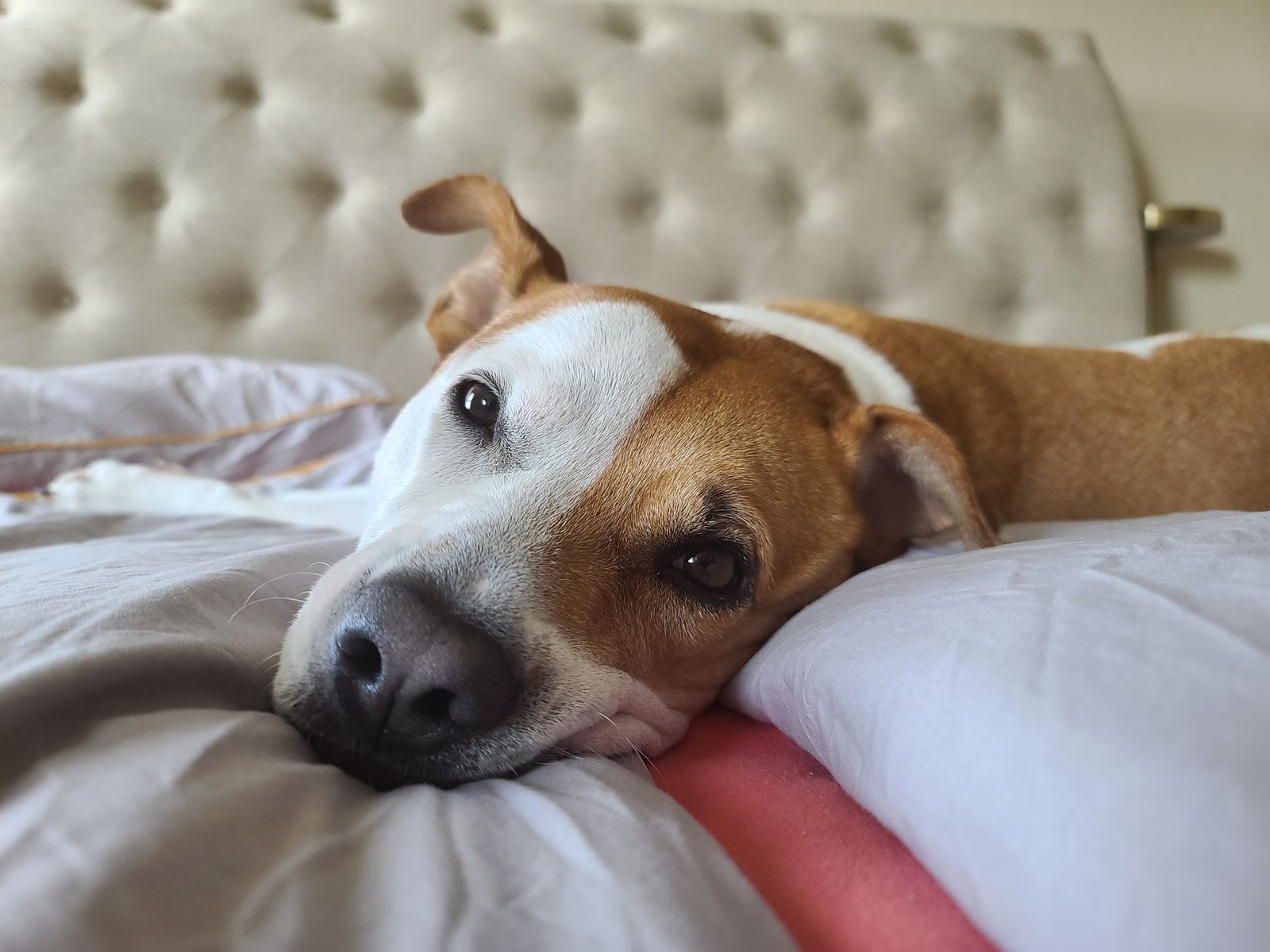
One episode on its own rarely tells the story. What matters is the dog in front of you afterwards: drinking normally, bright, and keen for dinner points toward watch-and-wait, while repeated vomiting, blood, weakness, a swollen belly, or trouble keeping water down points the other way.
Dogs vomit more readily than people do. Eating grass, gulping dinner in ninety seconds, scavenging something dubious at the park, or a car ride can all produce one dramatic episode followed by a completely normal dog. The episode itself matters less than the pattern around it: how many times, over how long, and how your dog seems in herself between bouts.
The Watch-at-Home Picture
Home monitoring is reasonable when all of these are true: it happened once, or twice in quick succession and then stopped; your dog is bright, responsive, and interested in water; her gums are moist and pink; and she keeps water down over the next few hours. Many owners then offer a smaller, bland, easily digested meal later that day if their vet has advised that approach for their dog in the past — and return to normal feeding gradually once things settle.
While you watch, be a good witness. Note the time, what came up — food, foam, bile, grass, something unidentifiable — what she ate or may have scavenged earlier, and whether stool is normal. Puppies, tiny dogs, seniors, and dogs with ongoing health conditions dehydrate faster and have less margin, so lower your threshold for calling the vet for them even after one episode.
Signs That Mean Call the Vet Right Away
Treat these as urgent rather than wait-and-see:
- Vomiting repeatedly over several hours, or retching without bringing anything up
- Blood in the vomit, or material that looks dark and grainy
- A swollen, tight, or painful belly, restlessness, or drooling with unproductive retching — especially in large, deep-chested breeds
- Weakness, collapse, pale gums, or obvious pain
- Vomiting with diarrhea, refusal of water, or signs your dog cannot keep water down
- Any suspicion she swallowed a toy, sock, corn cob, bone, medication, or toxin
Unproductive retching in a big dog is the one to act on fastest — do not wait until morning to see if it passes.
What Not to Do
Do not give human stomach medications, painkillers, or leftover prescriptions unless your vet directs it — some common household medicines are harmful to dogs, and masking vomiting can hide a blockage that needs hands-on care. Do not keep offering rich food to 'test' the stomach, and do not assume grass-eating means she has sorted it herself. If you are genuinely torn between watching and calling, call and describe what you saw; vets would rather triage a false alarm than meet a dehydrated dog a day late.
Coordinating Care Without the Phone Tag
When a dog is unwell, half the stress is logistical — who is home, who can drive, who has the vet's number and her history. KinsLe Messenger is the per-pet communications hub in KinsLe, so you can message your care circle in one thread tied to your dog, share updates, and coordinate getting her seen without scattering messages across three apps. Everyone helping sees the same latest update. Coordinate that plan through a KinsLe Messenger hub on KinsLe, posting the time she vomited, what came up, and who will drive if she needs to be seen.