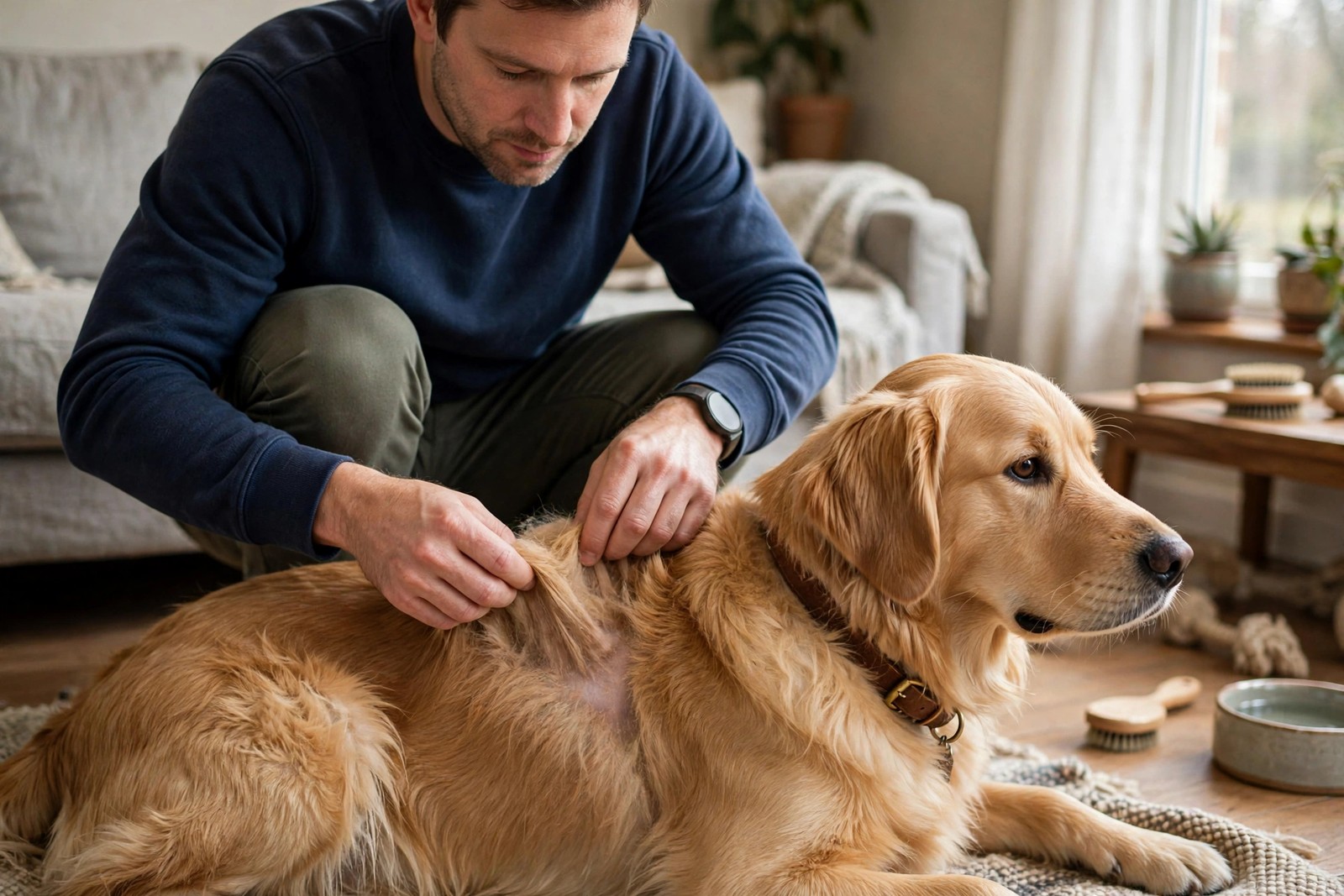
Skin problems announce themselves quietly: a speck of flea dirt, a small crust, a patch the dog keeps returning to with his tongue. A monthly hands-on check, done in good light with the coat parted down to the skin, catches those early announcements before they become the itching, spreading problems that fill vet waiting rooms in summer. The method matters more than the minutes, so work in sections and use touch alongside sight.
Working Section by Section
Settle your dog where you can see properly and part the coat against its lie so the skin itself shows. Start behind the ears and work along the neck, down the back to the tail base, then along each side, the chest, and the belly, finishing with the legs and feet. Look at the skin in every section rather than admiring the coat's surface. You are watching for redness, scabs, crusts, flaky skin, greasy or smelly patches, small bumps, and areas where the coat has thinned or broken. Run your fingertips over the skin as you part it, because a raised scab or a small lump registers by touch before it catches the eye, particularly under a thick double coat.
Parasites: What to Look For
Fleas often reveal themselves through their droppings before you see an insect: tiny dark specks in the coat, concentrated near the tail base, neck, and belly. A useful home test places a few specks on damp white tissue, where flea dirt smears reddish-brown as it dissolves. Ticks attach at the skin and favour the head, ears, neck, armpits, groin, and between the toes, so slow down in those warm, sheltered spots and feel for a small firm bump fixed to the skin. Check under the collar as a deliberate step, since a collar hides both parasites and rubbed, inflamed skin from a casual glance. Keep his vet-advised parasite prevention current alongside the checks, and record prevention dates with the findings so any breakthrough problem sits in its proper context.
Hot Spots and Other Early Problems
A hot spot typically begins as a small, moist, red, sore patch, often where a dog has been licking or scratching one place repeatedly, and it can enlarge noticeably within a day. Finding one early, while it is still small and moist, is precisely what the monthly rhythm is for, and finding one between checks because your dog is worrying at a spot is a reason to look immediately rather than waiting for the scheduled session. Note also symmetrical hair loss, a spreading rash, patches with a strong smell, or skin that has darkened and thickened in folds or armpits. None of these findings is a home diagnosis. Each is a dated observation that helps your vet judge whether the skin needs treatment, and a photograph beside a coin for scale records size honestly.
Recording Findings So Patterns Show
Write down what you found, where on the body, and the date, and photograph anything new. Skin trouble is often seasonal or situational, and a record across a year can reveal that flaking follows winter heating, that a rash returns each time a particular walk route is in flower, or that a patch sits exactly where a harness rubs. Those patterns change management in ways a single appointment cannot. Note prevention product dates, recent baths, new foods, and boarding stays alongside skin findings, since the vet investigating a recurring problem will ask about each of them and a written answer beats a guess.
When a Finding Needs the Vet
Ask your vet about any patch that spreads, oozes, smells strongly, or fails to settle within a few days of being left alone, and about persistent scratching that disrupts sleep even when the skin looks unremarkable. A suspected tick you are not confident removing, a lump that grows between checks, or widespread hair loss also belong in an appointment rather than another month of watching. Bring the dated photos, because showing a lesion's progression across weeks sharpens the consultation considerably.
His monthly findings build into a skin history inside KinsLe's Pet Passport, where dated photos, prevention records, and vet advice accumulate into the year-round picture a single visit cannot provide.