Start by naming the problem precisely, because 'badly behaved' points nowhere. A dog who forgets sit around other dogs, a dog who pulls toward home, and a dog who guards food need three different kinds of help, even if all three look unruly to visitors.
When a Group Class Is the Right Fit
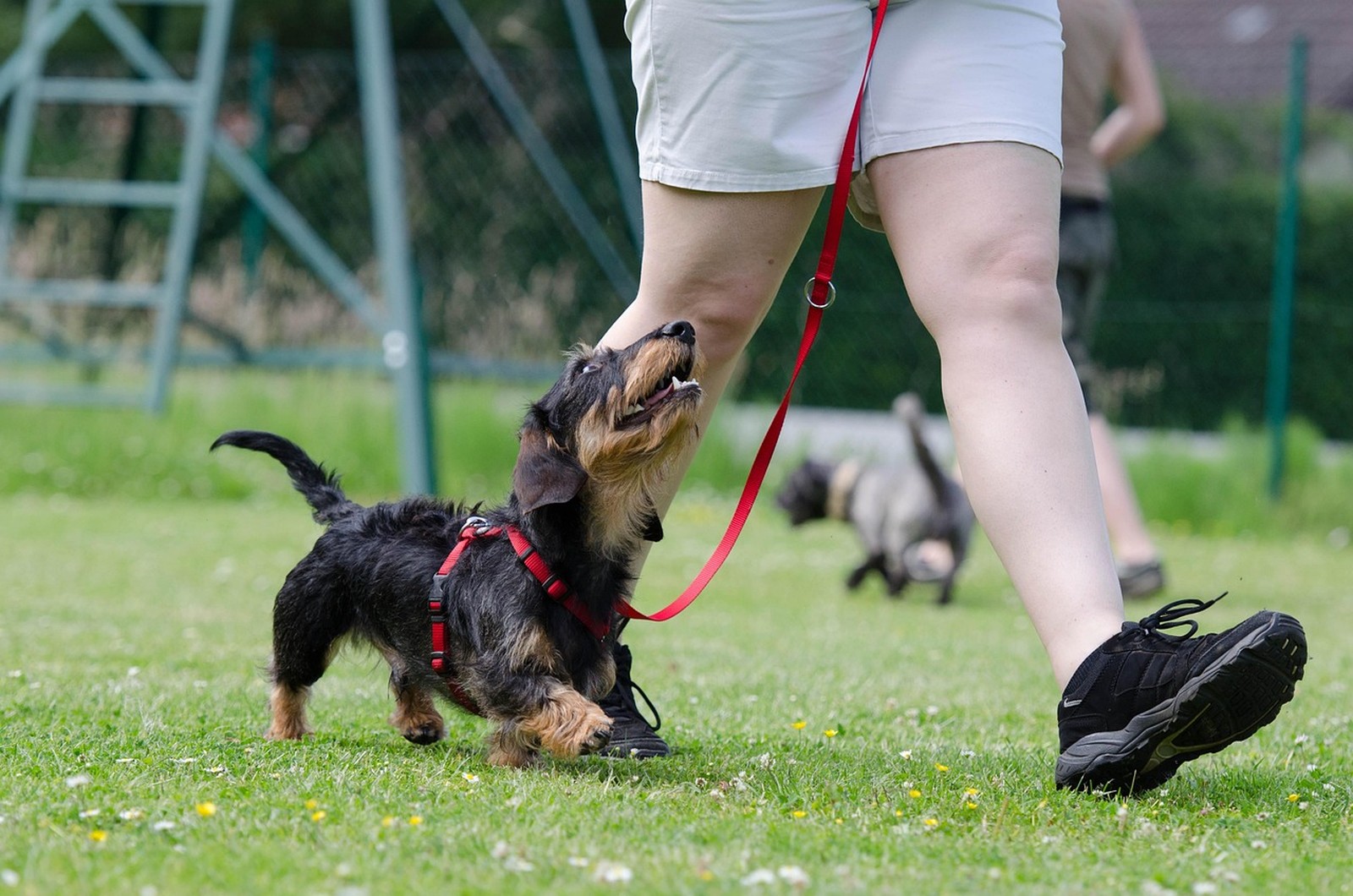
Choose a group class when the problem is greenness rather than distress. Puppies learning to settle, take turns, and listen with other dogs nearby belong here, as do friendly adults who know cues at home but lose them in company. The other dogs are part of the lesson: controlled distraction is exactly what a sociable dog needs to practise. Look for small classes, space between dogs, and a trainer who lets an overwhelmed dog work behind a barrier or at a greater distance rather than forcing it closer.
A group class is a poor fit if your dog lunges, snaps, cowers, or cannot eat treats in the room. That dog is not learning manners there; it is rehearsing panic or confrontation for an hour each week.
When One-to-One Training Earns Its Cost
Choose private training when the problem lives in a specific place or routine. Recall that fails only at the park gate, lead pulling on your own street, jumping on visitors at your front door, or refusing to settle in your kitchen are all best coached where they happen. A good private trainer watches your handling, your timing, and the layout of your home, then gives you a short plan to practise between visits.
One-to-one help also suits dogs who are friendly but easily overexcited, households where several people handle the dog differently, and owners who want flexible timing. Expect homework, not magic: most progress comes from your daily five-minute repetitions, with the trainer adjusting the plan as the dog improves.
When You Need a Behaviourist Instead
Skip both class formats and ask your vet about referral to a qualified behaviourist when you see fear, aggression, or loss of control. Triggers for this route include guarding food, toys, people, or rooms; lunging with stiff, hard staring; biting or attempting to bite; panic at sounds, visitors, or being left; and behaviour that is getting worse despite consistent training. These cases need a medical rule-out first, because pain and other conditions can sit behind sudden behaviour change, followed by a behaviour plan built around safety and gradual change.
Behaviourists and trainers are not interchangeable titles. Anyone can call themselves a trainer, so ask about qualifications, insurance, and methods before booking anyone. Reward-based methods, a willingness to refer onward, and honest talk about limits are good signs. Guaranteed results, talk of dominance and pack leadership, or reaching for prong collars, shock collars, and flooding are reasons to walk away.
A Simple Decision Test
Ask three questions. Is my dog relaxed enough to eat, look at me, and learn around the trigger? If not, start with a behaviourist. Does the problem happen mainly in one place or routine? If so, book one-to-one coaching there. Is my dog sociable and mainly under-practised? Then a group class gives you the most repetitions for your money.
Write the answers down before you start, and review them after a few weeks. If the problem is shrinking, stay the course; if it has stalled, sharpened, or spread to new triggers, step up a level rather than repeating what is not working. Once you know which kind of help you need, KinsLe's Pet Services Directory lets you compare local professionals side by side and approach the ones whose listed services match the problem you have described.