
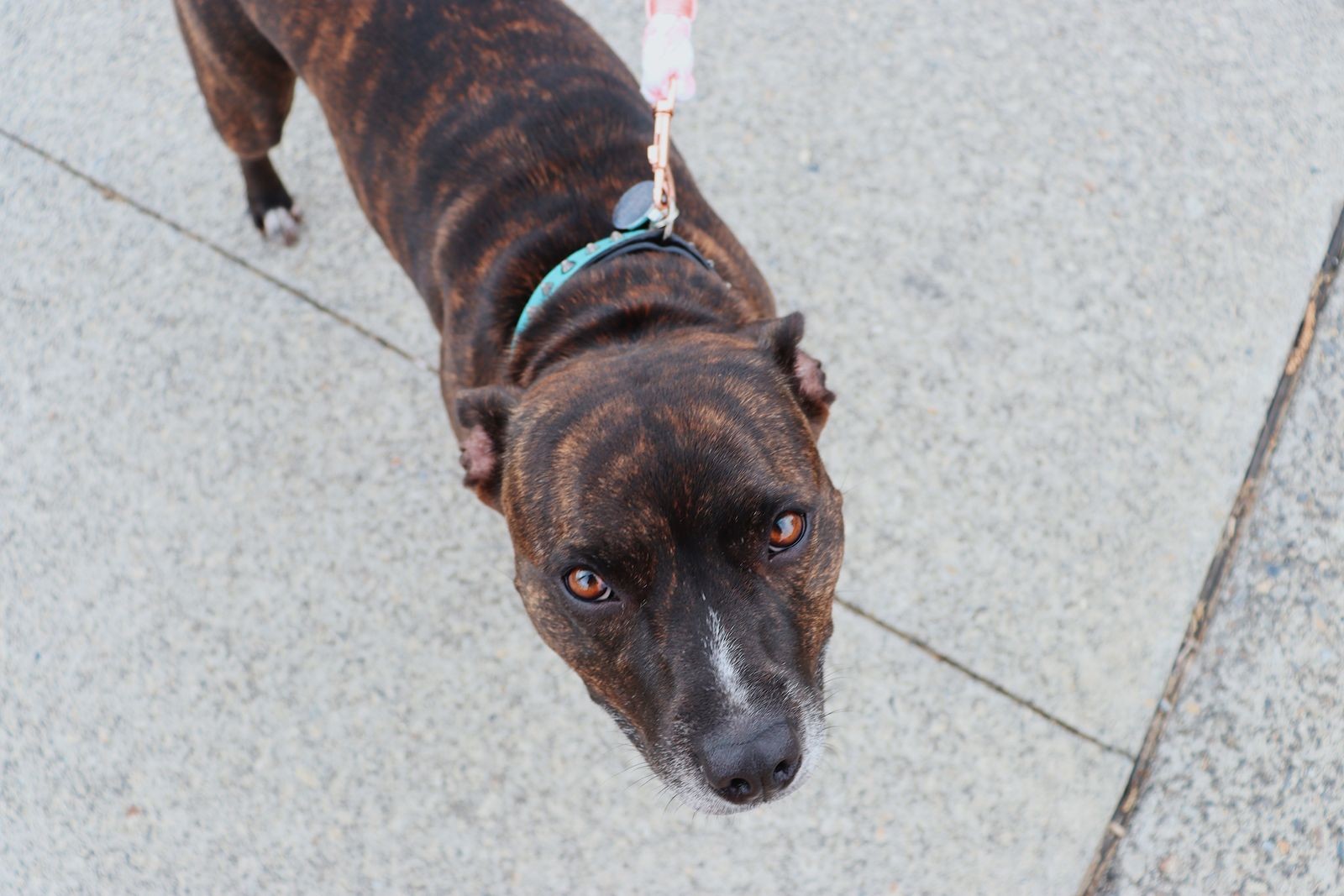
Reactivity in dogs means an exaggerated response to a trigger — barking, lunging, whining, spinning, or pulling hard toward other dogs, people, bicycles, or vehicles — that is out of proportion to the situation. It is most often driven by fear, frustration, or over-excitement rather than true aggression, and many reactive dogs are friendly in calmer, off-leash, or low-pressure settings. Reactivity does not make your dog a bad dog, but it does mean walks and greetings need management and patient, structured training.
What reactivity looks like day to day
A reactive response usually has a pattern. Your dog notices the trigger at a distance, goes still or stares, body stiffens, and then the barking or lunging starts. After the trigger passes, your dog may shake off, pant heavily, or stay wound up for several minutes. Some dogs react only to specific triggers — large dogs, dogs running, skateboards, uniformed delivery people — while others generalize until almost everything on a walk sets them off.
Owners often describe embarrassment, but the behavior is information. Your dog is saying the situation feels too big, too close, or too frustrating to handle calmly right now. Distance is the single most useful variable: almost every reactive dog has a distance at which they can notice a trigger, stay relaxed, and still listen to you. Finding that distance is where training starts.
Why it happens
Leash frustration is common: a social dog who wants to greet is restrained, the frustration builds, and barking becomes the release. Fear is equally common: a dog who wants distance cannot create it, especially on a leash or behind a fence, so making a big display becomes the strategy that works — the other dog goes away, and the behavior is reinforced.
Under-socialization, a frightening experience, pain or discomfort, genetics, and simple high arousal can all contribute. Barrier reactivity at windows, fences, and car windows follows similar logic. Because pain and health changes can lower a dog's tolerance, a sudden change in reactivity — especially in an older dog or one whose behavior shifts quickly — is worth raising with your veterinarian, who can advise whether a checkup is appropriate.
What helps, and what makes it worse
Management comes first: cross the street early, put parked cars between your dog and a trigger, choose quieter routes and times, and use a well-fitted harness and secure leash. Give your dog something to do — sniffing, scattering treats in grass, or a practiced "watch me" — before they are over threshold, not after the lunging starts.
Avoid flooding your dog with close encounters hoping they will "get used to it," and avoid leash corrections in the heat of a reaction; both commonly increase stress and can deepen the association between triggers and bad feelings. Reward-based training that works below threshold — noticing a trigger at a distance, then being rewarded for disengaging — gradually changes the emotional response. Progress is measured in calmer recoveries and greater distance closed over weeks, not in one perfect walk.
Keep everyone safe: do not let strangers or off-leash dogs rush a reactive dog, advocate for space without apology, and consider a muzzle introduced gradually with treats if your vet or trainer recommends one for safety.
Find the right help through KinsLe
KinsLe's Pet Services Directory helps you find local groomers, vets, sitters, and trainers — including trainers who work with reactive dogs. Look for force-free, reward-based methods, experience with reactivity specifically, and a willingness to work at your dog's distance rather than in a crowded class your dog is not ready for. A good trainer will observe your dog, explain the plan in plain language, and give you homework you can actually do on your normal route.
Through the Pet Services Directory on KinsLe, look for reward-based help for reactive dogs, ideally from a trainer who starts work at the distance your dog can handle.