
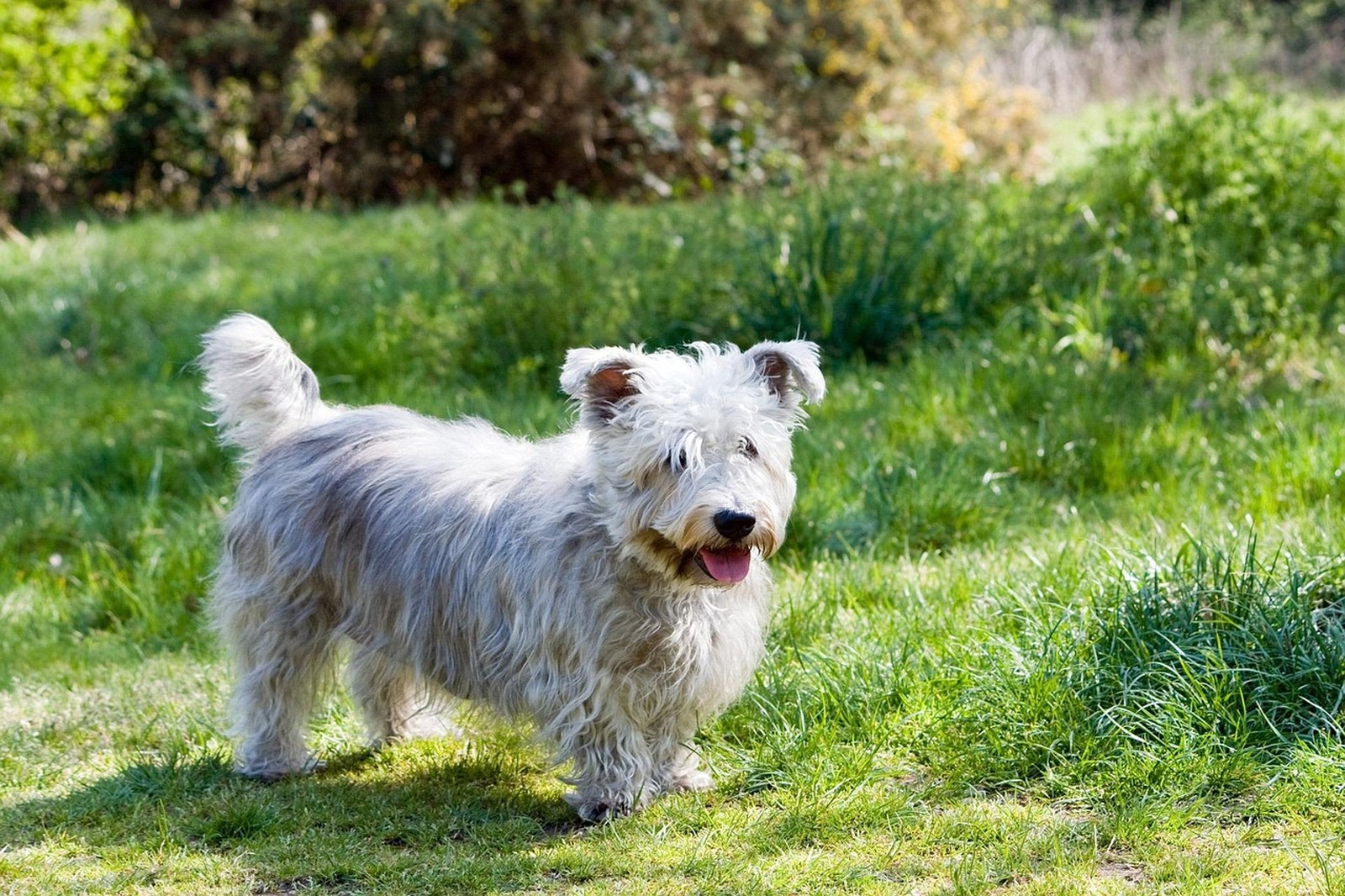
The Exception in the Terrier Group
If you know terriers mainly as enthusiastic, high-frequency barkers, the Glen of Imaal Terrier will surprise you. Glens are among the quietest of the group. They were shaped on Irish farms for work that rewarded silence — hunting badger and fox, and trotting at a turnspit for hours — and the modern Glen keeps that economical style. Most bark to announce something concrete and then stop.
When a Glen does bark, the second surprise is the voice: deep, strong, and carrying, sounding like a dog twice his height. Visitors who hear it through a door routinely expect a much larger animal on the other side.
What a Glen Chooses to Announce
Arrivals are the main event. A Glen is devoted to his household and watchful over it, so visitors, deliveries, and unfamiliar footsteps earn a proper announcement. Once he has reported and the situation is understood, most Glens stand down without the repeated checking-in of more reactive breeds.
Prey and garden intruders come next. The terrier hunting instinct is fully present even if the barking is rationed: a rat, a squirrel working the fence, or a neighbourhood cat crossing his territory can produce a short, intense burst, often paired with an attempt to give chase or dig toward it.
Sustained, repetitive barking — at passers-by all day, or through long absences — is not typical Glen behaviour. When it appears, it usually points to an unmet need: too little exercise, no outlet for digging and problem-solving, or loneliness in a dog left alone longer than he can manage.
Keeping a Quiet Dog Quiet
Protect the trait rather than testing it. A Glen stationed all day at a window or fence facing a busy path gets constant reasons to bark, and habits form even in steady breeds. Give him his watchfulness in doses, not as a full-time post.
Meet the working needs behind the calm: a real walk, a digging place where buried toys are fair game, and scent or puzzle games that employ his brain. A Glen whose drives have somewhere to go has little left over for recreational noise.
Teach a quiet cue using his natural pattern — he already stops after reporting. Mark and reward that natural pause, attach your cue, and acknowledge the alert first: a brief word that you have seen what he saw. Because he is a terrier, keep sessions short and rewarding; drilling a Glen like a gundog tends to produce stubbornness, not polish.
When Barking Changes in a Glen
Check in with your veterinarian if a quiet Glen becomes vocal, particularly with night-time restlessness, new reactivity to household sounds, appetite changes, or signs of stiffness and pain — this stoic breed often shows discomfort through behaviour before anything obvious appears. A trainer familiar with terriers can help if garden wildlife triggers are escalating into fence frustration.
Sound sensitivity at home is worth a mention. A Glen may be unbothered by the doorbell yet react strongly to wildlife scrabbling under a deck or a rodent in the wall — sounds his farm ancestors were paid, in effect, to notice. If the barking always comes from the same corner at the same hour, investigate the actual stimulus before training the response; evicting a garden visitor can end a barking problem no cue would touch.
In KinsLe, Care Teams divides your Glen's walks, digging games, and quiet-cue sessions among the household with each task marked done, so the calm habits you are building get reinforced by everyone, every day.