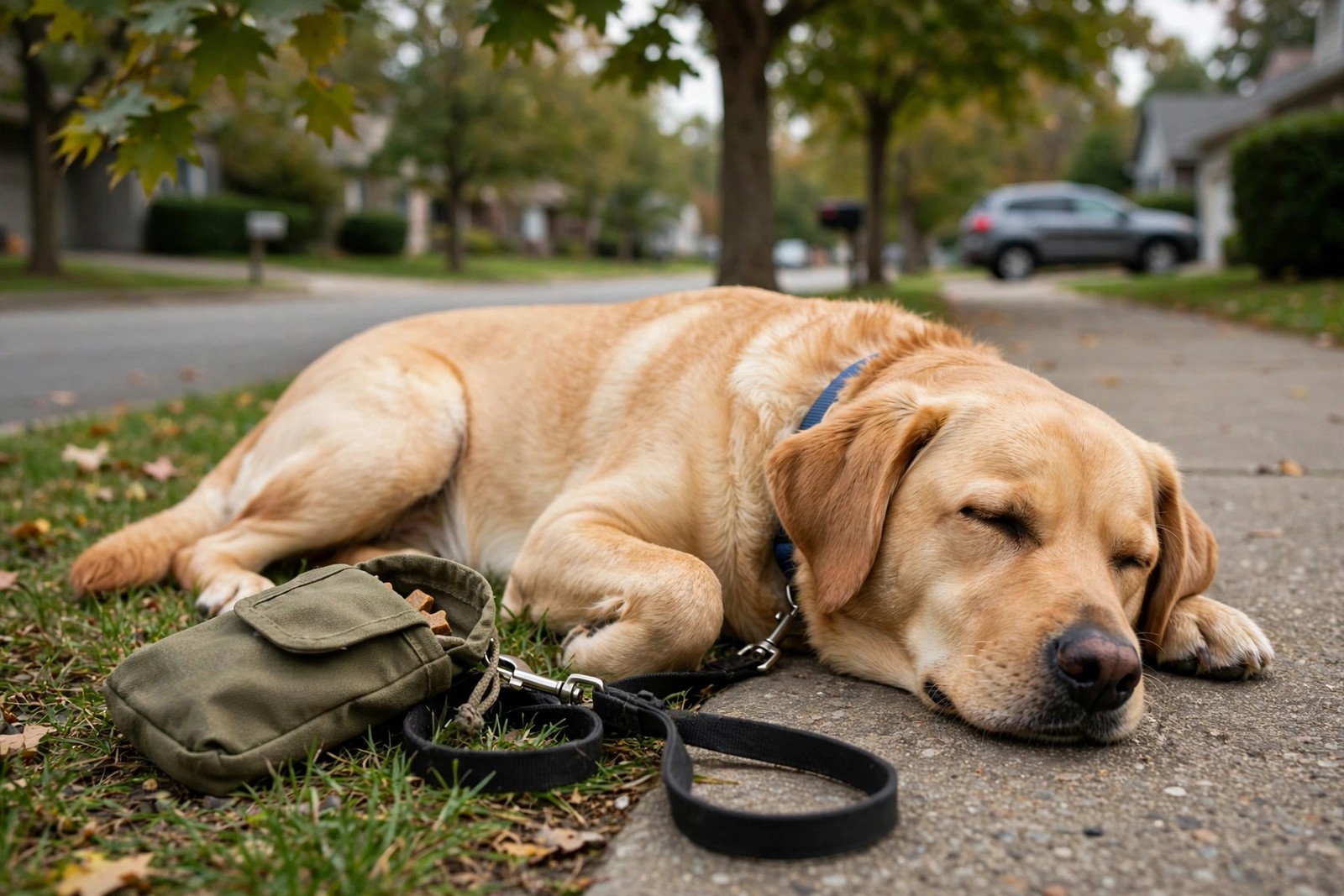
A snap from a dog woken suddenly is information before it is disobedience, and the first response belongs in two places at once: the household's habits around her bed, and a vet appointment to look for a painful or sensory reason behind the change.
Why a sleeping dog snaps
A dog woken by touch may react before she is fully awake, and that reaction is more likely, and stronger, when waking hurts or startles her more than it used to. Sore joints, dental pain, ear problems, and failing hearing or sight can all make a hand on the body arrive without warning. Age can lighten sleep as well. None of that can be sorted out by watching her at home, which is why new sleep-startle snapping belongs on a vet's list, described plainly: when it started, how often, and whether she can be woken calmly by voice.
Change how the household wakes her
Move her bed somewhere quiet that nobody crosses in the dark, and agree that nobody touches a sleeping dog in your home, including visitors and children. Wake her by calling her name from a distance, by speaking before you enter the room, or by a gentle vibration through the floor, then wait until she has lifted her head, looked around and chosen to get up before anyone reaches toward her. Do not punish the snap: it is a warning, and suppressing warnings while the cause remains is how a bite later arrives without one.
Rules worth writing down for everyone
- Her bed is placed away from doorways, stairs and the route to the bathroom
- Waking is by voice or floor vibration only, never by hand, foot or collar
- Children do not approach her until she is standing and has come to them
- Guests are told the rule on arrival, not after an incident
- Any snap, growl on waking, or change in sleep is noted with its date for the vet
Follow the pattern after the vet visit
Once pain, hearing and sight have been checked, watch whether the voice-only routine reduces the incidents over the following weeks. Note whether snaps cluster in the evening, after long walks, or in one sleeping place, because that detail helps the vet or a behaviour professional judge whether discomfort, tiredness or the environment is driving it. If episodes increase, happen when she is awake, or she becomes harder to settle at all, go back sooner rather than treating the first appointment as the end of the question.
Add the quiet-bed routine to KinsLe's Care Teams rota: the person on duty gets notified of their turn, and the app timestamps it once done.