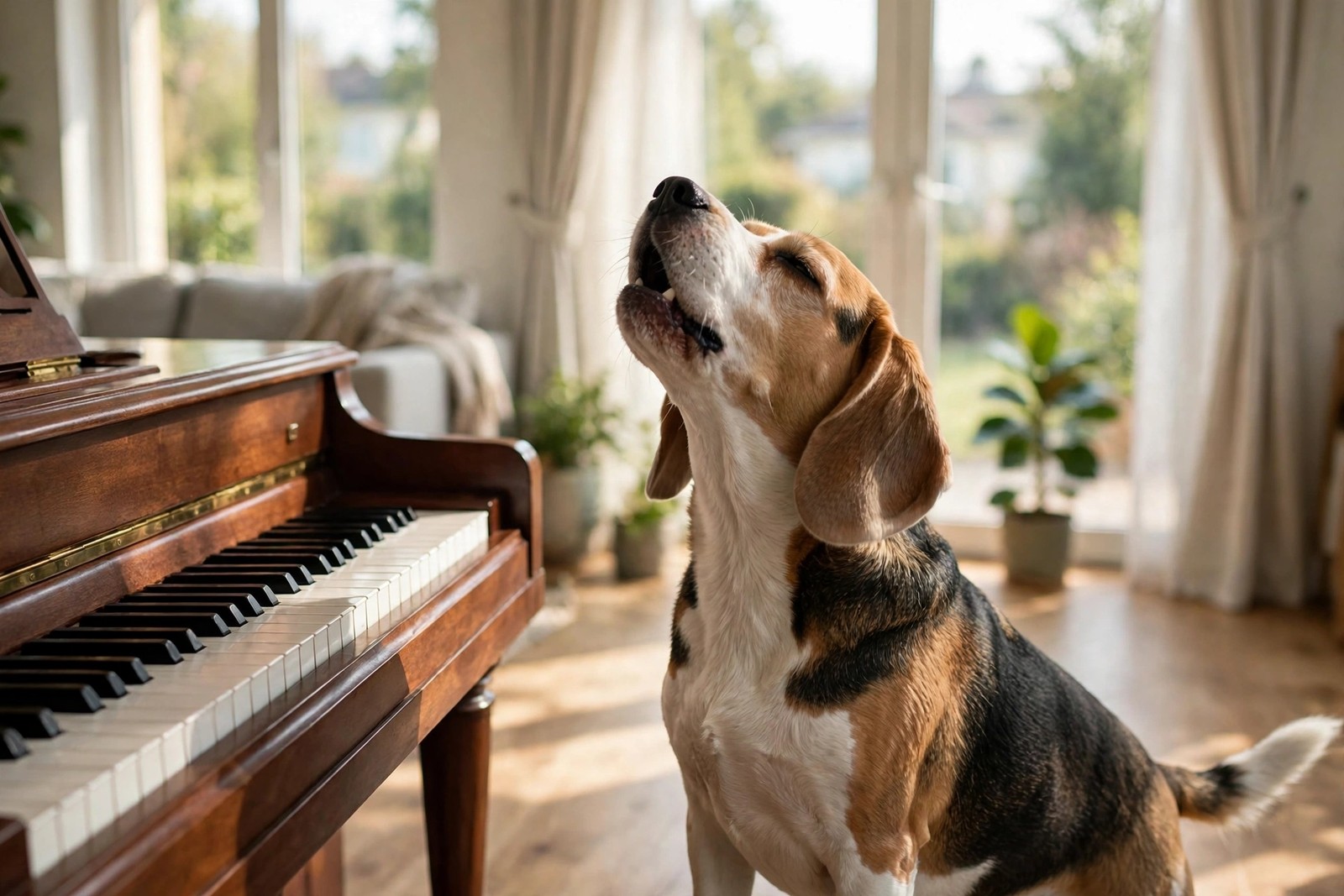
Two dogs in one house can split the soundscape between them, one singing along with every passing siren and ignoring the doorbell completely, the other doing the reverse. That split is not odd, because howling and doorbell barking belong to different systems. Howling is an old form of long-distance contact calling, and it is triggered by sound shape. Doorbell barking is learned household behaviour, triggered by meaning. Your howling dog is responding to pitch and duration; your other dog is responding to what the bell predicts.
The Sounds That Switch a Howl On
Sirens rise and hold a note, slide down, then rise again. Sustained piano and violin notes, a person singing a long note, and recordings of other dogs howling share that stretched, tonal quality. Many dogs answer such sounds automatically, sometimes within a second or two, nose lifted and voice following the pitch. The response often runs in families and is stronger in some breeds than others, but any dog can have a particular note or instrument that sets her off. Short, percussive sounds rarely do it: a doorbell chime, a phone ringtone or a knock is over before the joining-in response gets going. Volume alone is not the key either; a quiet harmonica can start a howl that a loud door slam never earns.
Reading Your Dog's Body While She Howls
A social howl usually comes with relaxed muscles, a soft wagging tail, ears in a natural position and easy movement between notes. She may look towards the sound, pause when it pauses, and settle quickly once it passes. That picture differs from distress howling, which tends to come with pacing, panting, drooling, scratching at doors or an inability to settle, and often happens when the dog is left alone rather than when a sound plays. Context separates the two: sound-triggered howling stops with the sound, while anxiety-driven howling can continue in bouts and is often reported by neighbours rather than witnessed. If howling is new in an older dog, or joins other behaviour changes, mention it to your veterinarian, because discomfort and hearing changes can alter how a dog reacts to sound.
Living With a Singer, and the Doorbell Non-Reaction
There is rarely a reason to stop relaxed howling unless neighbours or sleeping babies make it impractical. If you need it quieter, reward the pauses, redirect her into a game or a sniffing scatter as the siren approaches, and avoid joining in yourself, since households who howl along enthusiastically often get a more committed singer. Never punish howling; it may confuse her, and it can add stress to the moment. Her silence at the doorbell needs no fixing at all. She has not learned the bell as her job, your other dog covers it, and a dog who stays calm when visitors arrive is a gift rather than a gap. If both dogs ever react to the bell, that is the habit worth training, with a settled mat routine behind a barrier. You can also test her selectivity yourself: play a recorded siren, a doorbell and a piano note at similar volume on different days and watch which she answers, which she glances at and which she sleeps through entirely.
Keeping brief notes on which sounds earn a howl, which earn nothing, and how she settles afterwards turns a funny quirk into a clear picture within a couple of weeks. When the picture stays unclear after a fortnight of notes, put a follow-up question to KinsLe's Kinny; he answers using the KinsLe Answers library.