
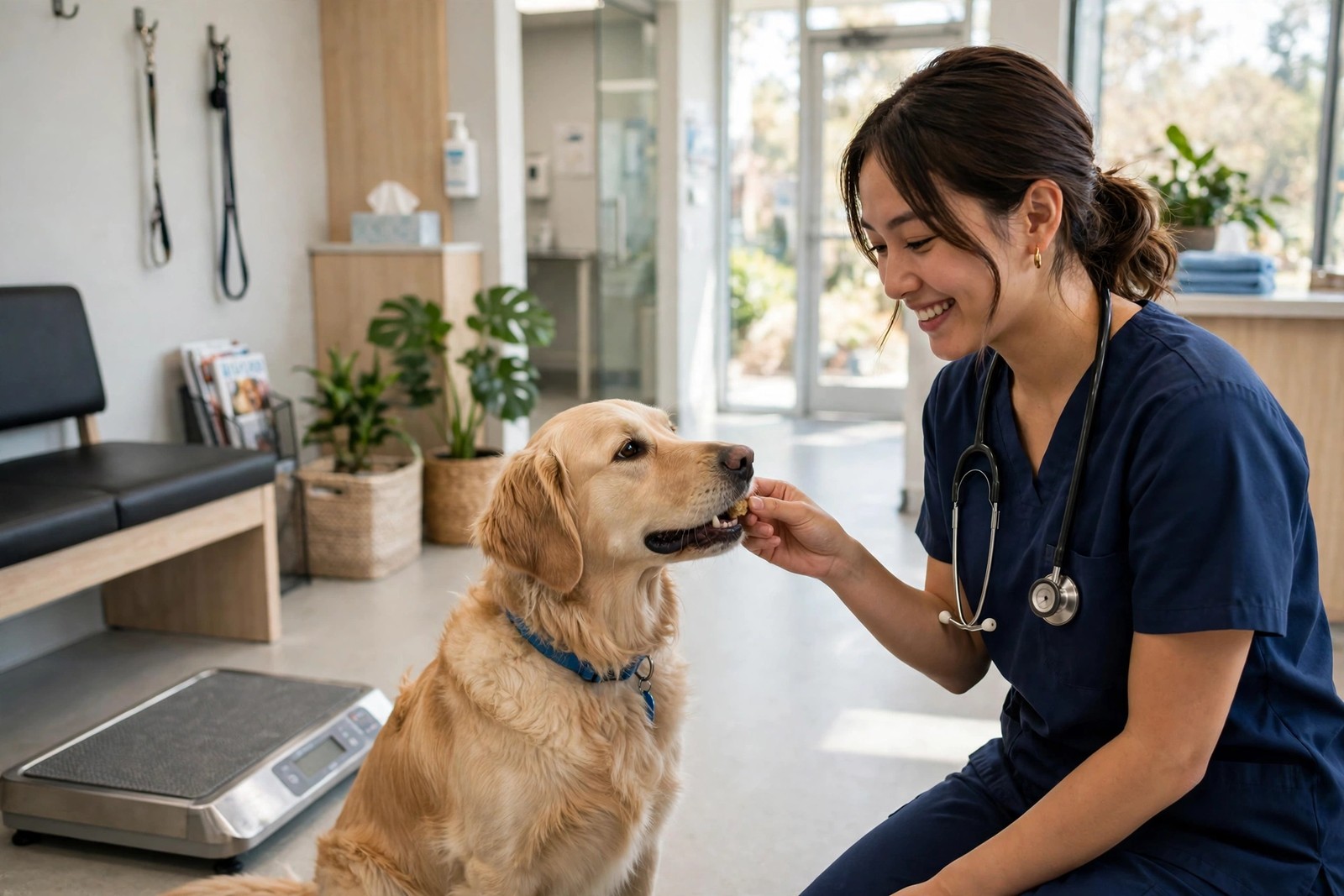
A dog who fears the clinic has usually learned that the building predicts restraint, strange smells, and uncomfortable handling, so the fix is to teach a new prediction: the clinic also predicts treats, praise, and leaving again with nothing bad happening. That teaching happens in small, cheerful doses spread over weeks, at the clinic and at home, and it works best when every person in the household follows the same simple plan. Expect gradual change rather than a single breakthrough, and measure progress in smaller victories, such as walking through the door willingly.
Happy Visits Come First
The foundation is the happy visit: a trip to the clinic with no appointment, no exam, and no procedure. Walk in together, let your dog sniff the waiting room, accept treats and a friendly greeting from staff if they have a moment, step onto the scale for a quick weigh-in, and leave while the experience still feels easy. Repeat these visits regularly so the building, the smells, the sounds, and the scale all become familiar background rather than warning signs. A dog who has entered the clinic ten times for treats and left happily has real evidence to set against one frightening visit, and staff get to become familiar faces instead of strangers who only appear on bad days.
Handling Practice at Home
Most fear at the clinic is fear of being handled by strangers, so practice the handling itself at home in a relaxed setting. Pair each touch with food: look in an ear and offer a treat, hold a paw gently and offer a treat, lift a lip briefly and offer a treat, rest a hand along the ribs the way an exam does and offer a treat. This pairing, repeated calmly, is counter-conditioning in its simplest form, changing how the touch itself feels to the dog. Keep sessions to a minute or two, stop while your dog is still comfortable, and never pin, corner, or force a dog through a touch that triggers panic. If a particular touch worries your dog even at home, split it smaller: a glance toward the ear first, then a brief touch near the shoulder, building distance by distance over days.
Cooperative Care Games
Cooperative care turns handling into a game your dog can control, which changes everything for a nervous dog. Teach a chin rest, where your dog rests the chin on your palm or on a chair and holds it there for a treat; while the chin stays down, handling continues, and when the dog lifts the chin, handling pauses. That simple start-and-stop signal gives the dog a way to say ready and a way to say wait, and dogs who can pause an exam usually tolerate far more of it. Practice the game at home until it feels playful, then use the same chin rest at the clinic, and tell the staff your dog knows it.
A Pre-Visit Plan Built on Routine
On appointment day, familiarity and routine carry the dog. Take a calming walk first so energy and the need to toilet are handled, bring the high-value treats your dog loves at home, and arrive a little early so there is no rushed dash from car to exam room. Keep your own body relaxed and your voice ordinary, use the weigh-in and the chin rest exactly as practiced, and ask staff to start with the least invasive parts of the exam where the appointment allows. Afterward, note what went well and what spiked fear, and share that note with everyone who walks or handles the dog, so the next visit builds on the same information rather than starting over. Assign the practice sessions, the happy visits, and the weigh-ins as named household duties, written down, so the plan survives busy weeks and no step depends on one person remembering.
With the routine shared through KinsLe, Care Teams keep handling practice, happy visits, and weigh-ins assigned to named people week after week.