
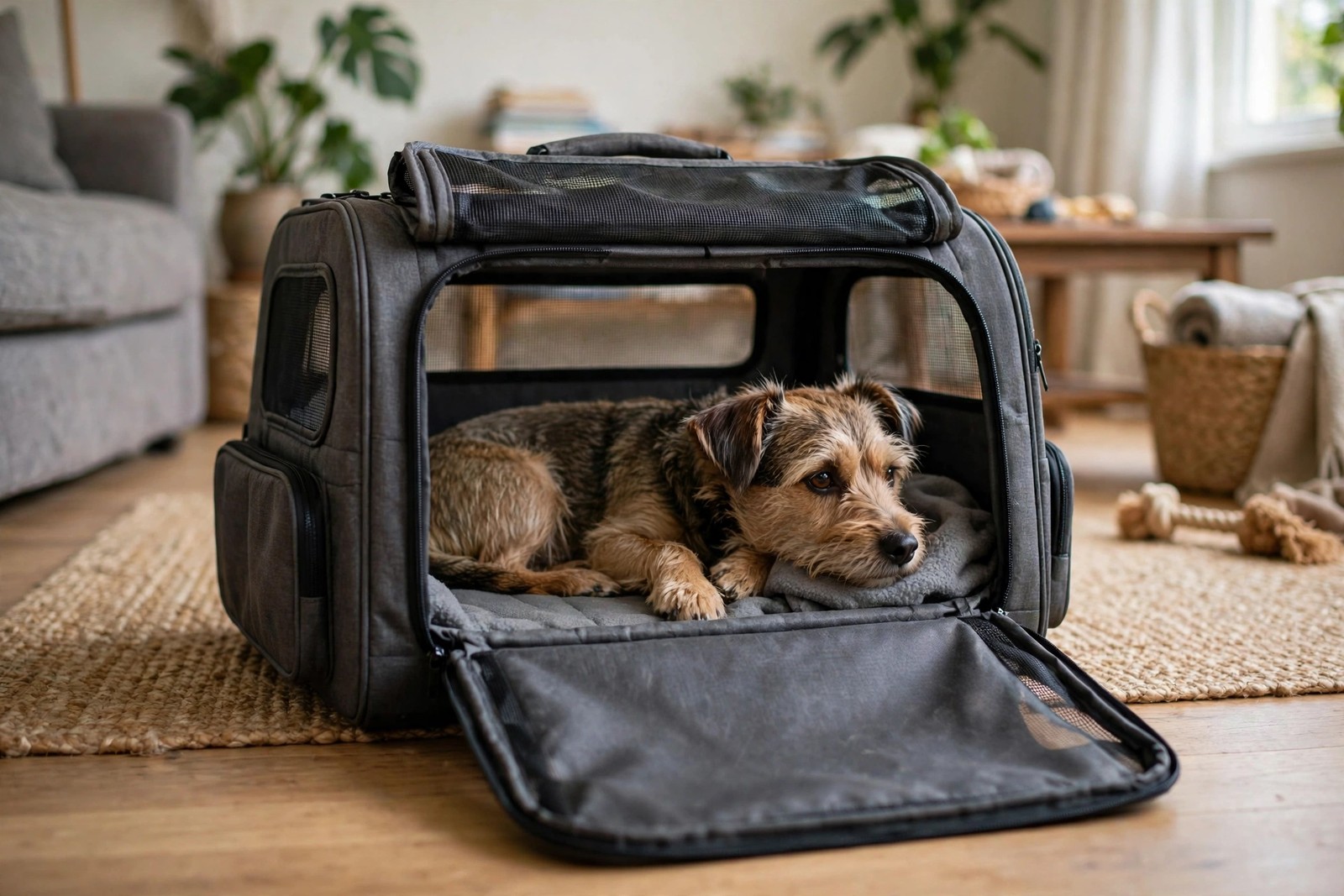
Choose a carrier that your airline approves for your dog's size, that lets your dog stand up, turn around, and lie down in a natural position, and that has secure ventilation on multiple sides. Measure your dog — length from nose to base of tail, height to the top of the head or ears — and compare those numbers to the carrier's interior, not just the weight limit printed on the tag.
Start with your airline's rules
Every airline publishes its own maximum carrier dimensions for cabin travel, and those numbers differ between aircraft types on the same airline. A soft-sided carrier is usually the better cabin choice because it can flex slightly under the seat, but it still has to meet the stated limits. For cargo travel, airlines typically require a rigid, hard-sided crate with metal hardware, a secure door latch, and ventilation that meets their checklist — a cabin carrier will not be accepted.
Check whether your dog even qualifies for the cabin. Many airlines cap cabin pets by weight and carrier size combined, so a sturdy 22-pound dog like a French Bulldog may be over a limit that a leggy 18-pound dog fits easily. Confirm the pet reservation itself, too — most flights carry only a small number of cabin pets, booked first come, first served.
Fit and comfort details that matter
Inside, your dog should be able to shift position without their back or ears pressing hard against the top. Look for:
- A firm, waterproof base with a washable, familiar-smelling pad
- Mesh panels that give airflow without a paw-sized opening to push through
- Zippers or latches your dog cannot nose open from inside — zipper clips help with clever escape artists
- A short interior tether so you can open a corner for a water offer without a bolt risk
- Pockets for paperwork, treats, and waste bags that do not eat into your dog's space
Avoid carriers that are mostly novelty — cute shapes often steal interior room, hide poor ventilation, and collapse onto the dog when bumped in a crowded aisle.
Break the carrier in at home
A carrier that appears for the first time on travel day smells like stress by association. Leave it open in your living room for at least a week. Feed a few meals near it, then inside it. Toss in a favorite toy, practice closing the door for short, relaxed periods, and carry your dog around the house and then on a short car ride in it. Short, boring sessions teach your dog that the carrier predicts nothing dramatic — that is precisely the lesson you want at 30,000 feet.
If your dog panics in the carrier at home, do not force longer sessions. Go back a step, reward calm entry, and talk to your vet or a trainer well before the trip if confinement itself is the problem.
The ID that travels with the carrier
Attach clear identification to the carrier itself — your name, mobile number, destination address, and an emergency contact — in case you and your dog are ever separated during screening or boarding. KinsLe's Pet Pass, your dog's verified ID card, belongs in that same travel set: it keeps your dog's identity in a clean, verified format alongside the carrier paperwork, which is far more reliable than a handwritten tag alone. Pair it with your dog's collar ID and you have covered both the dog and the bag. Ready to plan the rest of the trip? Pet Pass on KinsLe belongs beside that paperwork because its verified information identifies your traveling companion quickly if screening separates you from the bag.