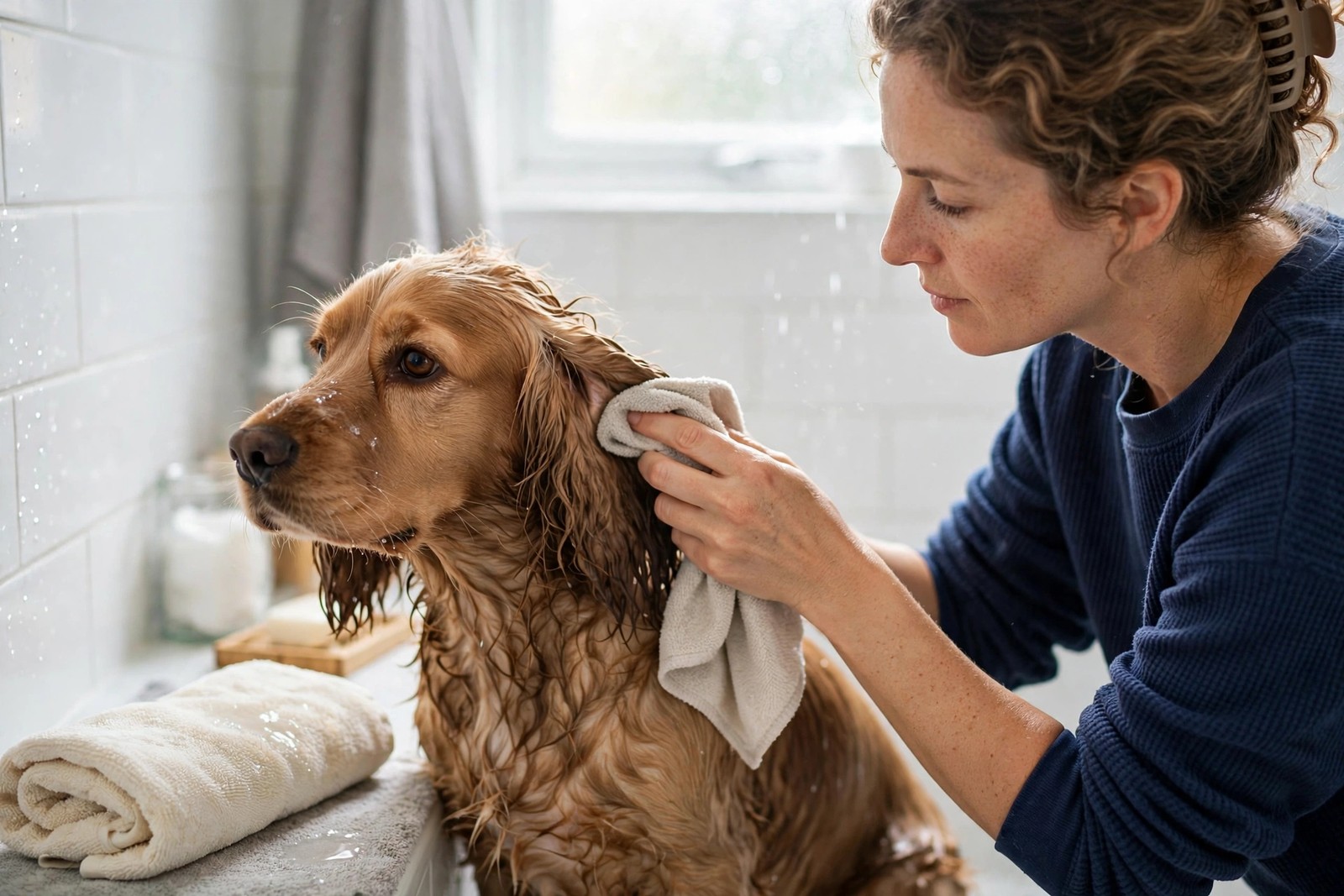
After swimming, let your dog shake first, then gently wipe the outer flap and the part of the ear you can see with a soft cloth, working only where your fingertip reaches. Water left sitting in a warm ear canal is the problem this routine solves, not dirt, so the goal after a swim is a drier ear rather than a scrubbed one. Work promptly once you are home and your dog has shaken off the worst of the water on her own terms, because that head shake moves more water out of the canal than any cloth can draw out afterwards.
The shake, the wipe and the fingertip limit
Start outdoors or on a washable floor and let the shaking finish completely before you touch the ears; dogs typically shake in bursts, with a pause between, and interrupting early leaves water deep inside. Lift the ear flap, look at the skin you can see in good light, and wipe the inner flap and the entrance folds with a soft dry cloth or cotton pad wrapped around your finger. Keep to the fingertip rule throughout: if your finger cannot reach it while you can still see your fingertip, it is beyond home cleaning. Work from the entrance outward in gentle sweeps, use a fresh section of cloth as soon as one comes away damp or dirty, and stop while your dog is still tolerant so the next swim day starts with goodwill intact.
A drying cleaner only on your vet's say-so
Some dogs benefit from a drying ear cleaner after swimming, yet that choice belongs to your vet, who knows your dog's ear history and canal shape. If your vet recommends one, use only the product type they name, in the way they show you: typically filling the entrance, massaging the soft base of the ear briefly while your dog stands calmly, then letting her shake and wiping away what surfaces. If your vet has never raised a cleaner for your dog, plain drying and wiping is a complete routine, and adding products on a guess can irritate healthy ears or mask early trouble. Never substitute household liquids, oils or leftover drops from another illness, and never continue a cleaner through signs of pain in the hope it will settle.
Ears you must not clean at home
Leave an ear alone and book a veterinary appointment instead when you see redness inside the flap, swelling, dark or yellow discharge, or a sour or sweet smell that was not there before the swim. The same rule holds when your dog yelps, pulls away sharply, scratches one ear repeatedly, tilts her head, or shakes long after drying — these are signs a vet should examine the ear rather than have it cleaned. Cleaning an ear that is already sore can push debris deeper and make the vet's examination harder, while a prompt visit catches a developing infection while it is still a small problem. Note which ear, what you saw and when the swim happened, and take that note with you.
Making swim days routine rather than projects
Keep a small ear kit where swimming gear lives: soft cloths, cotton pads, the vet-recommended cleaner if you have one, and treats for the dog who stands patiently. Pair the check with the same cue and location each time — towel off, ears, treat, done — so your dog predicts a two-minute job rather than an open-ended handling session. Check both ears every swim day even when one side looked perfect, since water does not distribute itself evenly, and give the ears a quick look again the following morning for redness that developed overnight. Putting that swim-day checklist into KinsLe as a recurring Care Teams task means a partner, sitter or older child can run the identical ear check after a lake trip, with the completed timestamp showing you it genuinely happened.