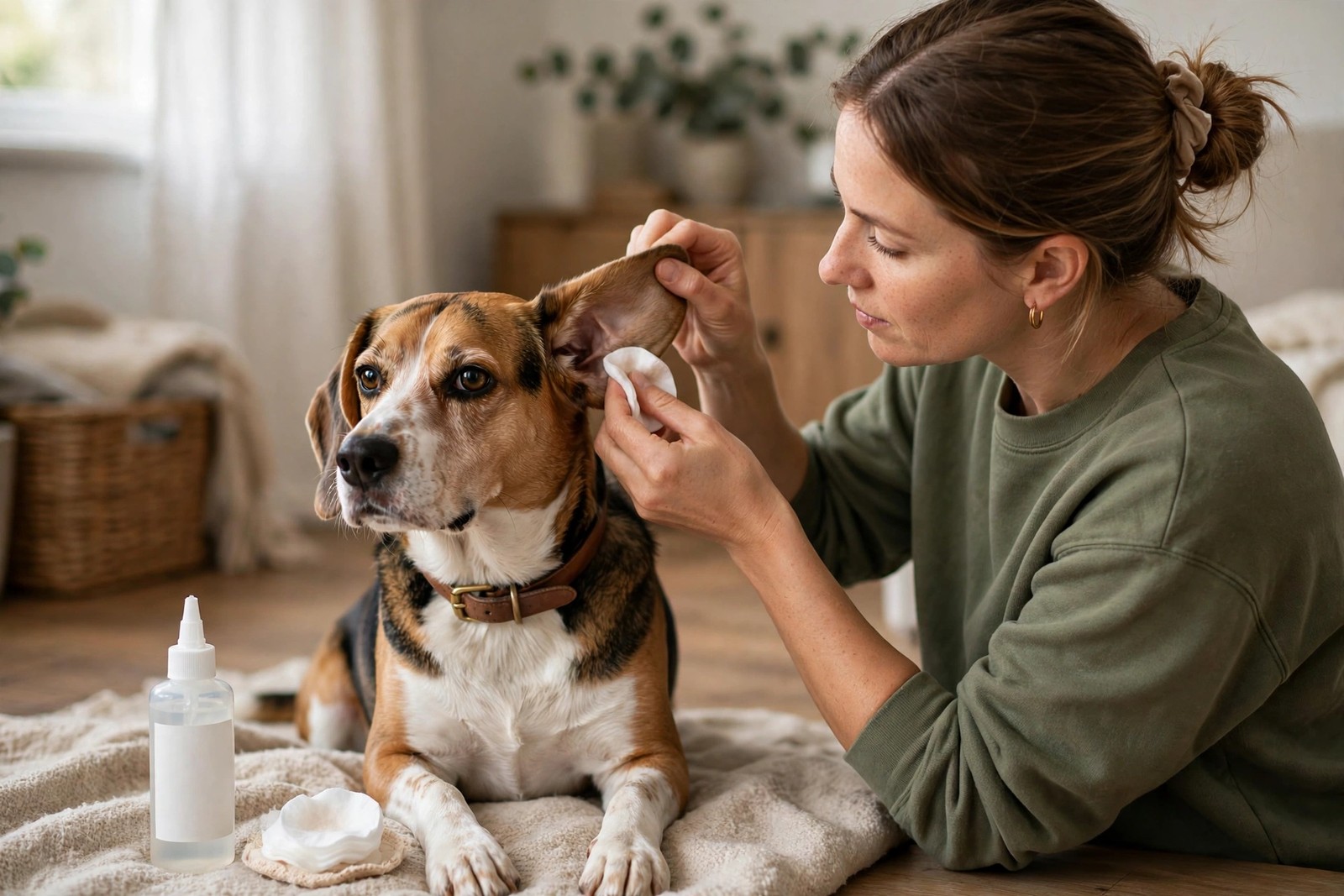
For a healthy dog, ears need cleaning less often than many owners think. A clean every few weeks is plenty for most, with an extra one after a swim or a bath, or whenever wax is visibly building up or a mild odour appears; floppy-eared and hairy-eared breeds may need a little more attention. Routine cleaning uses a vet-recommended ear cleaner: fill the ear canal gently, massage the base of the ear for 20–30 seconds (you will hear a squelch), let your dog shake, then wipe what comes up with cotton wool or gauze wrapped around your finger.
Technique and What to Avoid
Never push cotton buds or anything else down the ear canal — you can damage the eardrum and pack debris deeper. Work somewhere washable, keep sessions calm with treats, and do one ear at a time. The canal should look pale pink and clean; dark coffee-ground debris, redness, a strong yeasty or sweet smell, discharge, or your dog crying, scratching, or shaking their head means stop cleaning and book the vet instead — cleaning an infected ear at home can be painful and can make treatment harder. Some dogs with recurring ear trouble need a vet-designed routine rather than a generic schedule.
Working With Your Vet
Ear trouble sits in a grey zone where cleaning helps until the day it harms, so let your vet set the boundary for your dog. At a check-up, ask them to look down the canal and tell you what they see: how much wax is normal for this dog, whether the skin is calm, and which changes should bring you back. If your dog is prone to infections, allergies or grass-seed trouble, ask for a cleaning routine designed for his ears specifically — how often, with what, and when to stop and book in instead. Bring dates: when the head-shaking started, which ear, what the debris looked like, and whether it followed swimming or a walk through long grass. That sequence is what lets a vet separate a grubby ear from a diseased one.
See your vet promptly for head-shaking that keeps returning, scratching that breaks skin, discharge, a bad smell, or any tilt of the head. Ear disease is painful and occasionally a sign of allergies or a foreign body like a grass seed, all of which need examination rather than more cleaning.
Keep an ear log rather than a general diary for this job: the date of each clean, what came out on the cotton wool, any smell, and any head-shaking or scratching in the days after. A pattern — trouble always after swimming, or always in one ear in pollen season — points your vet towards a cause far faster than a guess at the appointment, and it tells you whether your current cleaning interval is actually the right one for this dog.
Those ear notes belong with the rest of his paperwork. In KinsLe, the Pet Passport holds them alongside vaccination dates and visit summaries in a single portable record, ready to open at the next appointment.