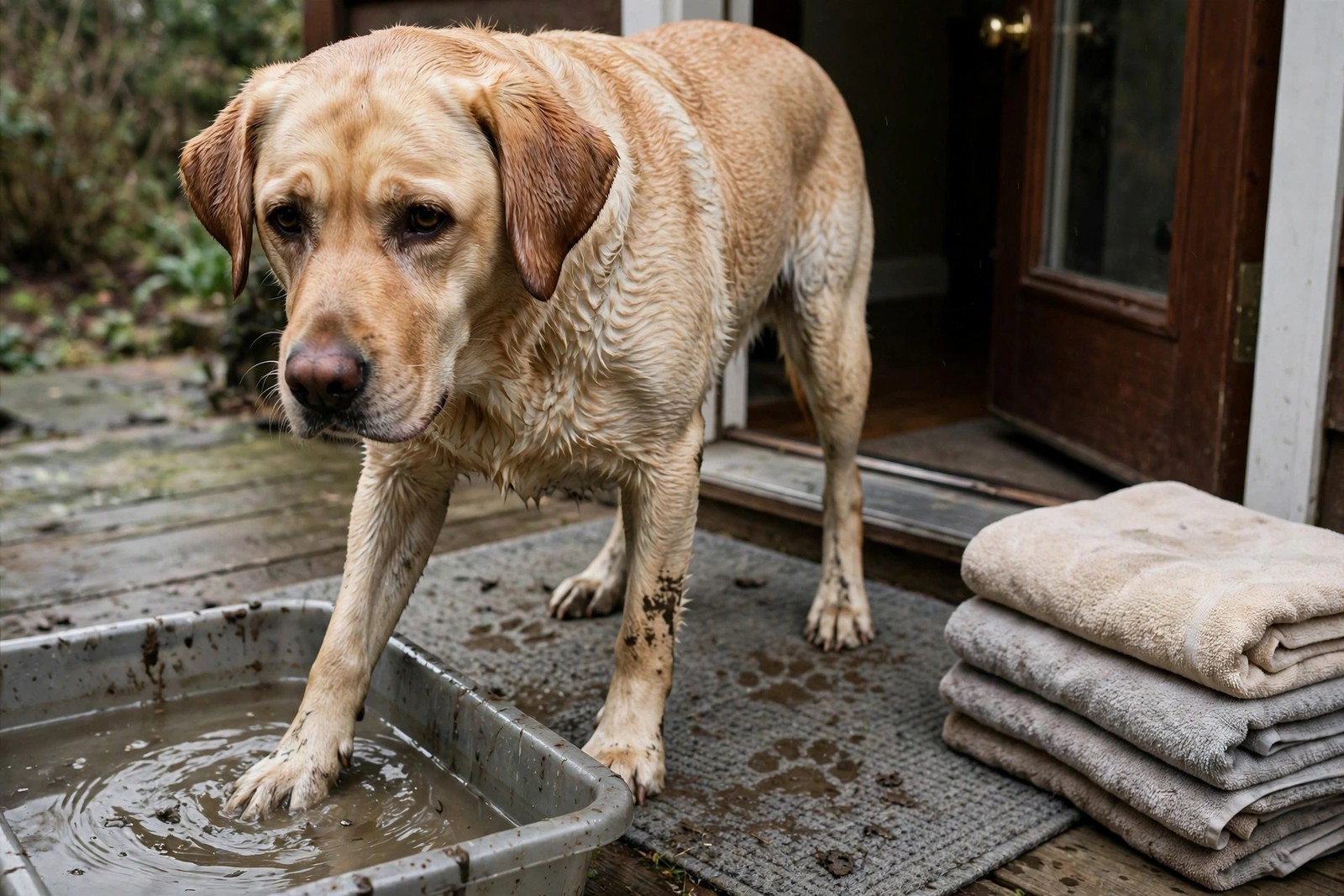
Muddy paws are really three jobs in one: get the mud off, get the feet properly dry, and check between the toes before grit or salt does damage. A fixed station by the door you actually use turns all three into a two-minute habit instead of a chase around the house with a towel.
Set Up a Paw Station by the Door
Keep everything within arm's reach of the entrance: a washable mat for your dog to stand on, a stack of dark-coloured towels, a shallow tub or wide bowl, and a jug for filling it. Train a simple station routine alongside the cleaning — ask your dog to wait on the mat when you come in, reward that pause, and release him only when all four feet are done. Dogs who learn the mat means a treat at the end stop bolting for the sofa within a week or two of consistent practice.
Match the Method to the Mud
For a light coating of dust and splashes, a thorough wipe is enough. Use a towel dampened with plain warm water and work over the whole paw — top, sole, around each pad, and between the toes, where a quick swipe over the top never reaches. For wet, caked mud, wiping just spreads it. Fill the tub with lukewarm water — never hot — stand one paw in it at a time, swish gently and rub the mud loose with your fingers, then lift the paw out and move to the next, changing the water if it turns to soup. Rinse-only is also the right call after winter walks on gritted or salted pavements, because road salt left on pads dries and cracks them, and dogs lick it off and swallow it.
Dry Properly, Then Check Between the Toes
Wet paws left to air-dry stay damp between the toes, and that warm moisture is where soreness and yeast irritation start, especially in breeds with hairy feet. Pat each paw dry with a clean section of towel and gently separate the toes to dry between them. Then use the check as a built-in inspection: run a thumb between the pads and feel for trapped grit, small stones, seeds, thorns or matted mud balls, and look for cuts, redness or cracked pads. In winter, also feel for lumps of compacted snow or ice between the toes and ease them out with warm fingers rather than pulling.
Coat and Paw Extras Worth Knowing
Long fur between the pads traps mud into hard little pellets; asking your groomer to keep paw fur trimmed short makes every clean faster. If your dog hates the tub, introduce it dry and empty first with treats, then with an inch of water, over several days — forcing a wrestling match at the door teaches him to dodge the station entirely. Wash the paw towels regularly, because a sour, gritty towel re-dirties clean feet and can irritate skin. Seek vet advice if you find limping, persistent licking of one paw, swelling between the toes, or a pad cut that keeps reopening. When several people walk the same dog, logging each post-walk clean in KinsLe's Care Teams keeps one shared record, so nobody assumes someone else already rinsed off the salt.