The baseline: one real brush-out a week
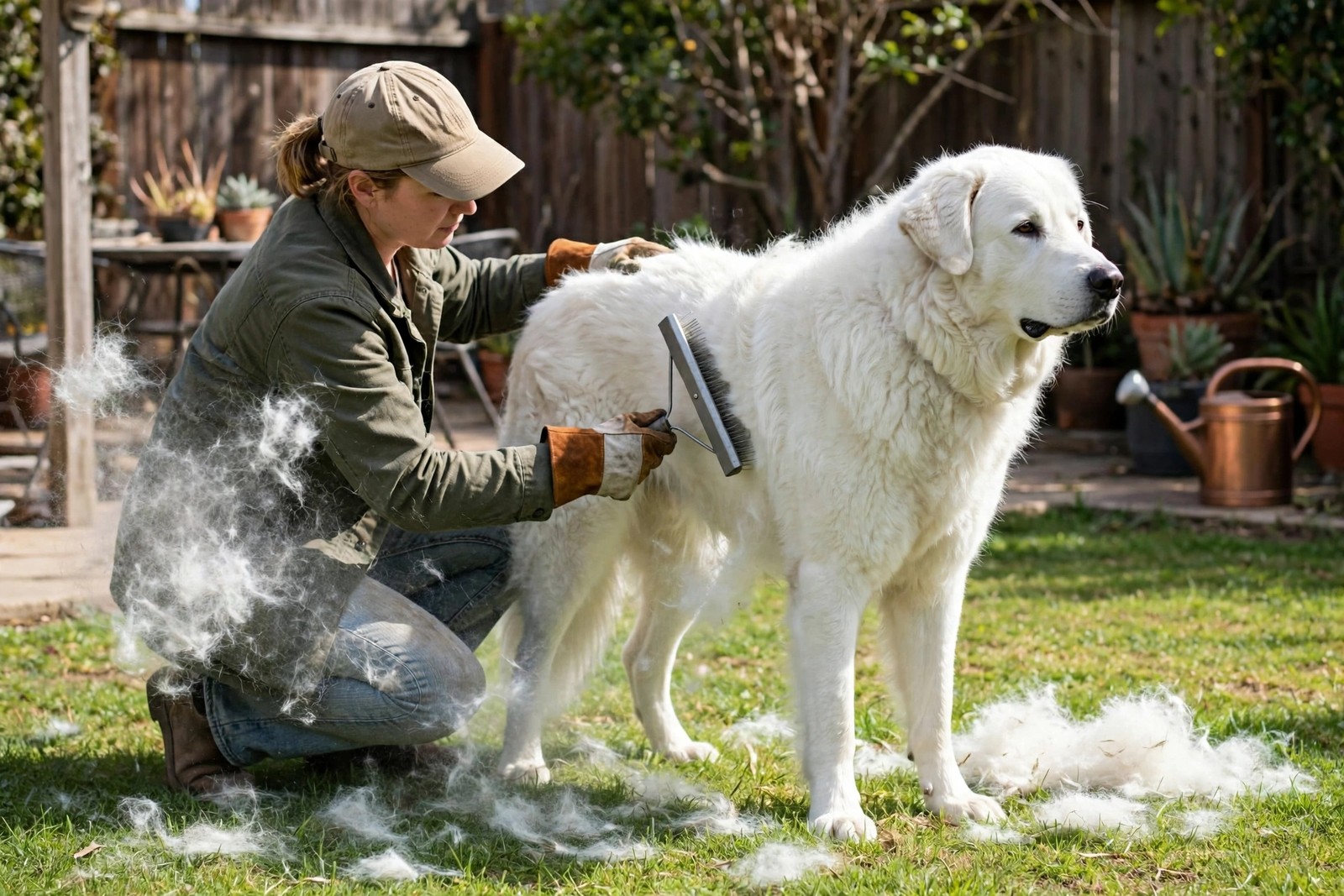
A Kuvasz needs one thorough brushing every week for most of the year. This is a large white livestock guardian with a dense double coat — a medium-length, slightly wavy outer layer over a thick, soft undercoat — and 'thorough' means reaching the skin, not skimming the surface. Work in sections with an undercoat rake to loosen dead undercoat, follow with a slicker brush or pin brush, and finish by checking the friction zones: behind the ears, the neck ruff, the backs of the thighs, and the tail, where the longer hair tangles first.
Shedding season changes the answer completely
Twice a year, typically with the big temperature shifts, the Kuvasz blows its undercoat, and the weekly rhythm stops being enough. During those weeks, loose hair packs into the coat faster than one session can clear, mats form at the skin while the top still looks fine, and white hair covers every surface in the house anyway. Short sessions every day or two — fifteen minutes with the rake outside, ideally — keep ahead of it. A dog who will stand calmly for frequent small sessions beats the once-a-week wrestling match, so build the habit before the first blow arrives with a young dog.
A coat that cleans itself, mostly
Kuvasz coats are known for shedding dirt well and carrying surprisingly little doggy odor; mud picked up on a farm or trail often dries and brushes straight out. That means baths are occasional — when the dog has rolled in something genuinely foul or before the coat stops releasing dirt — rather than a fixed monthly appointment. Over-bathing works against this breed, softening the outer coat and stripping the oils that make the self-cleaning quality possible. When you do bathe, rinse exhaustively: shampoo trapped in that undercoat takes longer to flush out than the wash itself, and residue makes the coat attract dirt faster afterward.
Tools that actually suit this coat
Skip the fine combs and soft bristle brushes meant for silky coats. The Kuvasz kit is an undercoat rake, a slicker, a sturdy pin brush, and a greyhound-style comb to test whether you truly reached the skin — if the comb glides through a section, that section is done. Deshedding blades used aggressively can damage the outer coat, so the rake-and-patience method is the safer default. Work outdoors or on an easy-clean floor during the blow, and expect the removed undercoat to fill a bag; that volume is normal for this breed, not a sign of a coat problem.
Ears, nails, and a guardian's temperament at the table
Weekly sessions should include ears, teeth, and nails, and they double as handling training for a breed that grows into a large, self-assured dog. A Kuvasz who decides grooming is over can simply leave, so sessions stay calm, unhurried, and finished on a good note rather than by force. Start with puppies using very short sessions and plenty of pauses, and the adult dog will treat the rake as routine instead of confrontation. Watch for hot spots or irritated skin under the ruff during humid spells, when that dense neck coat holds moisture against the skin.
Making shedding season a household project
No single person should carry a Kuvasz coat blow alone — the daily sessions land better when two or three people rotate, and the dog benefits from not facing the same handler's tired arms every evening. KinsLe's Care Teams lets you post the shedding-season schedule where everyone sees it, assign the rake sessions and nail checks by day, and confirm from the completion timestamps that today's brush-out already happened before someone starts a second one.