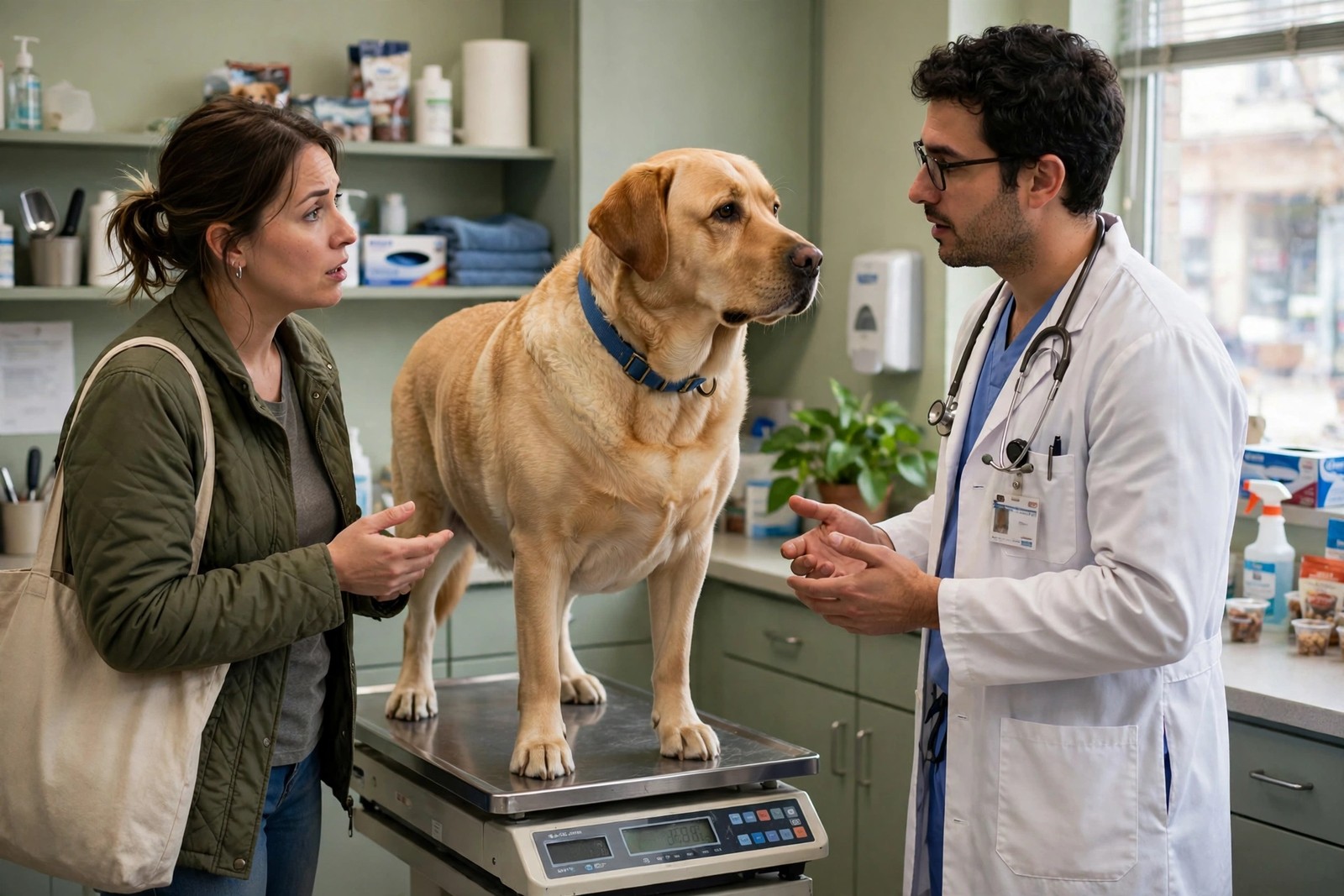
Say it plainly at the appointment: portions and extras have crept up, and you want help resetting them. Vets hear this often, and honesty saves time that guesswork wastes. Your dog's target and daily amount are decisions for the vet, informed by a body condition check and by the full feeding picture only you can supply.
Counting Everything He Actually Eats
For one week, weigh his meals and list every extra: training treats, dental chews, scraps, crusts, the spoon he licks and food from other pets. Count treats by the handful you really give, not the amount you meant to give. Note who feeds him and when, because a dog fed by three people can receive three lunches. Bring the labels or names of his food and chews so the vet can judge their energy content. This record often explains the weight trend without anyone needing to feel blamed.
The Conversation Itself
Ask the vet to assess his body condition and to show you what they feel: ribs under a thin fat cover, a waist seen from above and a tuck seen from the side. Ask what target weight they set and what daily amount covers meals and treats together. Ask how treats should change: smaller pieces, part of the meal ration set aside, or lower-energy options the vet suggests. Ask how exercise should build alongside the food change, taking his age, joints and fitness into account. Agree a weigh-in rhythm and a review date before you leave, and ask what change in the trend should prompt an earlier call.
Making the New Amounts Stick at Home
Use the kitchen scale for every meal rather than trusting a scoop. Set aside the day's treat allowance each morning so the limit is visible. Brief the whole household, including visitors, and put the rule where everyone sees it. Replace some food rewards with play, sniffing games or praise where your dog values them. Weigh him at the agreed interval, at a similar time of day, and write the result down rather than relying on how he looks in the garden.
Rebuilding Treats Into Rewards That Do Not Undo the Plan
Dogs do not need a large edible reward every time they behave well, and reworking rewards is often the easiest part of a weight plan. Break a single treat into several tiny pieces so a training session still feels generous while the total stays inside the allowance. Rotate food rewards with a game of tug, a thrown ball or a chance to sniff a favourite patch of grass, depending on what your dog actually values. Keep the day's allowance in one jar each morning and stop when the jar empties, because a visible limit beats a mental one. If your dog works for praise alone at home, save the edible rewards for walks and new environments where his focus is harder to hold.
When Progress Stalls
Ask the vet how any medication, age-related stiffness or recent neuter status affects the plan, because those details can shift both the target and the exercise advice. A dog who has been neutered recently, a senior dog with sore joints and a young dog in training all need slightly different handling of the same honest conversation.
Bring the record back instead of quietly giving up. A stall usually has a findable cause: an uncounted feeder, a new chew, or an amount that needs the vet's adjustment. Ask before changing the plan yourself, because cutting food without guidance can leave a dog hungry and still short of nutrients. Steady loss at the pace the vet set is the goal, not speed. His Pet Passport in KinsLe keeps his condition scores, target and weigh-in dates together, so each visit continues the same honest conversation.