Degus are unusually prone to diabetes, and their diet has to stay strictly sugar-free for life — which means your care instructions are not a courtesy note but a safety document. A well-meaning sitter who offers a raisin as a treat can undo your careful feeding in one afternoon. Write the sheet so a kind stranger, in a hurry, with your degu looking hopeful, still cannot get it wrong.
Put the Sugar Rule First and Make It Absolute
Open the document with the rule in its own line: this degu must never be given sugar in any form. Then translate that into the real-world traps a sitter will actually meet. The forbidden list should name fruit in all forms, including apple, banana, and dried fruit; raisins and sultanas; honey and honey-based treats; yoghurt drops; any pellet mix, treat stick, or nugget containing molasses, syrup, or added sugars; and sweet vegetables such as carrot and sweetcorn offered as treats. State plainly that there are no exceptions and no tiny tastes, and that if he has eaten something sugary, the sitter should phone you or the vet for advice rather than wait and watch.
Document What He Does Eat, Precisely
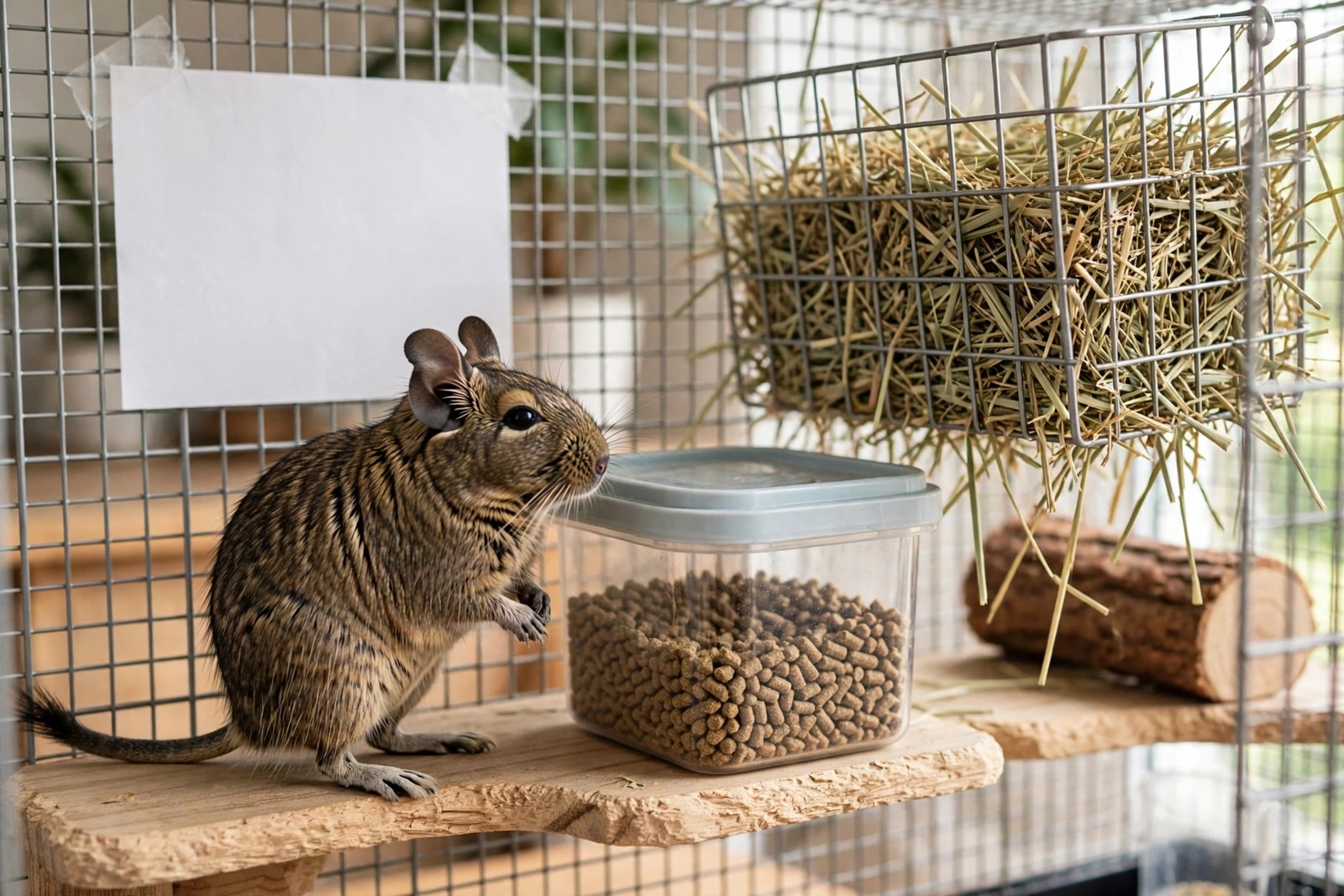
List his actual daily diet with amounts and times: unlimited grass hay available around the clock, the measured portion of his degu pellets — noting that the label must be checked for molasses and added sugars if a new bag is bought — and the specific safe vegetables and herbs you feed, named one by one rather than described as salad. Pre-portion pellets into labelled daily containers so the sitter never has to judge a scoop. Note his water bottle routine, the gnawing wood and chew items he is allowed for his constantly growing teeth, and anything individual: foods he refuses, where he hides food, and the normal pattern of his droppings and activity.
Add Monitoring and Emergency Guidance
Degus hide illness, so tell the sitter what to observe at each visit: eating hay and pellets normally, drinking at his usual rate, urinating as usual, staying active and responsive, and keeping his weight steady. The warning signs to phone about the same day are drinking or urinating noticeably more, sudden weight change, lethargy, reduced appetite, or eyes turning cloudy — cataracts are a known complication in degus with sugar problems and always warrant a vet conversation. Put your number, a backup contact, and the vet's details at the foot of the sheet, and keep a printed copy taped beside the cage as well as a digital one.
Make the Document Impossible to Lose
Review the sheet whenever anything changes — new pellets, new vet advice, a weight trend — and mark each new version clearly so an old printout cannot silently outlive it. Walk a new sitter through it once in person, pointing at the actual food containers, rather than simply handing it over. Most sitters follow instructions exactly; your job is making sure the instructions deserve that trust. KinsLe's Care Pass gives your chosen sitter time-limited access to this degu's care sheet alone — the sugar-free rule, the allowed and forbidden lists, and the warning signs — so the document reaches them clearly without opening up your pet's whole record.