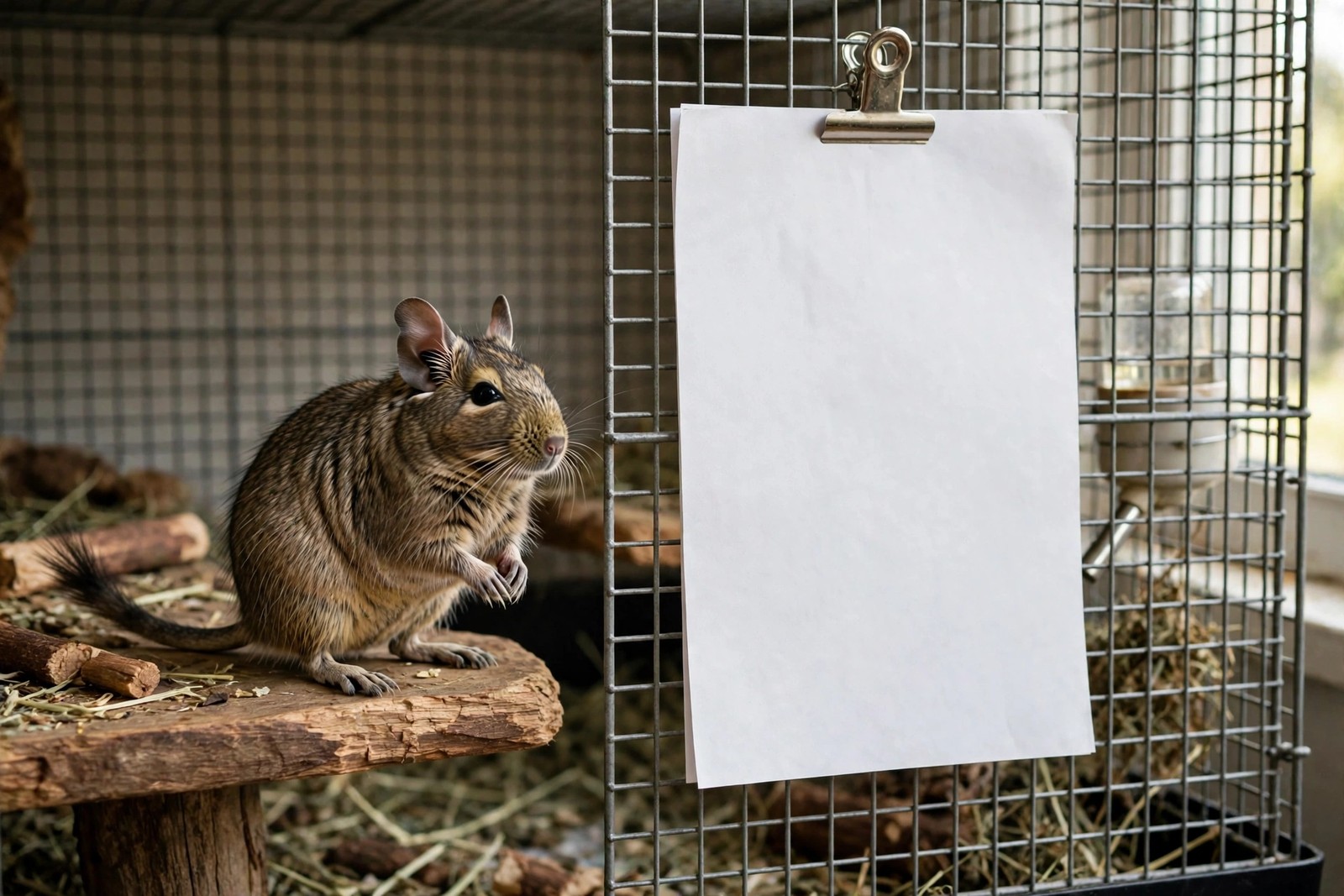
Think of the page as a handover brief for a busy, social rodent who is awake when you are. A degu profile has to do three jobs at once: say who this animal is, protect a diet with no room for sweet mistakes, and explain a group life that a sitter must not accidentally break up. Written well, one page lets a new vet or sitter feed, house, and watch your degu correctly from the first visit.
Identity and the Group Comes First
Open with name, age or best estimate, sex, colour and markings, and typical weight, then name the companions this degu lives with and must stay with. Degus are group animals, so the profile should state plainly that the group is cleaned, fed, and if necessary moved together, and flag any degu who is bullied at feeding time and needs food scattered in more than one place. Add your vet and an emergency contact under the identity block, not buried at the end.
The Diet Block a Sitter Cannot Misread
Degus are highly prone to diet-related trouble on sugary food, so write the diet as rules, not suggestions: hay available at all times, a measured portion of a degu-appropriate pellet, fresh water, and no fruit, sweet treats, or molasses-containing foods at all, with root vegetables only as the occasional extra you specify. List the exact vegetables this degu usually gets and how often, because a kind sitter improvising with banana or dried fruit is the commonest way a degu profile fails in practice.
Housing, Handling, and Daily Rhythm
Describe the home in one short block: a wide metal cage with levels, a solid running wheel, deep substrate for digging, and a sand bath for coat care. Note when this degu is active — degus bustle in the daytime and chat, chirp, and pile up together to sleep — and how handling works: scoop gently, support the whole body, and never lift by the tail, which can be seriously injured. Add favourite foods, usual hiding places, and the sounds that are normal for this group.
Health Watch Points for This Species
Close the page with what to watch: front teeth that grow continuously and need hay and gnawing material to wear down, weight and appetite changes, coat condition, and any drop in daytime activity. This is general information to guide observation, not a diagnosis — a degu who stops eating, loses weight, or goes quiet in the day should be seen by a veterinarian. When the sitter arrives, hand over the packet rather than a verbal summary: in KinsLe, your degu's Pet Passport holds the group details, feeding rules, and vet contacts they need from the first visit.