
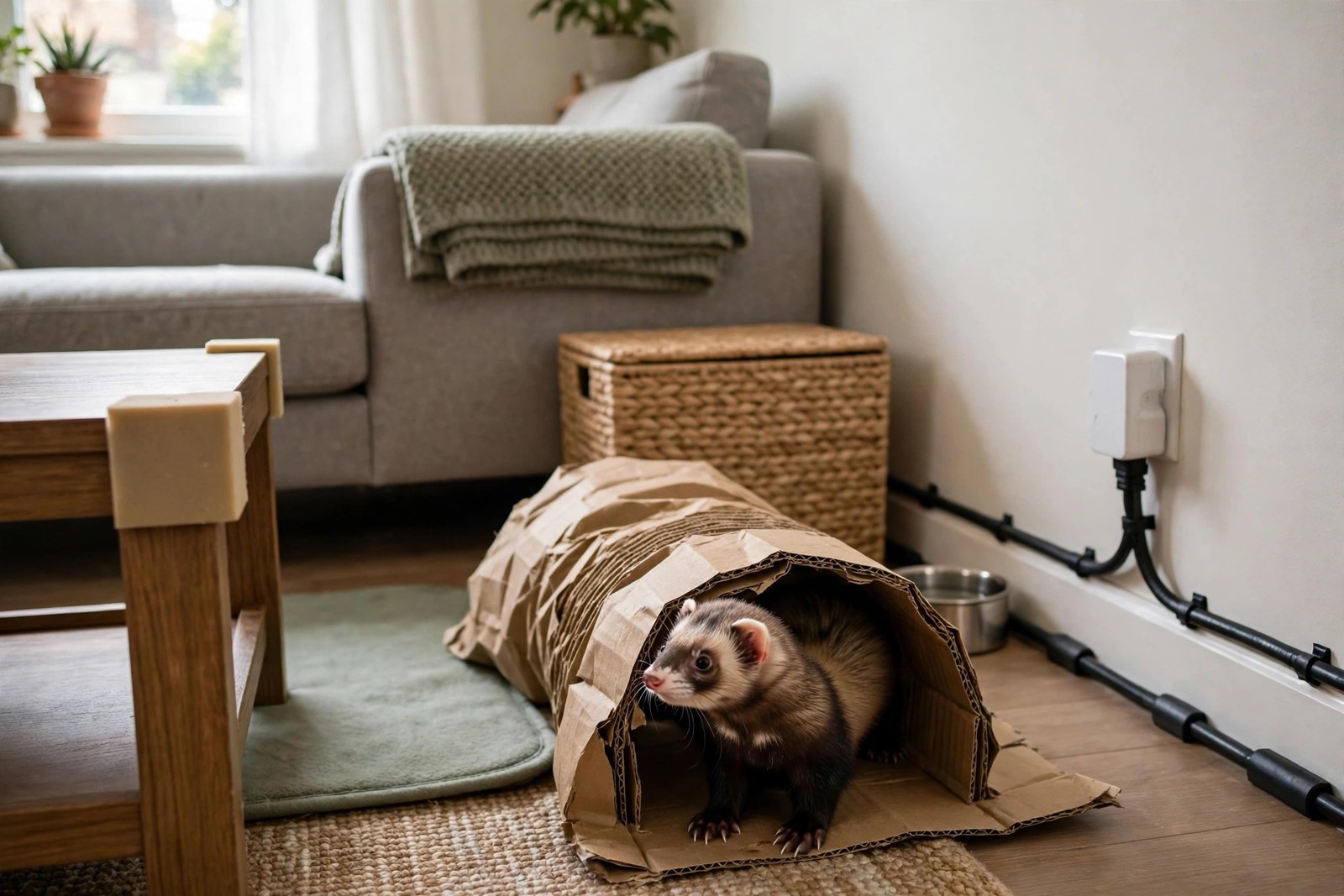
Ferret-proofing starts at floor level: seal every gap a ferret could squeeze into — behind appliances, inside reclining furniture, and under doors — then clear away cables and anything rubbery or foamy, plus every small item a ferret might chew or swallow. Ferrets are determined, flexible explorers, so the room is only ready when you can supervise the whole session and count everyone back into the cage at the end.
Think Like a Ferret: Low, Curious, and Relentless
Ferrets explore with their noses first and can flatten their bodies to slip through openings you would swear were too small. A useful rule of thumb is that if a ferret's head fits, the rest of them will usually follow. Crawl the room slowly before every new play space, looking at it from a few inches off the floor. You will spot hazards — the gap under the kitchen cabinets, the space behind the washing machine, heating vents with loose covers — that are completely invisible from standing height.
Seal the Escape Routes First
Block gaps behind and under appliances with boards or hardware cloth, fit a draft excluder or barrier under doors that do not close flush, and check that windows and any external doors are shut and latched. Reclining chairs and sofa beds deserve special attention: a ferret can climb inside the mechanism, where it is at serious risk if someone sits down or moves the furniture. Many ferret owners simply keep recliners out of play rooms entirely, or block access underneath and behind them completely.
Also check for holes in walls or skirting around pipes, and make sure other pets' access points, like cat flaps, are locked for the session.
Remove What Ferrets Should Never Chew
Ferrets are famous for stealing and gnawing soft, squishy materials, and swallowed fragments of rubber or foam are one of the most common causes of dangerous intestinal blockages. Before playtime, clear away:
- Foam, rubber, latex, and soft plastic items — remote buttons, erasers, earbuds, shoe soles
- Electrical cables, or cover them with hard cable protectors
- Houseplants, which may be dug up, chewed, or toxic
- Cleaning products, medicines, and small objects like buttons, coins, and hair ties
- Open toilets, buckets of water, and washing machine or dryer doors left ajar
Move anything precious or breakable too — a ferret will climb, drag, and stash with great pride.
Set Up the Play Session Itself
Scatter tunnels, boxes, ball pits, and dig boxes filled with safe material so the room rewards exploring in the open rather than hunting for trouble. Stay in the room the whole time; ferret-proofing reduces risk, it does not remove the need for supervision. When playtime ends, do a headcount as each ferret goes back, and do a quick sweep for stashed treasures before anyone leaves — ferrets hide things, and occasionally themselves, in remarkable places.
If a ferret does swallow something rubbery or foamy, or you cannot find one after a thorough search, treat it as urgent: blockages and trapped ferrets are exactly the situations where calling a veterinarian promptly matters.
Get Everyone Checking the Same Spots With KinsLe
Ferret-proofing only works when every household member checks the same danger spots the same way. On KinsLe, Family Sharing puts each ferret's profile in the hands of relatives you select — access belongs to the family you pick, and to no one beyond them.