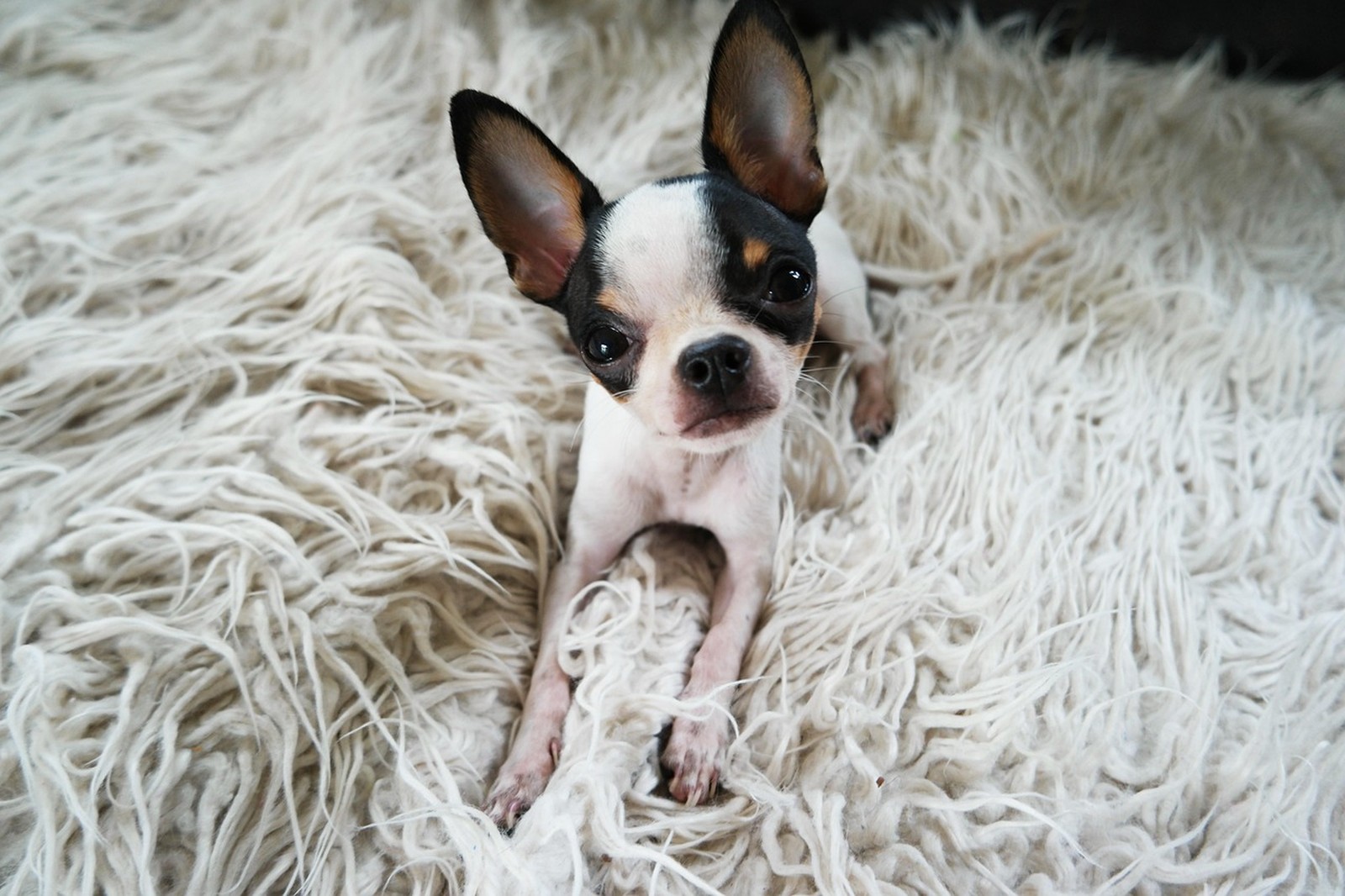
Treat socialisation as the headline quality
Look through the Chihuahua breed club's referrals and small-dog rescues, and ask any breeder one question early: how are these puppies being socialised? Chihuahuas become fearful and snappy mainly when the world stays small and frightening, so puppies should be raised inside a home, handled gently every day, and introduced gradually to visitors, children under supervision, household noises, and being carried and set down safely.
Meet the mother and, if possible, other adult dogs the breeder keeps. You want friendly, confident little dogs that approach you willingly, not a room of trembling adults barking from behind barriers. Trembling itself is common in the breed and can mean cold or excitement as easily as nerves, but the overall picture should be of dogs that cope with ordinary life, because that coping is what your puppy is most likely to learn.
Soundness over extreme smallness
Ask what health checks the parents have had, particularly knees and hearts, and how the breeder chooses the size of their breeding dogs. This is where Chihuahua searches most often go wrong: marketing that celebrates the tiniest possible puppies, with novelty labels for undersized dogs, usually means breeding from very small, sometimes less robust parents. A responsible breeder aims for a sound, sturdy little dog within the breed's normal range and will say plainly that health comes before teacup novelty.
Ask, too, about teeth. Chihuahuas' small mouths crowd teeth, and dental care is a real, ongoing part of owning one, so a breeder who already handles puppies' mouths gently and talks about tooth brushing and dental checks is preparing you honestly. Puppies should leave at an appropriate age with vet records, microchip details, and feeding guidance suited to a tiny stomach and frequent small meals.
Why rescue suits Chihuahuas so well
Chihuahuas are one of the breeds most commonly found in shelters and small-dog rescues, surrendered when owners move, when an elderly owner dies, or when an undersocialised young dog's barking and guarding overwhelm a home. Because the breed is long-lived, adopting an adult is no compromise: a healthy five-year-old Chihuahua may share well over a decade with you, with house habits and personality already visible.
Ask the rescue how this dog behaves with strangers at the door, other dogs, and being picked up, and whether they prefer a quiet adult home. Foster carers know which of their Chihuahuas is a confident social butterfly and which one bonds fiercely to a single person and needs a calmer household. Let them match you, and take the dental and vet records they hold, including any extractions or knee notes.
Red flags in a Chihuahua search
Leave a seller who advertises extreme tininess as the main selling point, who will hand over a very young puppy without questions, or whose adults live permanently in cages with little human contact. Puppies offered through brokers or shipped sight unseen from an unnamed breeder give you no way to judge temperament, socialisation, or the mother's welfare.
Also be cautious of the opposite problem in rescue settings: a dog described only as cute, with nothing said about handling, visitors, or other pets. A good rescue is specific about quirks, because a Chihuahua placed with honest information stays placed.
Carry the small details home
Collect your Chihuahua's vet and dental records, knee or heart notes from the parents if a puppy, microchip details, feeding routine, and honest notes on what they like and what startles them. For a dog this small, details like how they prefer to be lifted and which household sounds unsettle them genuinely shape their first weeks. On KinsLe, Transferrable Profiles keep those vet records, handling notes, and early-life details travelling with your Chihuahua, so everyone who cares for them handles them the way they are used to.