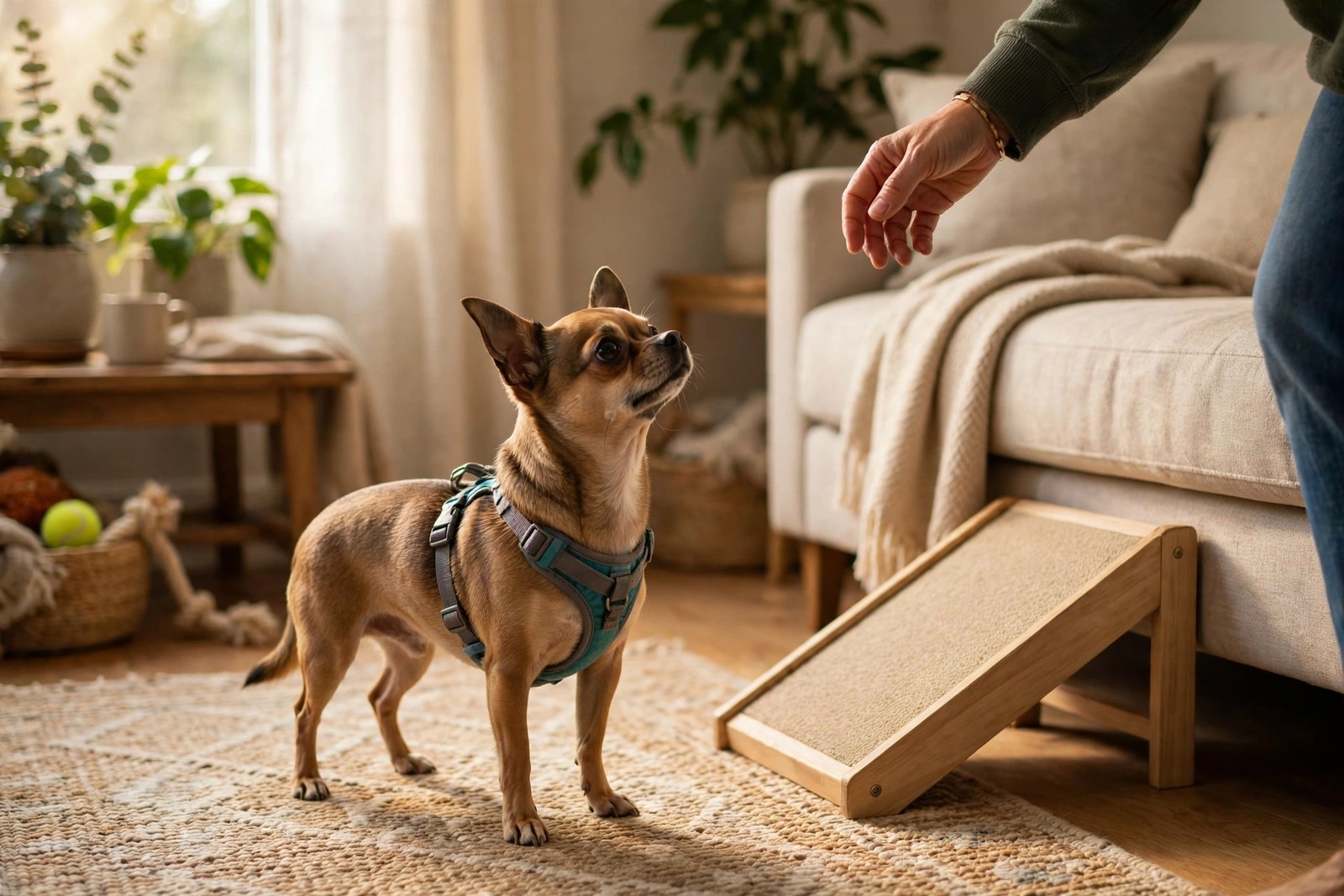
Chihuahuas usually live 14 to 16 years, and a healthy dog reaching beyond that range is not unusual. As one of the smallest breeds, a Chihuahua avoids much of the joint and heart strain that size brings to giant breeds, and that smallness is a genuine part of the long lifespan. Smallness cuts both ways, though: the same dog who may live 16 years is also fragile, quick to chill, prone to dental crowding and easy to injure in a fall or a scuffle. Longevity in this breed is built on protection as much as on feeding.
Teeth and Knees: The Two Standing Watch Points
A Chihuahua's tiny mouth crowds a full set of teeth into very little space, so plaque builds fast and dental disease is a recurring risk across the lifespan. Start tooth brushing young, use vet-advised dental care, and expect your vet to raise teeth at routine checks; mouth pain in a small dog quickly becomes reduced eating and weight loss. Knees are the second watch point: the kneecap can slip in this breed, sometimes seen as a brief skip or hop on a back leg. Report a recurring skip to a vet rather than treating it as a quirk, keep your dog lean to reduce joint load, and use ramps or steps for sofas and beds instead of repeated jumping down.
Feeding and Safety for a Very Small Dog
Feed little and often in measured amounts matched to your dog's actual weight, because a few extra grams of treats a day is a large percentage of a two-kilogram dog's intake. Very small puppies need regular meals without long gaps, since youngsters can be vulnerable to low blood sugar; ask your vet how to recognise weakness or wobbliness in a tiny puppy and what to do. For safety, use a harness rather than pressure on a delicate neck and throat, supervise time around larger dogs, teach children to sit on the floor and let the dog approach, and provide a warm layer outdoors in cold weather. Secure balconies, gaps in fencing and open stair edges with the same seriousness you would give a toddler.
The Long View: Records Across a Long Life
A dog who may live 16 years or more can move house, change vets and outlast family changes, and gaps in the record are where repeat tests, missed history and restarted routines creep in. Keep vaccinations, dental work, knee notes, weight and feeding routines recorded from puppyhood, and update them at every change rather than reconstructing them later. Senior Chihuahuas deserve the same promptness as puppies: report appetite changes, new limps, coughing or confusion to a vet rather than writing them off as age in a breed where age alone explains very little.
A lifespan this long makes continuity itself a form of care, especially if your Chihuahua is ever rehomed or cared for by family. KinsLe's Transferrable Profiles lets that complete history, from puppy feeding routines to senior vet notes, move with your Chihuahua to a new owner so nothing learned over those years is lost.