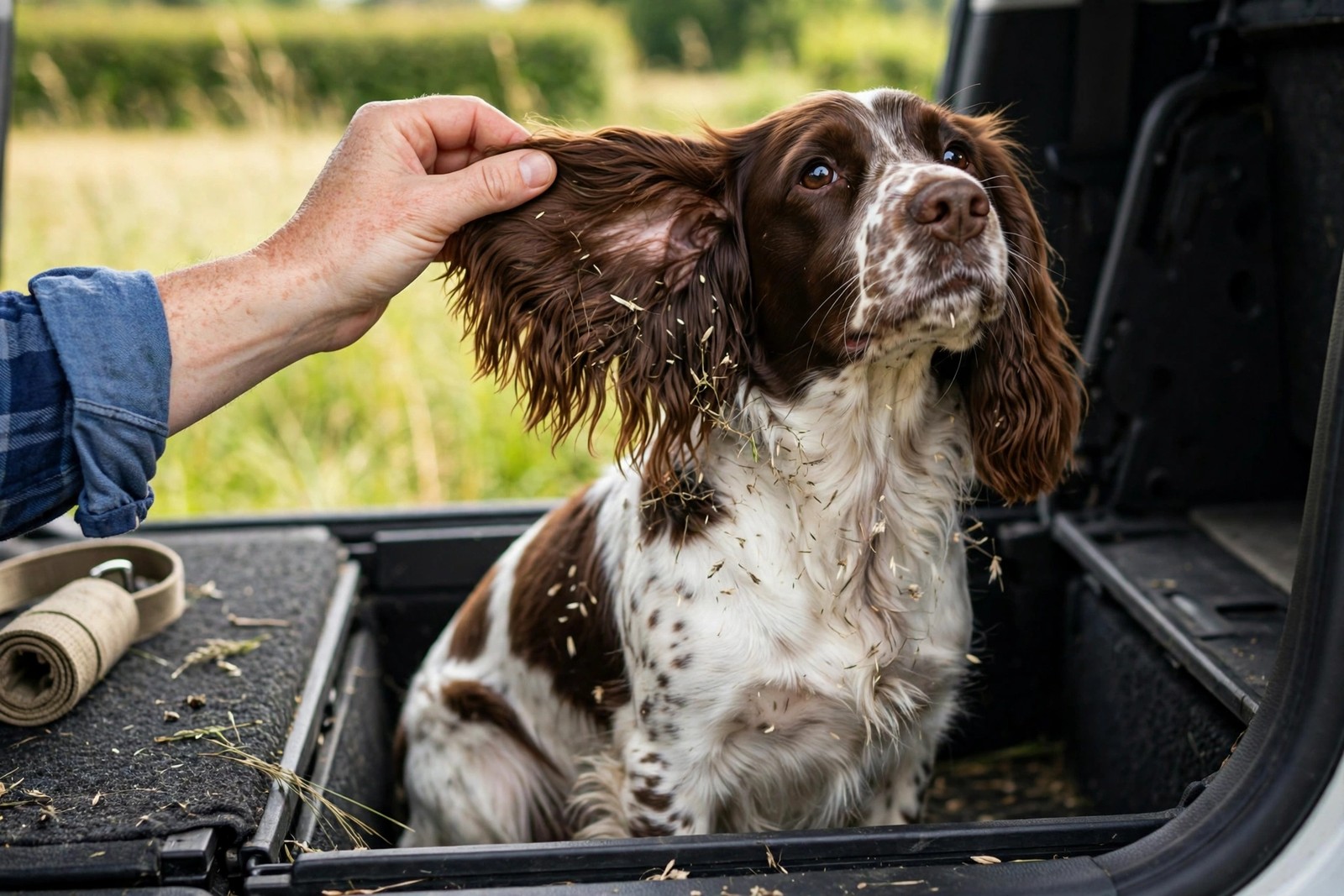
Spaniels were built to push through exactly the cover that sheds grass seeds, and their shape collects the harvest: long, heavy ear flaps that sweep the ground flora, dense feathering along the chest, legs, and belly, and a coat that holds a seed against the skin instead of dropping it. After a walk through long summer grass, the job splits cleanly in two — the coat, where your hands do the work, and the ears, where restraint matters more than thoroughness.
Work the Coat in Sections
Begin while the seeds still sit near the surface, ideally at the car or doorstep before your spaniel flops onto bedding and grinds them deeper. Part the coat in strips with your fingers and work through a territory at a time: neck and chest, the feathering behind each front leg, the belly line, the long hair on the hind legs and tail, and the backs of the ears where they brush the ground. Draw each seed out along the direction of the hair with fingers or a comb, holding the hair at its base when a seed sits in a tangle, so removal does not tug skin. Seeds in feathering often line up like beads along a strand, so run each decorated length of hair between finger and thumb twice; the second pass finds the one your eyes skipped.
Finish the coat with the hidden addresses seeds favour: both armpits, the groin, and between every toe, spreading each foot and looking into the webbing, since a seed there works inward with every step the dog takes on the way home.
The Ears: Light, Look, and Hands Off the Canal
A spaniel's ear flap is a curtain over a deep, angled canal, and that curtain both traps seeds and hides them. In the best light you have, lift the flap and look at the inner surface and the entrance of the ear. Any seed lying on the flap, tangled in the fringe around the rim, or sitting visibly at the outer opening can be lifted away with your fingers, drawn outward along the hair. That is the limit of home treatment. No cotton buds down the canal, no tweezers probing out of sight, no drops poured in to float a seed out. A pointed grass seed inside that canal moves inward with head movements and does not back out, and an instrument following it can drive it further or injure the canal wall long before it retrieves anything.
Brush the ear fringe itself carefully, since seeds caught in the long hair under the flap migrate toward the opening as the dog shakes and scratches through the evening.
The Signs That End the Home Session
Watch your spaniel for the rest of the day, not just at the doorstep. Repeated head shaking that was not there before the walk, a head held tilted to one side, frantic pawing or rubbing at one ear, yelping when an ear is touched, or a dog who goes quiet and guards his head all point to a seed where it should not be. Any one of those signs means a vet visit, promptly. Tell the practice it may be a grass seed in the ear and when the walk happened; that detail changes how quickly they will want the dog seen. Until then, stop other dogs bouncing him, keep the ear dry, and do not attempt one last look with a torch and tweezers — the examination belongs to someone with the right scope, lighting, and, where needed, sedation.
Lower the Odds Next Walk
In peak seed season, choose routes with shorter growth for the daily walk and save the meadow plunges for after the grasses have dropped their seed heads or been cut. A light brush-through at the doorstep on every summer return, always in the same order, catches the surface seeds that would otherwise spend the night travelling. Care Teams beside KinsLe's walk log flags a spaniel who shook his head twice, so a vet call is not forgotten by evening.