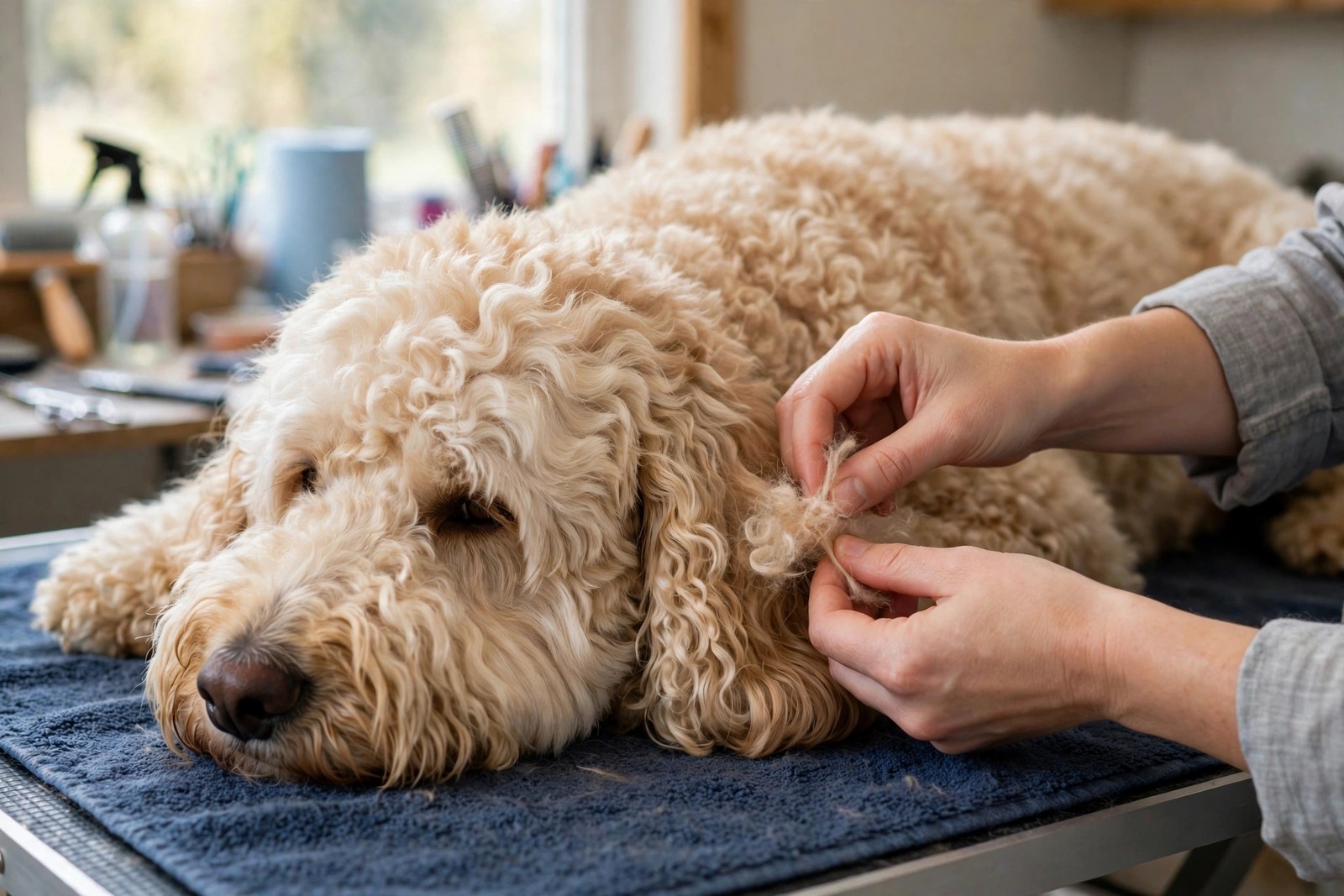
A mat is a tangle that has tightened into felt, and how you remove it decides whether your dog enjoys the process or learns to dread the brush. The governing rules never change: protect the skin by holding the base, work from the edges toward the middle, and recognise the point where a mat stops being a brushing job and becomes a clipping job.
Start With Fingers, Spray and a Held Base
Settle your dog somewhere comfortable with good light, and begin with the loosest mat you can find so the session starts with a win. Pinch the base of the mat between your fingers and hold it firmly against the skin — this one habit is what separates painless de-matting from pulling, because every tug you make is absorbed by your fingers instead of the skin. Mist the mat with a detangling spray and let it sit for a minute, then tease the fibres apart with your fingertips, starting at the outer edges and working inward, breaking the mat into smaller strands. Follow with a comb in short sections, again from the tips of the hair downward toward the base, never dragging the comb through the whole mat at once.
Splitting and Working Tight Mats
A dense mat that will not open with fingers needs to be split lengthwise — in the direction the hair grows — into two or three narrower strips using a mat splitter, then each strip teased and combed out separately. Work in short bursts of a few minutes per mat, with breaks and rewards, because de-matting is slow and a dog who has endured twenty patient minutes today will accept another session tomorrow, while a dog pinned down for an hour will not. Friction zones mat first and worst: behind the ears, in the armpits, around the collar line, the belly, and the backs of the legs, so check those by feel even when the coat looks fine on top.
Know When to Clip Instead
Some mats should not be brushed out at all. A mat that is pelted — felted flat and tight against the skin across a patch — traps moisture and pulls constantly, and the kindest, fastest fix is electric clippers run underneath it by a groomer, which is also far safer than scissors. Never slide scissors under a mat to cut it out: skin tents up into the mat in ways you cannot see, and mat-removal scissor cuts are a classic cause of emergency vet visits. See a vet rather than a groomer if the skin under a mat is red, weeping, smelly, hot or sore, or if there are signs of infection once the mat is off — severely pelted coats can hide all of that for weeks.
Prevent the Next Round
Mats form in dirty, damp, unbrushed coats, so prevention is mostly rhythm: brush drop-coated and curly breeds several times a week down to the skin — a slicker over the top while the undercoat felts beneath it is how coats that look groomed still mat — and always brush out before a bath, because water tightens existing tangles into concrete. Keep friction-zone hair sensibly trimmed if your dog mats there repeatedly. Putting those brush-outs on a repeating schedule in KinsLe's Care Teams, assigned and timestamped, keeps a ten-minute weekly habit from becoming a two-hour de-matting ordeal at the groomer's.