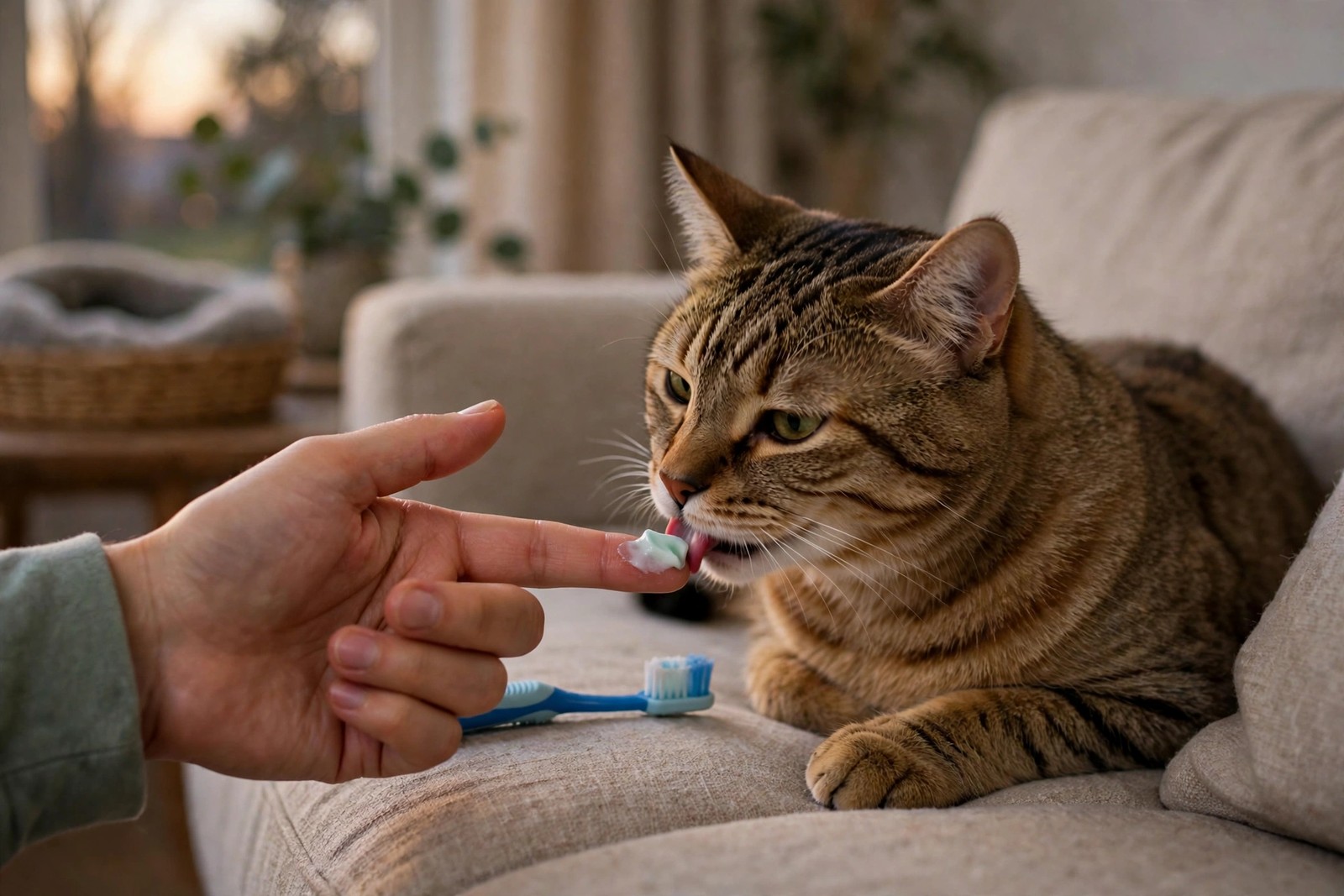
Most cats are not objecting to the brush itself. They are objecting to a hand arriving, a lip being lifted, and a strange object entering their mouth all at once. Split those surprises into separate, easy stages and the same cat often accepts brushing within a few weeks.
Stage One: Toothpaste as a Treat
Use only toothpaste made for cats, in a flavour your cat likes, and never human toothpaste, which is not meant to be swallowed and can contain ingredients unsafe for cats. Put a small smear on your fingertip and simply offer it to lick, once a day for several days, ideally at the same quiet time. Do not open the mouth at this stage. You are teaching one lesson only: this taste arrives with you, and nothing uncomfortable follows it.
Choose your moment carefully. A sleepy, settled cat on a familiar lap or perch is a far better pupil than a cat who has just been chased around the house. If your cat walks away, let her. Chasing converts a neutral exercise into a reason to hide next time.
Stage Two: Finger on Teeth and Gums
Once licking is eager, add the toothpaste to your finger and, with the other hand resting gently on the head, lift one side of the lip and rub along the outer surface of the upper canine and back teeth. Outer surfaces are where plaque builds most and, helpfully, the only surfaces most owners can realistically reach. Work for ten to twenty seconds, one side only at first, then stop and reward. Alternate sides on different days until your cat leans in rather than pulling away.
If the finger is tolerated but resented, wrap it in a small piece of damp gauze instead. The texture gives a little gentle abrasion and some cats prefer it to a bare fingertip moving in their mouth.
Stage Three: Finger Brush, Then a Real Brush
Slip on a finger brush with toothpaste and repeat the same short rub, starting with just two or three teeth. After several calm sessions, move to a small, soft-bristled cat toothbrush held at a slight angle to the gumline, using small circular movements on the outer teeth. Build toward thirty to sixty seconds total rather than aiming for a perfect clean on day one. Even brushing a few times a week is a meaningful step up from none, so protect the routine by keeping it pleasant.
Work in the same order each time — same side first, same final tooth — because predictability helps a cat relax. Finish with something your cat values, such as play with a wand toy or a favourite food morsel, so brushing predicts the good thing rather than replacing it.
When to Stop and When to Ask the Vet
Stop for the day if your cat flattens her ears, thrashes her tail, growls, or tries hard to escape. Ending one stage earlier tomorrow is faster progress than a wrestling match today. Kittens and newly adopted cats usually accept the stages quickly; an older cat with a sore mouth may not, and that reluctance is information, not stubbornness.
Ask your veterinarian to check the mouth if you notice persistent bad breath, red or bleeding gums, drooling, dropped food, pawing at the face, or a sudden refusal of hard food. Brushing supports dental health, but it does not replace an examination when those signs appear. In KinsLe, Care Teams lets you set the brushing days, note which stage your cat has reached, and mark each session complete, so progress builds steadily instead of restarting from scratch after a busy week.