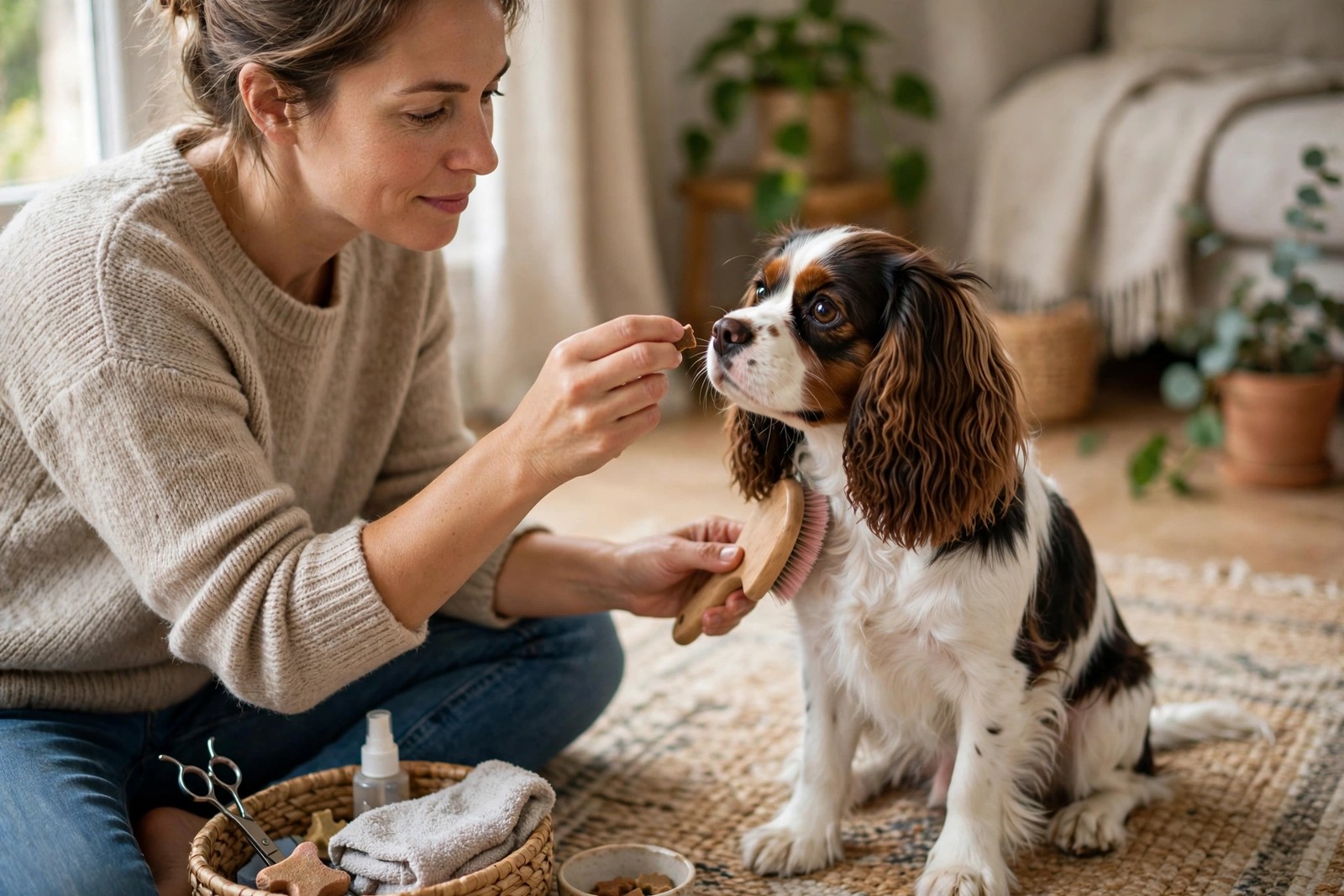
Dogs are not born enjoying grooming; they learn it, one small association at a time, and the learning sticks when every new sensation predicts something good and nothing is forced to completion. The method is desensitisation done properly: introduce each tool separately, at an intensity your dog can shrug at, pair it with food, and only raise the stakes when the current step is boring.
Step One: Handling Before Tools
Begin with touch alone, in a calm spot your dog already likes, for two or three minutes at a time. Stroke the areas grooming will need — back and sides first, then the trickier zones: chest, legs, paws, ears, tail and around the muzzle. Touch, treat, touch, treat, at a steady rhythm, and let your dog move away whenever he wants; a dog free to leave who stays is giving you honest information. Dogs who flinch at paw handling need that fixed first, in its own tiny steps — touch a paw, treat; hold it for a second, treat; gently spread the toes, treat — because nails cannot be trimmed safely on a dog fighting for his feet.
Step Two: Introduce One Tool at a Time
Bring in a single tool per phase, starting with it simply present. Let your dog sniff the brush on the floor and reward interest, then touch it against his shoulder for one second, treat, and build to single strokes in the direction of coat growth on the easiest part of his body. Clippers and dryers are sound problems before they are touch problems: play the noise across the room while treats appear, move it closer over several sessions, and only then touch the switched-off tool to his body, then the vibrating one briefly against a meaty area like the shoulder. Bathing comes last and separately — a dog can love the brush and still need his own gradual plan for water.
Keep Sessions Short and End on a Win
A few minutes, several times a week, beats a monthly marathon every time. Watch his body language rather than the clock: soft eyes, loose wagging and leaning in mean continue; lip licking, yawning, whale eye, freezing or moving away mean you are at or past his limit, so drop back a step or finish. Always finish after a success, however small, with a proper reward — a favourite game or a lickable treat buys goodwill for the next session. If your dog is already frightened of grooming from past experiences, progress will be slower and that is fine; a dog with a genuine phobia, or one who snaps, deserves help from a qualified behaviourist or a fear-free groomer rather than firmer handling.
Turn It Into the Real Routine
Once each element is accepted separately, start chaining them in the order a real groom happens — handle, brush, paws, then bath or dryer — still in shortened form, still paid, until the full sequence is unremarkable. Keep the same order, place and calm tone every time, because predictability is itself calming for dogs. Puppies should start this plan in their first weeks home, in sessions of seconds; adult rescues start wherever they are, with no deadline. Recording which stage your dog has reached in KinsLe's Care Teams means a partner, sitter or new groomer picks up at exactly his level instead of accidentally opening with the clippers.