
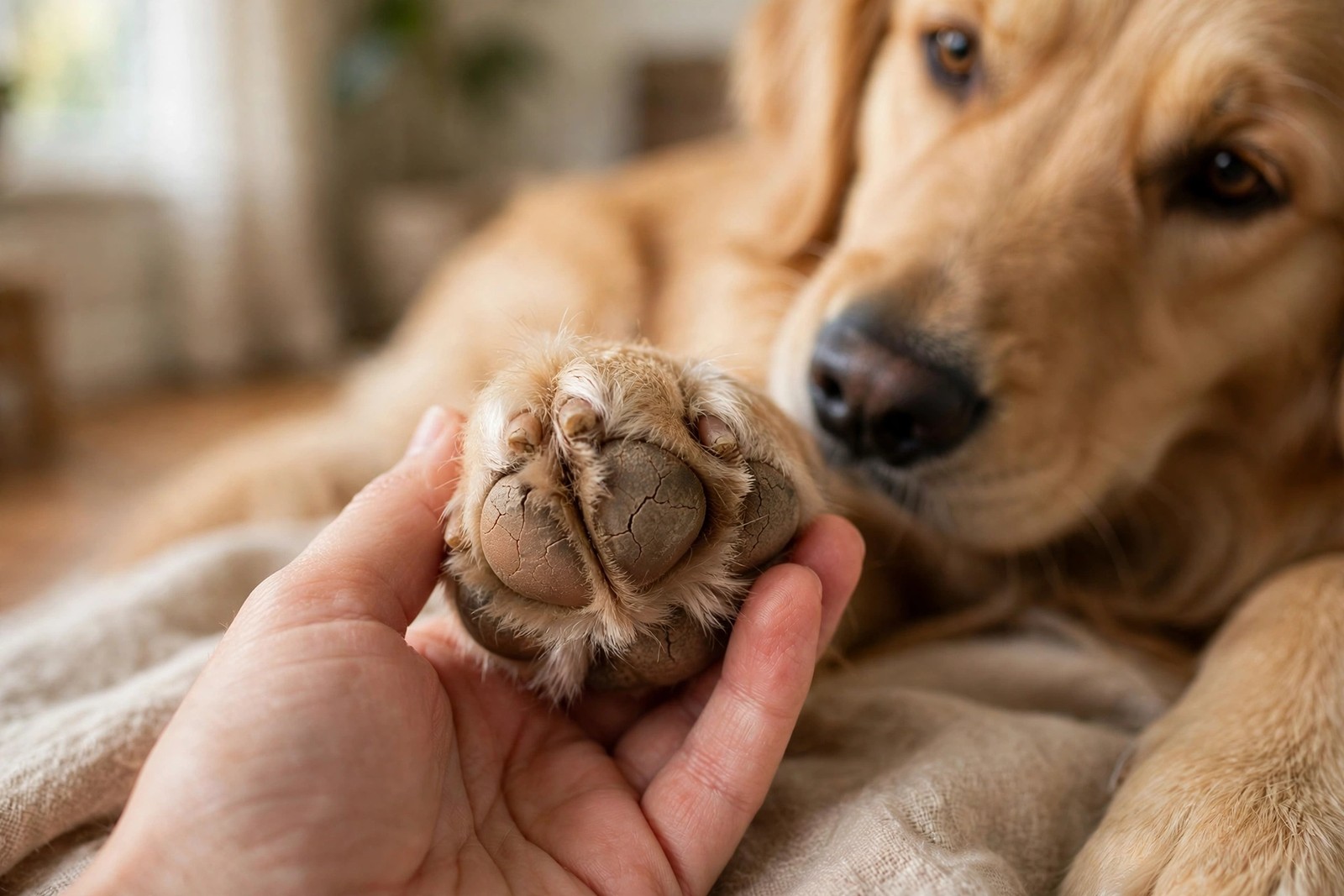
For mild cracked paw pads, rest and protection usually do the trick: keep your dog off rough or hot surfaces, apply a dog-safe paw balm to clean, dry pads, and give the skin a few days to recover. Most surface cracks from dry weather or hard ground heal well at home, but deep splits, bleeding, or limping are a different story and need a veterinarian.
Why Paw Pads Crack in the First Place
Paw pads are tough, but they are not indestructible. Hot pavement in summer can dry and even burn the surface, while winter brings ice, grit, and de-icing salt that draws moisture out of the skin and stings in small cracks. Long hikes on gravel, concrete-heavy city walks, and very dry indoor heating all wear pads down too. Some dogs simply have drier skin, and older dogs often have thinner, less elastic pads than they did as youngsters. Licking makes things worse: a dog who worries at a sore pad keeps it moist and irritated, which slows healing and can invite infection.
Home Care for Mild Cracks
Start by gently washing the paws with lukewarm water to remove salt, grit, or chemicals, then pat them completely dry. Apply a thin layer of a balm made specifically for dogs — products meant for human skin can contain ingredients that are not safe to lick, and dogs will absolutely lick their feet. If your dog goes straight for the balm, pop on a clean sock or bootie for a few minutes while it absorbs, or apply it right before a meal or a gentle game so they are distracted.
While pads recover, swap pavement routes for grass or soft trails, shorten walks, and skip the dog park's gravel run. Booties are worth trying for necessary trips over salted sidewalks — many dogs walk oddly in them for the first few minutes, then adjust. Reapply balm once or twice a day, and check the pads each evening so you catch a small crack before it deepens.
When Cracked Pads Need a Veterinarian
Home care has a clear limit. Book a vet visit if you see any of these:
- A crack that is deep, gaping, or bleeding
- Limping, reluctance to walk, or crying out when the paw is touched
- Swelling, redness spreading around the pad, or warmth in the foot
- Discharge, a bad smell, or pads that look worse after a few days of care
- A cut pad, torn pad, or something embedded in the foot
Also check between the toes while you are at it — redness or sores there can point to allergies or infection rather than simple dryness, and that changes what helps.
Finding Paw Care Help Near You
Some pads benefit from professional attention, especially thick, overgrown callused edges that crack more easily, or nails so long they change how the foot lands. Groomers who offer paw care can trim the fur between pads (which collects ice balls and grit), tidy nails, and moisturize as part of a routine groom. KinsLe's Pet Services Directory helps you find local groomers, vets, sitters, and trainers, so tracking down someone who offers proper paw care takes minutes instead of a string of phone calls. Pet Services Directory in KinsLe connects cracked-pad owners with nearby groomers for pad-fur trimming and nail tidying.