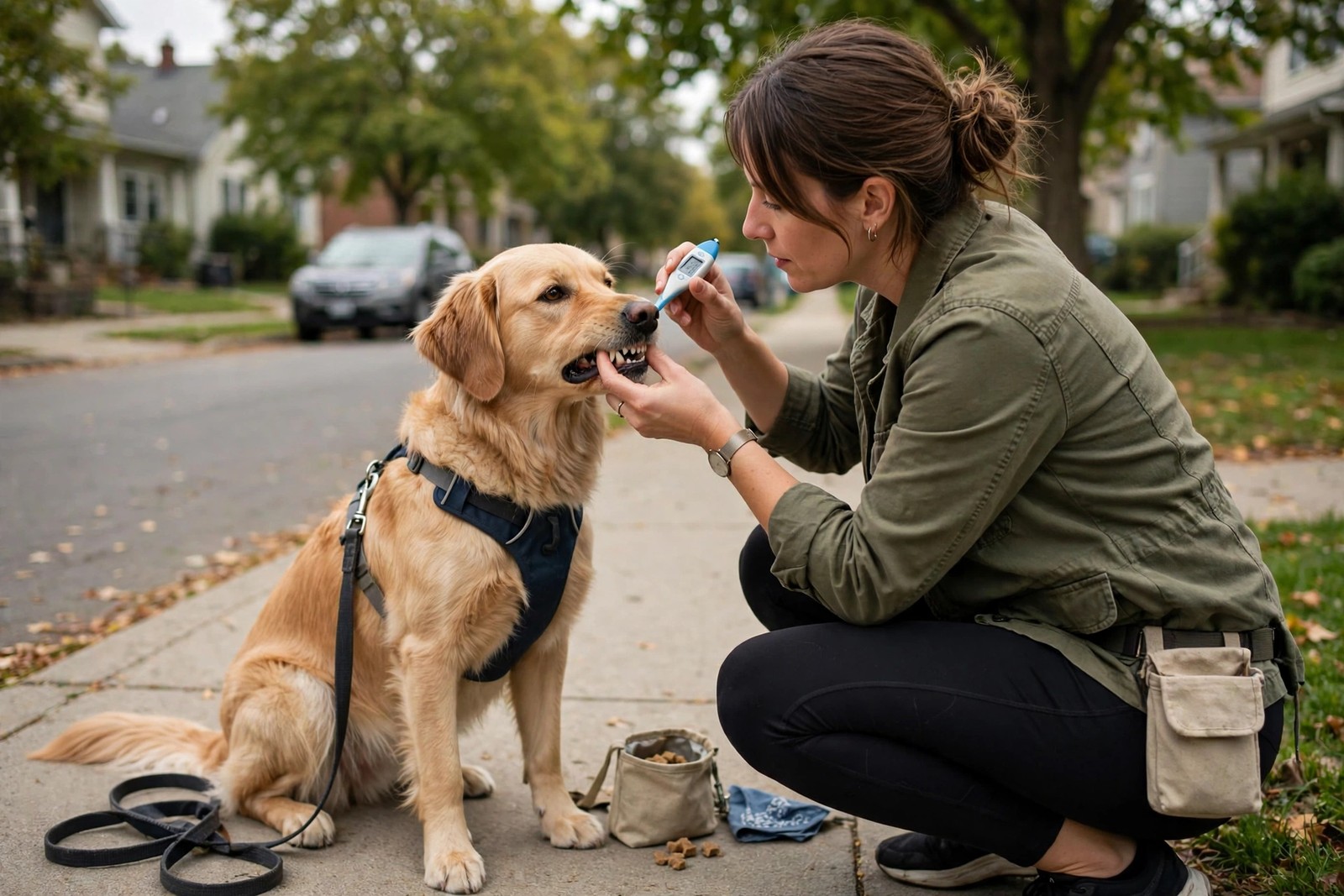
Build the skill at home in tiny, rewarded steps, long before a vet needs to do either check for real. A dog who has practised being handled around the mouth and rear end stays calmer when the thermometer or the dental examination arrives, and the vet gets a clearer picture. The method is cooperative: your dog can pause the exercise, and each small step earns a reward.
Setting Up Short, Safe Practice Sessions
Choose a quiet moment when your dog is settled but not sleepy, and work on a non-slip surface where he can move away freely. Prepare small, high-value treats before you begin and keep each session under a minute at first. One person handles and one person feeds if your dog is large or wiggly, because calm restraint from two relaxed people beats a wrestling match. End every session with something he enjoys, such as a short game or a sniff in the garden. Two or three brief sessions spread across a week teach more than one long drilling session.
Teeth Checks: From Chin Rest to Lip Lift
Begin with a chin rest: let him place his chin on your open palm and reward him for staying there, because a settled head position helps every mouth examination. Next, slide a finger along the outside of his cheek while his chin rests, then reward. Progress to lifting one lip briefly to show the side teeth, holding the lift for one second before the treat arrives. Build to a few seconds and to both sides over several sessions, then practise gently opening the front of the mouth only if he stays relaxed. If he pulls away, return to the previous step next session rather than pushing through resistance.
Temperature Checks: Practising the Handling, Not the Reading
Owners do not need to take a temperature at home for this training. What helps the vet is a dog who stands calmly while someone handles his tail and rear. Practise standing him in position with a hand resting on his hip, then a gentle tail lift held for two seconds, followed by a treat. Practise brief stillness while a second person stands behind him, since that is the shape of the real procedure. Keep his head occupied with a lick of food from your hand if he enjoys that. A dog who treats this handling as a known game is far easier to check accurately.
Practising With Other People and in Other Rooms
A dog who accepts handling from you may still tense up when a stranger in a consulting room reaches for his mouth, so extend the practice once the basics are solid. Invite a calm friend to repeat the chin rest and lip lift, rewarding each step as before. Practise on a raised non-slip surface similar to an examination table if he is comfortable with height. Move a session to the garden or the hallway so the behaviour travels beyond one room. Keep every new variation easy at first, because a skill that only works in the kitchen is not yet a skill the vet can use.
Carrying the Practice Into the Clinic
Tell the vet team what you have trained and which cues he knows, and ask them to use the chin rest where it helps. Ask how they prefer to approach each check so your home practice matches their handling. If a check still goes badly, ask what single step to work on before the next visit rather than attempting everything at once. Record his progress and any sticking points after each appointment. Those practice notes sit neatly inside his KinsLe Pet Passport alongside his visit records, giving every clinician a quick picture of how he handles examinations.