
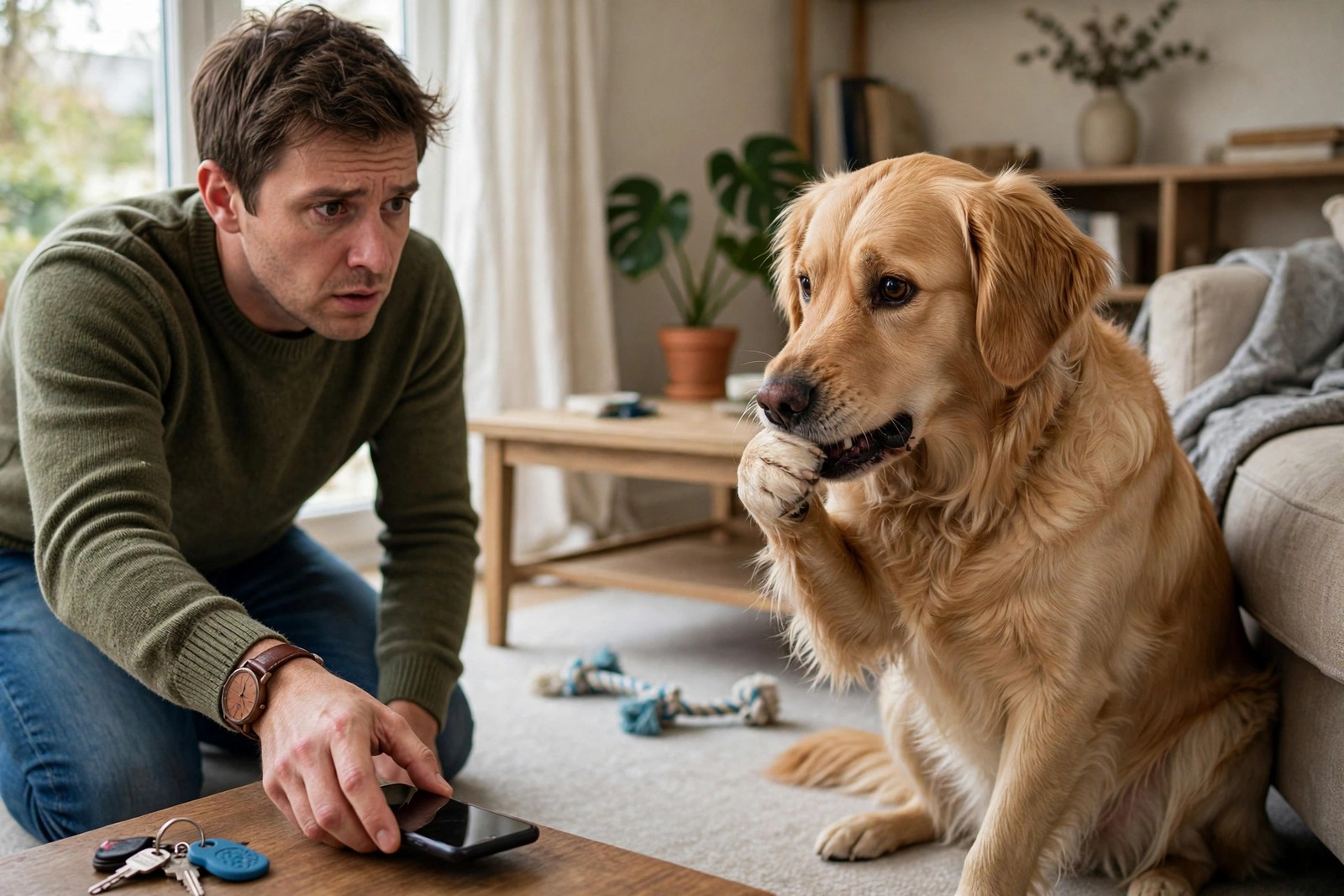
Yes — if your dog is pawing frantically at their mouth, gagging, drooling, coughing hard, making harsh or squeaky noises, or struggling to get air, treat it as choking and as an emergency. A dog who can still cough forcefully and breathe may clear a partial blockage on their own, but a dog whose gums look pale or blue, who is panicking, going limp, or cannot breathe needs emergency veterinary care immediately. Do not wait to see if it passes.
The signs owners notice first
Choking rarely looks quiet. Most dogs become suddenly frantic rather than sleepy. You might see repeated retching without bringing anything up, excessive drooling, pawing at the face, rubbing the mouth along the floor, or wide-eyed distress. Breathing may sound raspy, whistling, or unusually loud, or there may be almost no air moving at all despite effort in the chest.
A dog with a cough can usually still breathe between coughs and will settle; a choking dog is focused on one urgent problem — getting air. If you are unsure, err on the side of emergency care. Minutes matter more than certainty.
What to do in the moment
Stay as calm as you can and keep your dog as still as possible. Do not reach blindly into the throat or sweep a finger around hoping to hook something out. That can push an object deeper, damage delicate tissue, and frightened dogs — even gentle ones — may bite hard without meaning to.
The safest action for most owners is immediate transport: get to the nearest veterinarian or emergency clinic right away, and call ahead if you safely can so the team can prepare. Have another person drive if possible, keep the car cool, and do not offer food or water.
Common things dogs choke on
Prevention starts with knowing the usual culprits. Balls that are just small enough to lodge at the back of the throat are a classic risk, especially for large, enthusiastic retrievers. Chewed-off chunks of toys, rawhide pieces, bones that splinter or break, socks, corn cobs, children's small toys, and hard treats swallowed whole can all block an airway.
Choose toys too large to fit entirely in your dog's mouth, supervise chew time, and discard toys once pieces come off. Puppies explore with their mouths, and senior dogs can swallow pieces they once managed — supervision matters at every age.
After the scare
Even if your dog coughs something up and seems fine, call your veterinarian for advice. An object can scratch the throat, cause swelling, or leave a fragment behind, and a dog who was struggling to breathe should be checked. Watch that day for renewed coughing, drooling, reluctance to eat, or tiredness, and seek care promptly if any appear.
Write down what your dog may have swallowed and when it happened. That timeline helps the team, and helps you remove the right hazard afterward.
Keep emergency details ready with Pet Passport
In a choking scare, the person holding the leash may be a partner, sitter, or neighbor who does not know your vet's number, your dog's medications, or their allergies. KinsLe's Pet Passport is the records packet for your dog — vaccines, medications, allergies, and documents in one place that can be shared with vets and sitters. Keeping it current means whoever is with your dog can share key details fast while you focus on getting help. When seconds feel very long, that preparation is a real gift. Whoever is holding the leash can open the Pet Passport file on KinsLe and hand the emergency clinic your dog's allergy list, current medications, and regular vet's number without calling you first.