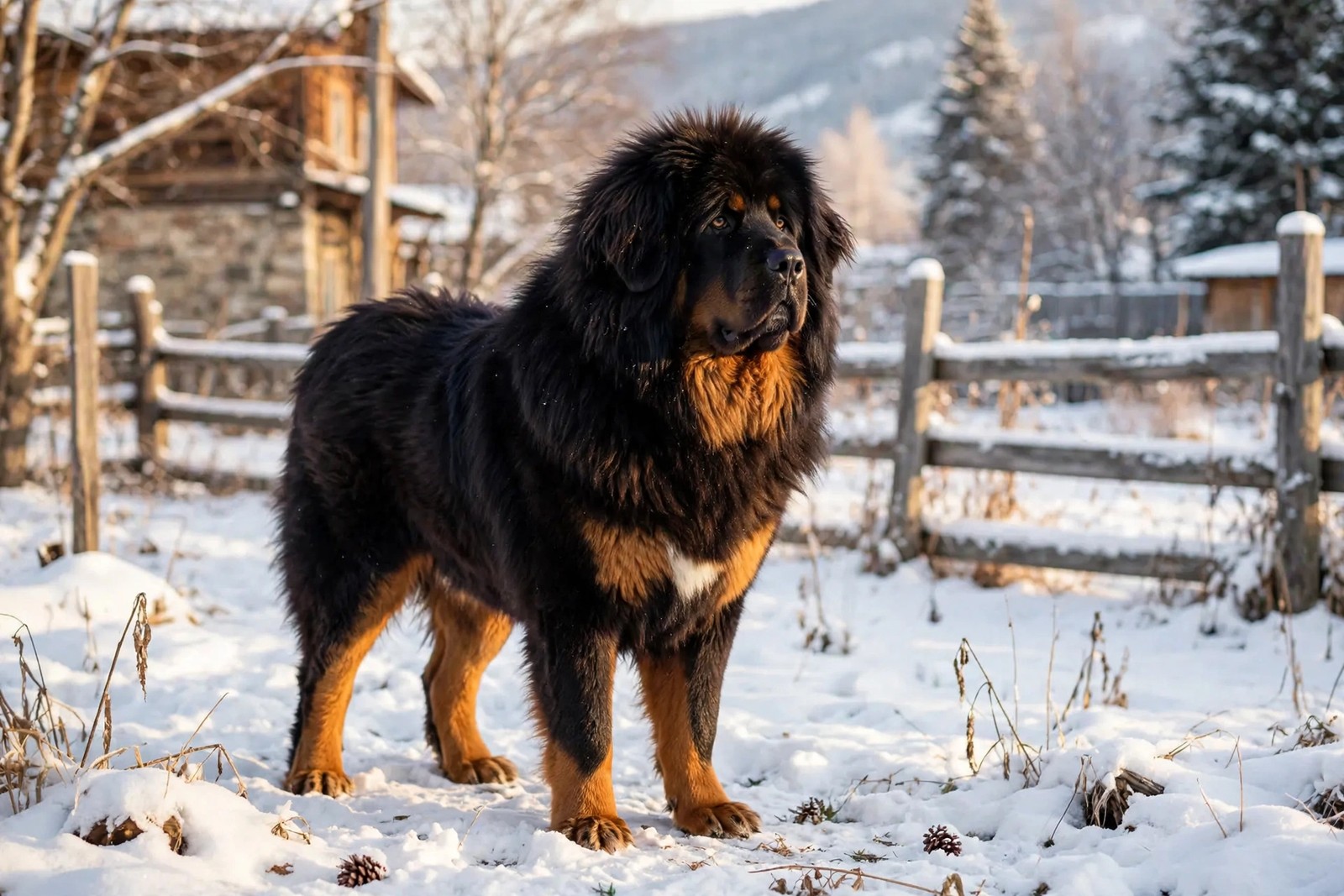
Size Is the Risk Multiplier in This Breed
Almost every Tibetan Mastiff health concern traces back to the dog's scale and slow development. Hip dysplasia and elbow dysplasia are the headline orthopedic problems: poorly formed joints in a dog who may carry enormous adult weight wear unevenly, producing stiffness after rest, a rolling or swaying gait, reluctance to climb, front-leg lameness after exercise, and eventually chronic pain that shows up as a shorter temper and shorter walks. Because this breed matures late, growth should be fed and exercised with restraint, steady nutrition rather than rich feeding to push size, no repetitive jumping or long forced runs for youngsters, and honest weight checks, since a heavy adolescent loads unfinished joints hardest. Choosing a puppy from parents with hip and elbow scores is the single most useful step a buyer can take.
The Puppy Nerve Condition Owners Should Know
Canine inherited demyelinative neuropathy is a breed-associated condition in which the insulation around nerves develops abnormally, and affected Tibetan Mastiff puppies typically begin showing hind-limb weakness in the first couple of months of life, progressing to a wobbly, uncoordinated back end and difficulty standing. It is not something an owner can exercise or feed away, and any puppy in this breed who steadily loses strength in the rear rather than gaining it needs veterinary assessment early, both for the puppy's own care plan and because the information matters to the breeder's programme. Breeders who test and talk openly about their lines are doing this rare, powerful breed a service, and buyers should ask the question directly rather than assuming silence means absence.
Thyroid and Eyelids: the Quieter Entries
Hypothyroidism is reported in Tibetan Mastiffs, typically surfacing in middle age as weight gain on unchanged food, lethargy in a breed that is already reserved, thinning of the spectacular coat, and skin that becomes dull or infection-prone. In a dog famous for sleeping and shedding dramatically once a year, those signs are easy to misread as normal Mastiff behaviour, which is why unexplained change deserves bloodwork rather than a shrug. Entropion, where the eyelid rolls inward so hair rubs the surface of the eye, causes watering, squinting, and pawing in a breed with heavy facial folds; a persistently wet, half-closed eye should be examined, because ongoing rubbing can damage the eye's surface. Ear infections and skin flare-ups also occur under that dense coat, so parting the fur to look at skin during grooming is worthwhile.
Managing a Guardian's Health Over a Long Growth
Care for this breed is patient and unglamorous: measured feeding through a long adolescence, joint-friendly exercise on good footing, regular hands-on checks under the mane, and prompt attention to gait change at any age. A Mastiff who stops wanting to rise, cries on stairs, or develops dragging hind legs needs care without delay, and collapse or inability to stand is an emergency in a dog this size, where moving him is itself a project. Ask breeders for joint scores and straight answers about nerve problems in the line. Held together in KinsLe's Pet Passport, a Tibetan Mastiff's joint images, thyroid panels, and eye notes form one complete packet, sparing any new clinic from reconstructing a giant file from fragments.