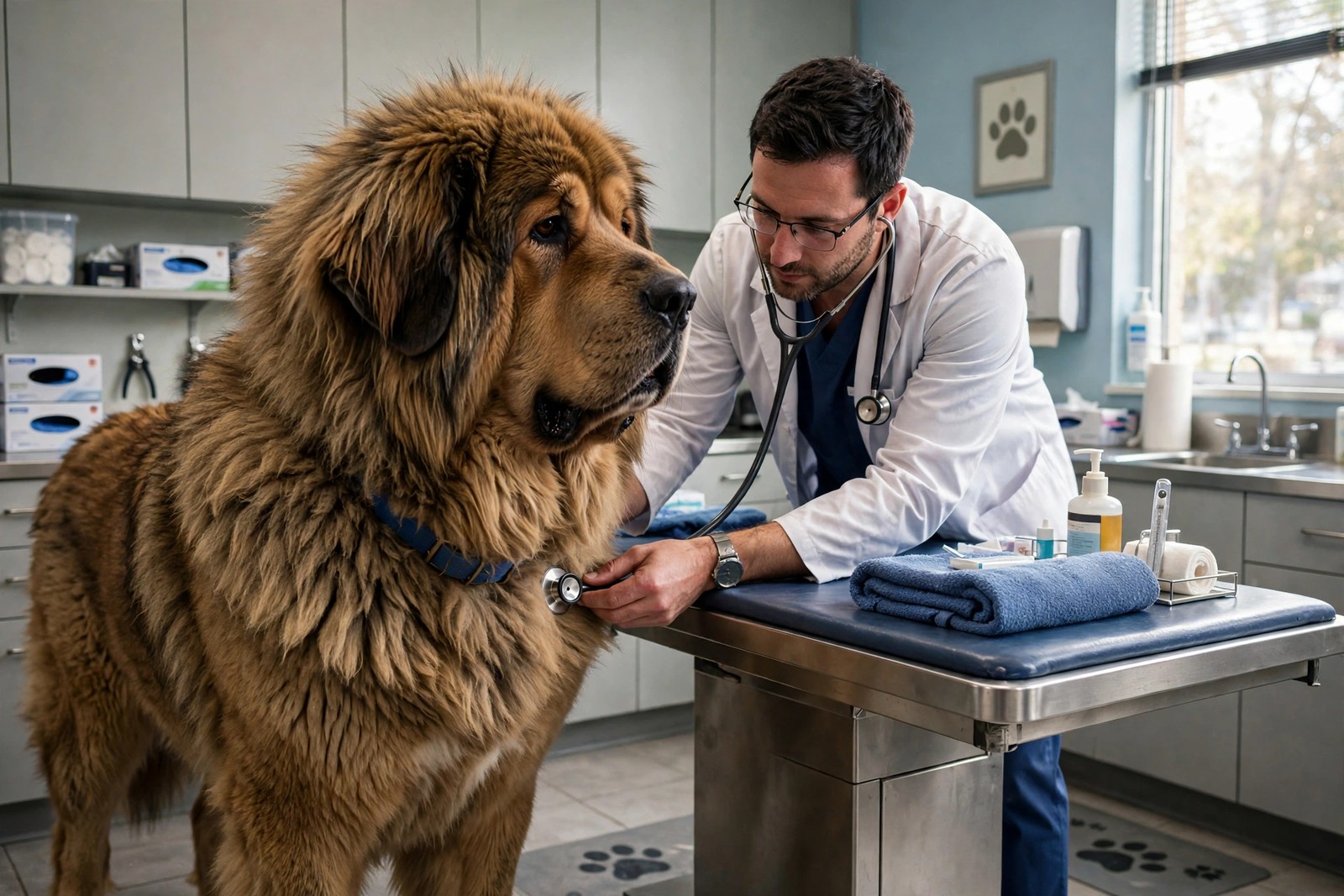
The yearly rhythm for a Tibetan Mastiff
A healthy adult Tibetan Mastiff should see a vet once a year for a complete routine checkup. Puppies need a closer schedule in their first months, and older Mastiffs do better with visits twice a year. This breed matures slowly for a giant, so the annual exam changes character over time: early visits watch growth plates and joint development, middle years focus on weight and maintenance, and senior visits look harder for the quiet changes that large guardian breeds hide well.
Why size and temperament shape this breed's visits
A Tibetan Mastiff can outweigh his owner, and many are wary of strangers handling them. That combination means the quality of the exam depends on preparation. A vet needs to feel hips and elbows, listen to the heart, open the mouth, and look into ears buried under heavy coat, all of which goes better when the dog has been taught to stand, accept touch, and wear a muzzle calmly if asked. Tell the clinic the dog's size and temperament when booking so they can allow time and space rather than rushing a nervous giant through a crowded waiting room.
What the vet is watching for in a Mastiff
Joint health leads the list. Hips and elbows carry enormous load in this breed, so the vet will watch the dog rise, walk, and turn, and ask about morning stiffness, reluctance on stairs, or a shortening walk. Thyroid function is another breed talking point, since low thyroid activity can show up as weight gain, coat thinning, and a flatter, less energetic dog — changes owners often blame on age or the breed's natural calm. Screening blood work may be suggested when those signs appear or as a senior baseline.
The exam also covers skin folded under that thick mane, ears that trap moisture, eyes, teeth strong enough to crack hard chews, and body condition. A Mastiff's heavy coat hides both ribs and lumps, so hands-on checking matters more than looking.
Puppies, breeding-age dogs, and seniors
Mastiff puppies grow fast on a frame that finishes late, so early visits track weight gain, limb straightness, and whether exercise is being kept steady rather than forced. This is not a breed to jog with a youngster or let leap from height while joints are forming, and the puppy visits are the place to check that growth is even.
Seniors need the twice-yearly pattern. Large breeds age faster than small ones, so a Mastiff who was fine at the last annual visit can change a lot in twelve months. Senior screening often includes blood and urine tests, a careful pain assessment, and a frank talk about flooring, ramps, and keeping muscle on a dog whose guardian instincts still say patrol while his joints say rest. Sudden weight loss, a new cough, drinking far more, or struggling to rise should never wait for the next routine slot.
Making a giant dog's checkup go well
Rehearse the exam at home: brief sessions touching paws, ears, lips, and tail, rewarded heavily, so clinic handling feels familiar. Keep a running note of appetite, sleep, mobility, and any coat or behaviour change, because a reserved breed rarely performs its symptoms on demand in an exam room. Weigh him where facilities allow, since guessing the weight of a dog this size leads to errors in everything from food amounts to parasite prevention planning.
All of that history is far more useful when it is not scattered across practices and paper slips, which is why KinsLe's Pet Passport suits a Tibetan Mastiff: one portable record of exams, screening, and weight that follows the dog wherever he is seen.