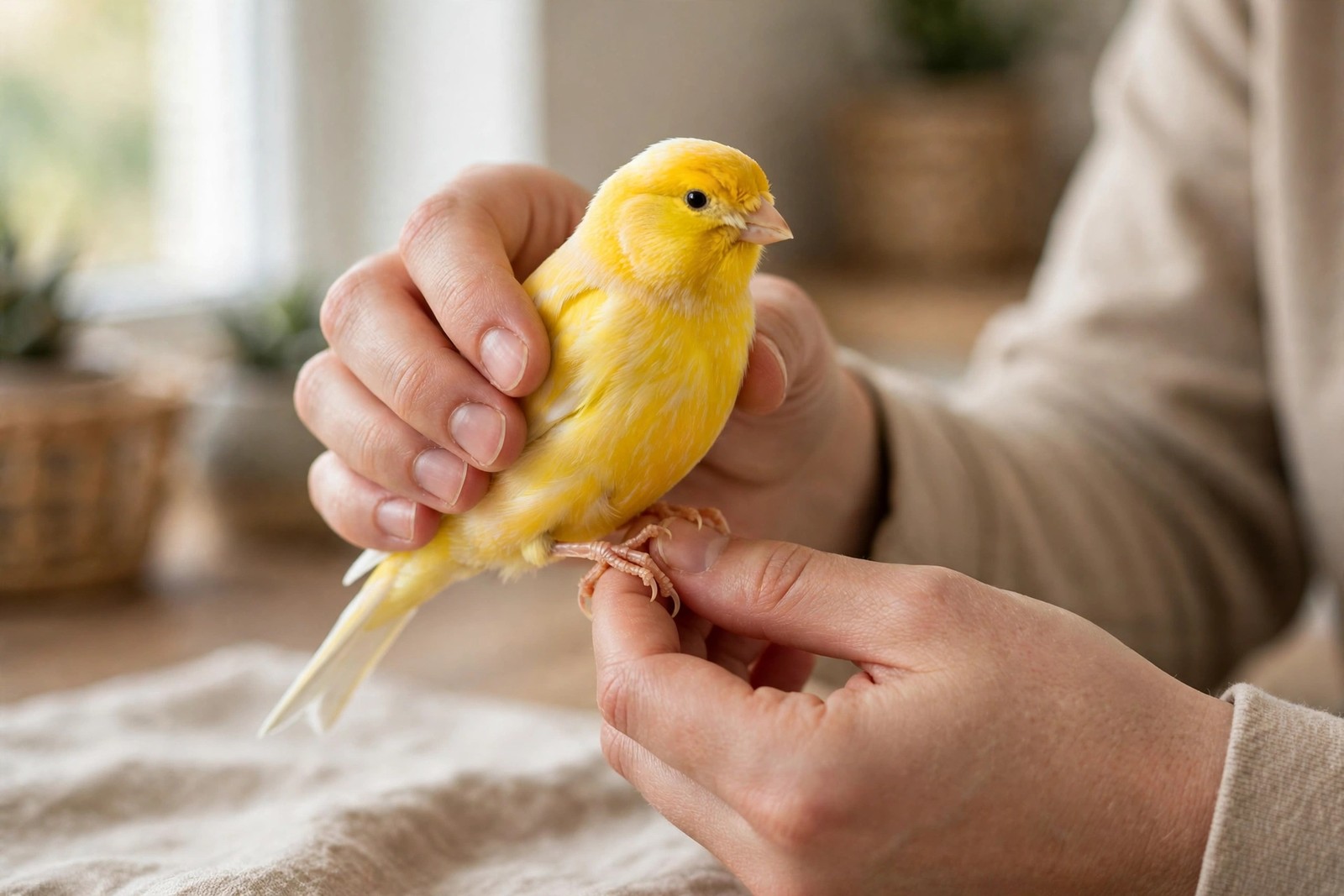
A good home check for a canary is mostly skilled looking, because canaries are too small and stress-prone for much handling. Watch first from a distance: a healthy canary is upright, bright-eyed, active, singing (males), eating, and breathing quietly with the tail still — no bobbing. Then look closely at the details: eyes clear without discharge, nostrils clean, beak smooth and aligned, feathers sleek rather than fluffed, the vent clean, and feet and legs smooth — raised, crusty scales on the legs can indicate scaly-leg mites. A healthy weight feels like a breastbone you can detect but that is padded with muscle, not a sharp keel with hollows either side.
Weighing and the Droppings Check
If your canary is hand-tame enough, a weekly gram-scale weight (on a small perch or in a container) is the single most useful home check there is — a canary weighs so little that a gram or two of loss is a real signal, and birds hide illness until it is advanced. Fresh cage paper daily makes the other great check free: droppings should be consistent in number, form, and colour on your bird's normal diet; a sudden drop in number means the bird is eating less, which in a canary is an early-warning sign worth acting on the same day. Keep handling brief and gentle, never squeeze the body (birds breathe by expanding their chest), and cup the bird only as long as needed. Any handling session that leaves the bird panting or fluffed for more than a few minutes was too much — observation is the canary owner's main instrument.
Working With Your Vet
With a canary, your home check feeds straight into the vet visit: note the day you first saw the tail-bob, the fluffed posture or the drop in song, and what else shifted at the same time — a new seed mix, a moult, a colder room. Only an avian vet can diagnose what those signs mean, but a short video of the breathing that worried you, filmed from outside the cage, shows the vet exactly what you saw at home instead of a bird who has gone quiet in a strange surgery.
A canary who is fluffed, sitting on the cage floor, breathing with tail-bobbing or an open beak, or has stopped eating needs an avian vet the same day — small birds decline very fast.
For a canary, the log that matters is short and specific: the weekly gram weight, how much seed and soft food disappeared, what the morning droppings looked like on fresh paper, and whether he sang. A two-gram slide across a fortnight or three quiet mornings in a row is easy to miss from memory and unmistakable written down, and an avian vet can do far more with that run of figures than with a worried summary at the appointment. Recheck what 'normal' means after a moult, a cage move or a new cage-mate, because each one resets the baseline your next check is judged against.
Kept in KinsLe's Pet Passport, that log of weights, droppings and vet visits travels with your canary as a single records packet you can hand over at any appointment.