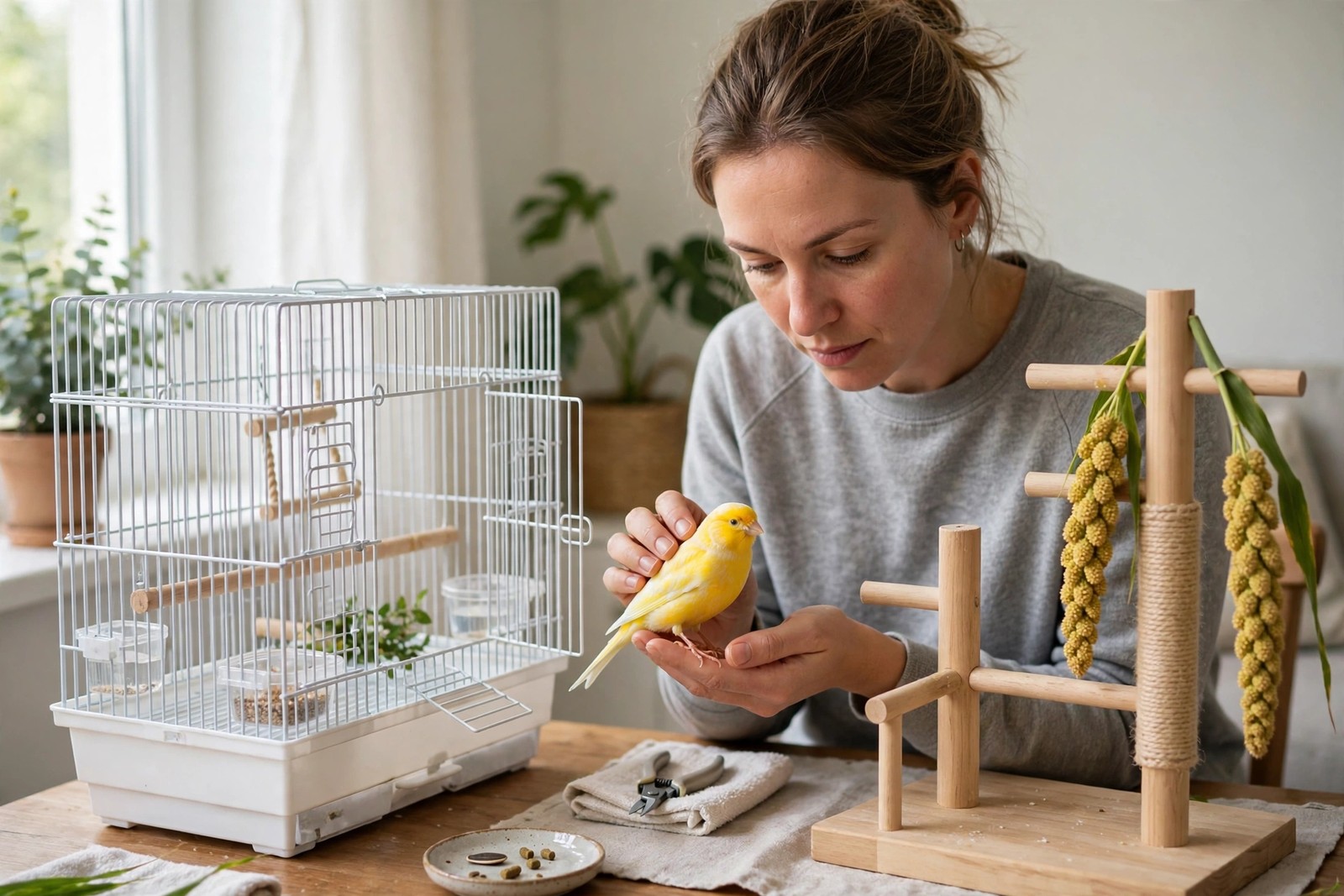
In a canary, illness whispers before it shouts. A bird who stops singing (in a male who normally sings), sits fluffed with feathers puffed and head tucked, sleeps during the day on two feet with eyes closing, or moves down to the cage floor is unwell until proven otherwise. Add reduced appetite, fewer or changed droppings, discharge around the eyes or nostrils, wheezing or clicking sounds, tail-bobbing with each breath, and weight loss you can feel as a sharper breastbone. In a bird this small, 'quieter than yesterday' is a real finding.
What To Do the Day You Notice
Act the same day: keep the bird warm (a hospital cage or one side of the cage warmed gently, around the mid-20s °C, with room to move away from the heat), quiet, and with easy access to food and water at floor level if the bird is weak. Weigh the bird if you can do it without a struggle; note droppings and whether the bird is eating at all, because a canary who is not eating is burning reserves it does not have. Then call an avian vet — canaries deteriorate in hours, not days, and many of the causes (infections, mites affecting the air sacs, egg-binding in hens) need professional treatment quickly. Avoid handling, home remedies, and shop-bought antibiotics while you wait; warmth, quiet, food access, and speed are the owner's contribution.
Working With Your Vet
For a canary, the most useful thing you can hand a vet is a short, dated account of the change: when the singing stopped, when the bird moved to the floor or began tail-bobbing, what the droppings looked like on each day, and any weight you managed to record in grams. Canaries are too small for guesswork from memory, and that sequence helps the vet judge how fast the illness is moving. Only an examination can produce a diagnosis; your notes decide how much of the story the vet gets to work with.
A fluffed, floor-sitting, non-eating, or tail-bobbing canary is a same-day avian vet case — in a bird of a few grams, waiting until tomorrow is a genuine risk.
After this episode, keep a brief baseline for your canary while it is well: its usual song pattern, how much seed disappears in a day, normal droppings, and a weekly weight. That healthy baseline is what makes the next change obvious on day one instead of day three. With KinsLe's Pet Passport, those song, weight and droppings notes stay together beside your canary's vet history, ready to hand over at the appointment.