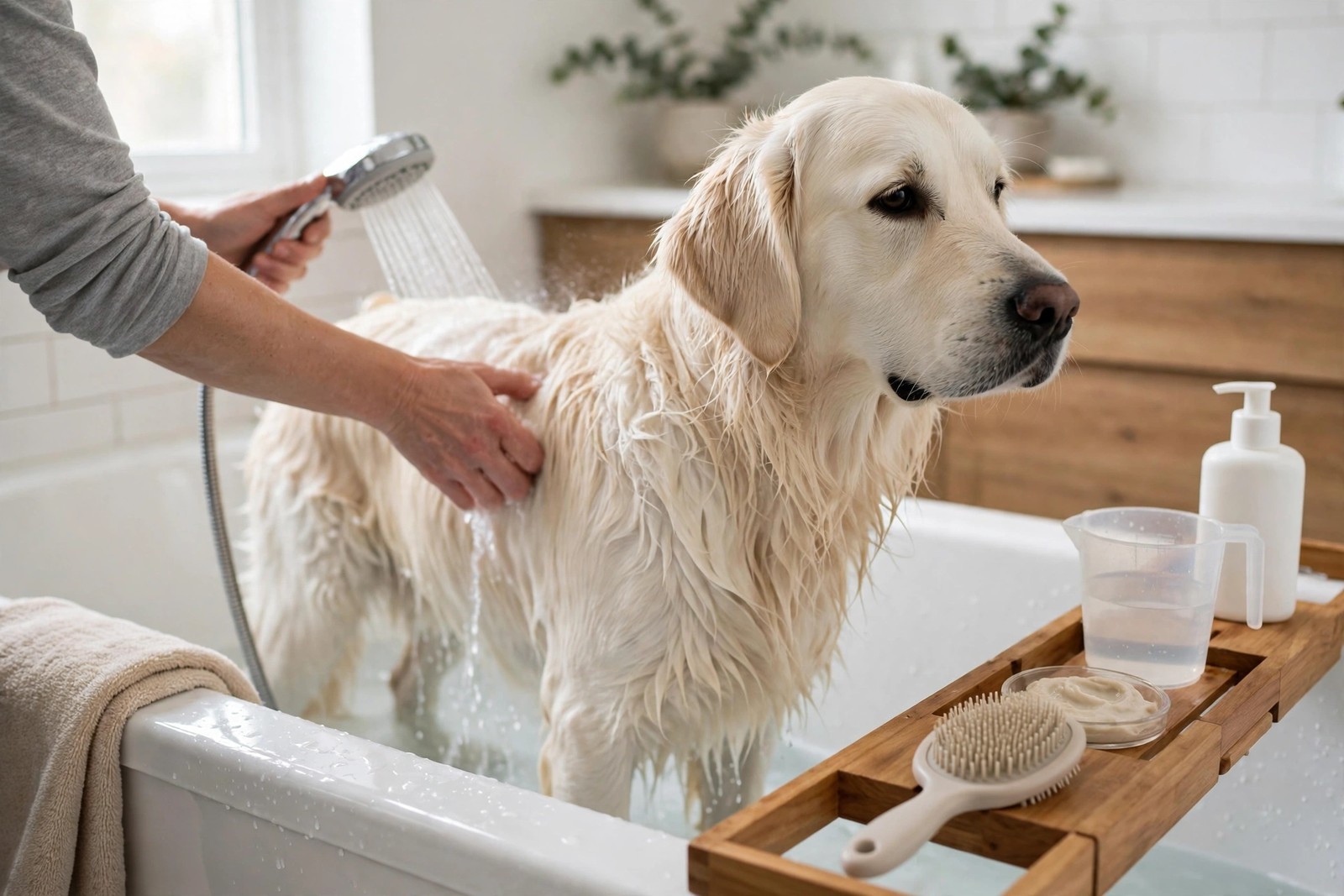
Sensitive skin punishes experimentation. Every new fragrance, spray, or clever additive is another variable, and a dog who reacts to scented shampoos needs the opposite of a product rotation: a short, plain routine, changed one element at a time, with a written record of what her skin did next. The goal is a bath so uneventful that grooming stops being an event at all.
The Bath Itself, Simplified
Use an unscented shampoo made for dogs, and nothing made for people, since human products are formulated for human skin and hair and add fragrances a reactive dog does not need. Wet the coat with lukewarm water — comfortably warm on your inner wrist, never hot — and work one modest lather through with your fingers rather than a scrubbing mitt, letting the shampoo sit only briefly before the rinse begins. Rinsing is where sensitive-skin baths are won: keep clean lukewarm water moving over the coat until it runs completely clear and then continue a while longer, parting the hair at the neck, behind the ears, in the armpits, and along the belly, where shampoo hides and dries into the itch owners later blame on the product rather than the residue. Dry by pressing with towels and, if you use a dryer, keep it on its coolest setting and moving, since heat on reactive skin adds a second irritation to a bath that was meant to remove one.
Patch-Test and Change One Thing at a Time
Any new product earns its place slowly. Apply a small amount to one limited area, such as a patch of belly or inner leg, use it exactly as directed on the label, and watch that area — and the dog — over the following day or two for redness, scratching, licking, or restlessness before the product touches the whole coat. Change only one element per bath: a different shampoo, a new wipe, a conditioner, each introduced alone, weeks apart if reactions have been frequent. Two changes in one bath leaves you with a reaction and no culprit, and a cupboard full of half-blamed bottles.
Bathe Less, Groom More
Frequent bathing strips the coat's own oils and gives sensitive skin no recovery window, so stretch the interval as far as cleanliness honestly allows and do the in-between work dry. Regular brushing removes loose hair, distributes oils, and lets your hands audit the skin for flaking, redness, or lumps while the dog stays relaxed. A plain cloth dampened with water handles muddy paws, food-smeared chins, and the general polish of daily life without a single ingredient to react to. Save full baths for genuine need — a rolled-in disaster, a coat that smells and feels overdue — and let the log, not the calendar, set the rhythm.
Log Reactions Like Evidence
Write down every bath and every response: the product, the date, how long the rinse ran, and what the next forty-eight hours looked like — settled, mildly itchy by evening, scratching through the night, ears involved or not. Patterns that are invisible from memory become plain on paper: reactions that follow baths at one interval but not another, trouble that tracks a season rather than a shampoo, a product tolerated three times before it was blamed once. That record is also what turns a vet appointment from a shrug into a shortlist. Reactions that keep recurring, spread, involve hair loss or broken skin, or arrive with ear trouble belong in a conversation with your veterinarian, who can investigate what is driving the pattern rather than you rotating products indefinitely in the dark. Pet Passport from KinsLe goes to the groomer and the vet unchanged, so nobody has to reconstruct which shampoo caused trouble from memory.