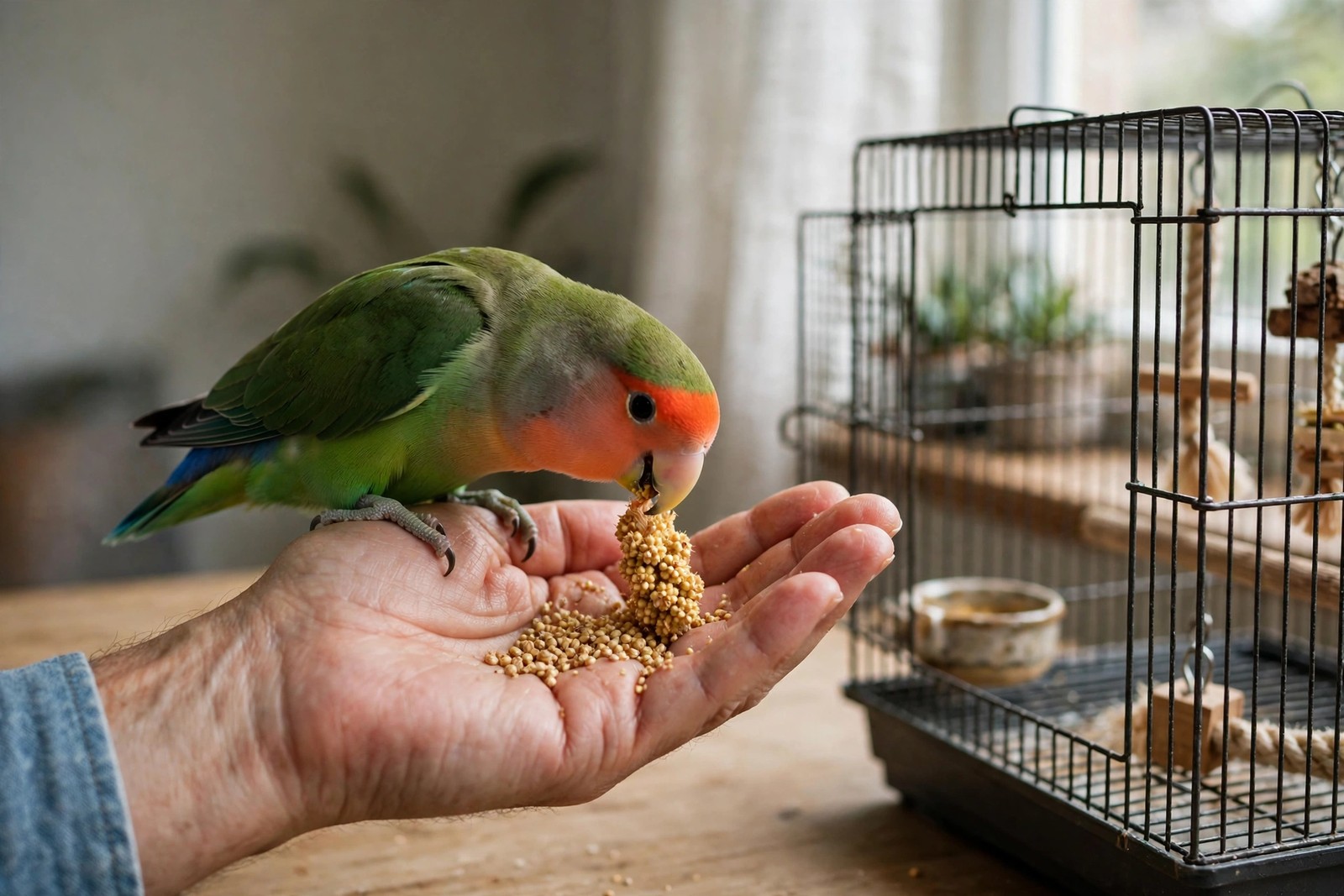
A lovebird is small, bold, and quite capable of deciding you are untrustworthy for weeks if the first lesson is a hand closing around its body. Hand-taming works when every step is the bird's choice, and the bird learns that hands predict millet, calm company, and an easy way back to the cage.
Step One: Become Familiar Furniture
For the first several days, simply sit beside the cage reading, working, or talking softly, at a distance where your lovebird continues eating, preening, and moving normally. If the bird freezes, presses to the far bars, or stops calling, you are too close — move the chair back. Short visits several times a day are better than one long vigil. Offer a spray of millet pushed through the bars and leave it there without watching intently; eating near you is the first real milestone, and it often arrives before any interest in your hand does.
Keep the room predictable during this stage. Loud visitors, hovering children, and a hand tapping the bars all reset the clock, so brief the household that the cage area is a quiet zone for now.
Step Two: A Hand That Does Nothing
Next, rest your hand flat against the outside of the cage for a minute or two, then withdraw it before your bird gets restless. When that earns no reaction, open the door and rest your hand just inside, low and still, palm up, for short periods. Do not reach toward the bird, follow it around the cage, or try to touch it. A hand that repeatedly appears, does nothing alarming, and leaves again becomes boring, and boring is the foundation of trust with a prey species.
Now offer millet from your fingers through the bars, then, once that is taken confidently, hold the spray so the bird must lean toward your hand inside the cage to reach it. Let the bird set the final distance every time.
Step Three: Food From the Palm, Then a Perch
When your lovebird steps closer willingly, place millet in your open palm and rest the hand still inside the cage. The first hop onto the edge of your hand may last one second; praise softly and do not try to lift or move. Repeat until standing on the hand to eat is routine.
Introduce step-up on a handheld perch or dowel before a finger, because a perch is less personal and easier to accept. Present it gently in front of the bird's lower chest, pair it with the cue you will keep using, and reward stepping on. Only when perch step-ups are calm should you offer a finger in the same position, at the same angle, with the same cue.
Rules That Protect Your Progress
Never grab from above, chase around the cage, or pull a biting bird away sharply — a lovebird bite usually means you skipped a step, so return to the previous stage for a few days instead of pushing on. Keep sessions to about five or ten minutes, end after a success, and return your bird to the cage before it becomes frantic rather than after. Work at the bird's pace over days or weeks; a hand-tame bird who chose you will stay tame, while a caught bird merely tolerates you.
In KinsLe, Care Teams can log which stage you reached, who held the session, and whether millet was taken from the palm, so everyone in the household follows the same sequence and nobody skips ahead to grabbing.