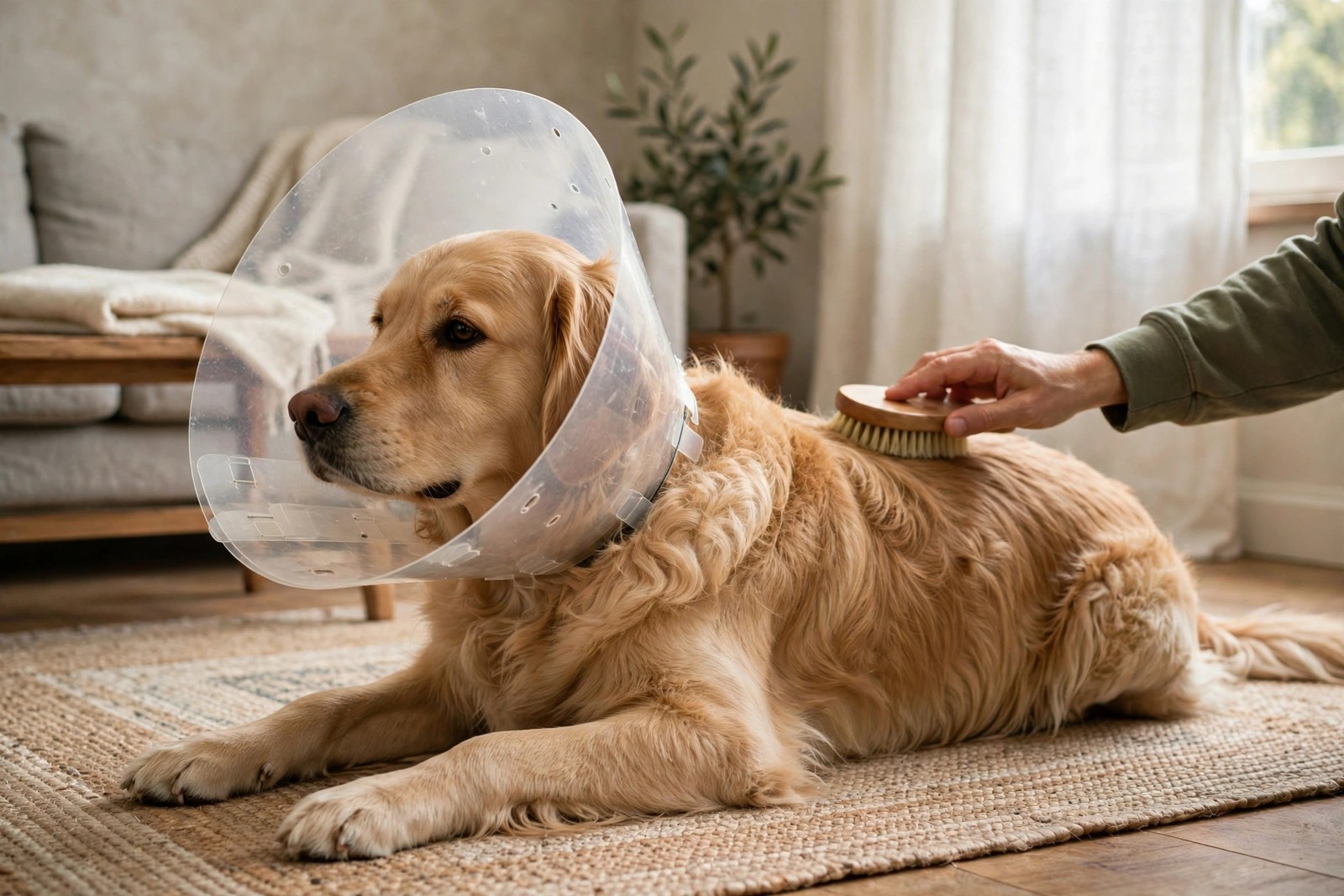
Groom around the cone rather than against it, and treat the discharge sheet from the clinic as the rulebook for every session until the veterinary team says normal handling can resume. The coat still needs attention during recovery, because loose hair mats quickly on a dog who is resting more and moving less, yet the surgical area sets the limits. Brush the body, legs, and tail in short sessions, keep the surgical area and any dressings completely untouched and dry, and stop the moment your dog shifts away, pants, or tries to turn toward the wound. A tidy coat is never worth a disturbed wound, a soaked dressing, or a frightened patient.
What Can Still Be Brushed, and How
Work only on the areas the cone was never protecting: the back, sides, chest away from any wound, legs, and tail, using the brush your dog already knows and tolerates. Use light, slow strokes in the direction the coat grows, and support the skin with your free hand so the brush never drags. Keep each session brief, a few minutes at a time, and finish while your dog is still relaxed rather than pushing on until restlessness starts.
Stay clear of the neck edge where the cone sits, because friction can rub skin already warm and damp from trapped drool. If discharge guidance allows the cone to be lifted slightly for a skin check, look for redness or an unpleasant smell underneath, then settle it back as fitted, and report anything sore or weeping to the clinic rather than treating it yourself.
The Cone, Dressings, and the Dry Rule
Wipe the cone clean daily with a damp cloth, inside and out, because food, water, and drool collect along its rim and quickly become grimy against the neck. Dry it before it goes back against the coat, and check that straps, tabs, or ties still hold it at the fitted snugness, neither slipping toward the eyes nor rotating loosely. A cone that has cracked, bent, or loosened enough for a tongue to reach past it is no longer doing its job, so contact the clinic about a replacement rather than improvising repairs near the wound.
Dressings follow a stricter rule: untouched and dry, always. No brushing over them, no bathing anywhere that could splash them, no trimming matted hair away from their edges, and no lifting a corner to peek underneath. If a dressing becomes wet, slips, unravels, or develops an odour, that is a same-day phone call to the veterinary team, not a home fix. The same applies if your dog reaches the wound despite the cone, opens any part of the incision line, or suddenly guards the area. Grooming judgement during recovery is mostly knowing which jobs are not yours.
Recovery Comes Before the Coat, Every Time
Never remove the cone for a full groom, a bath, or a photograph unless the veterinary team has explicitly said you may, because a determined dog needs only seconds of access to lick or chew at healing tissue. If loose hair near the cone edge genuinely bothers your dog, ask the clinic at the recheck whether a nurse may tidy that area under supervision. Expect a backlog once the cone finally comes off for good. Dead coat, flattened fur at the neck, and small mats behind the ears are normal after days or weeks of restricted grooming, and they yield to several gentle sessions spread across the first week rather than one marathon detangling. Short, rewarded sessions rebuild any lost tolerance without turning the first proper groom into a battle.
Households sharing recovery duty should write down who brushed, who wiped the cone, and who last checked that dressings stayed dry, because gaps and double handling both happen when everyone assumes someone else has done it. Care Teams within KinsLe gives that rota a visible home, letting each helper see assigned cone checks and brushing turns and mark each one complete with a timestamp the whole household can trust.