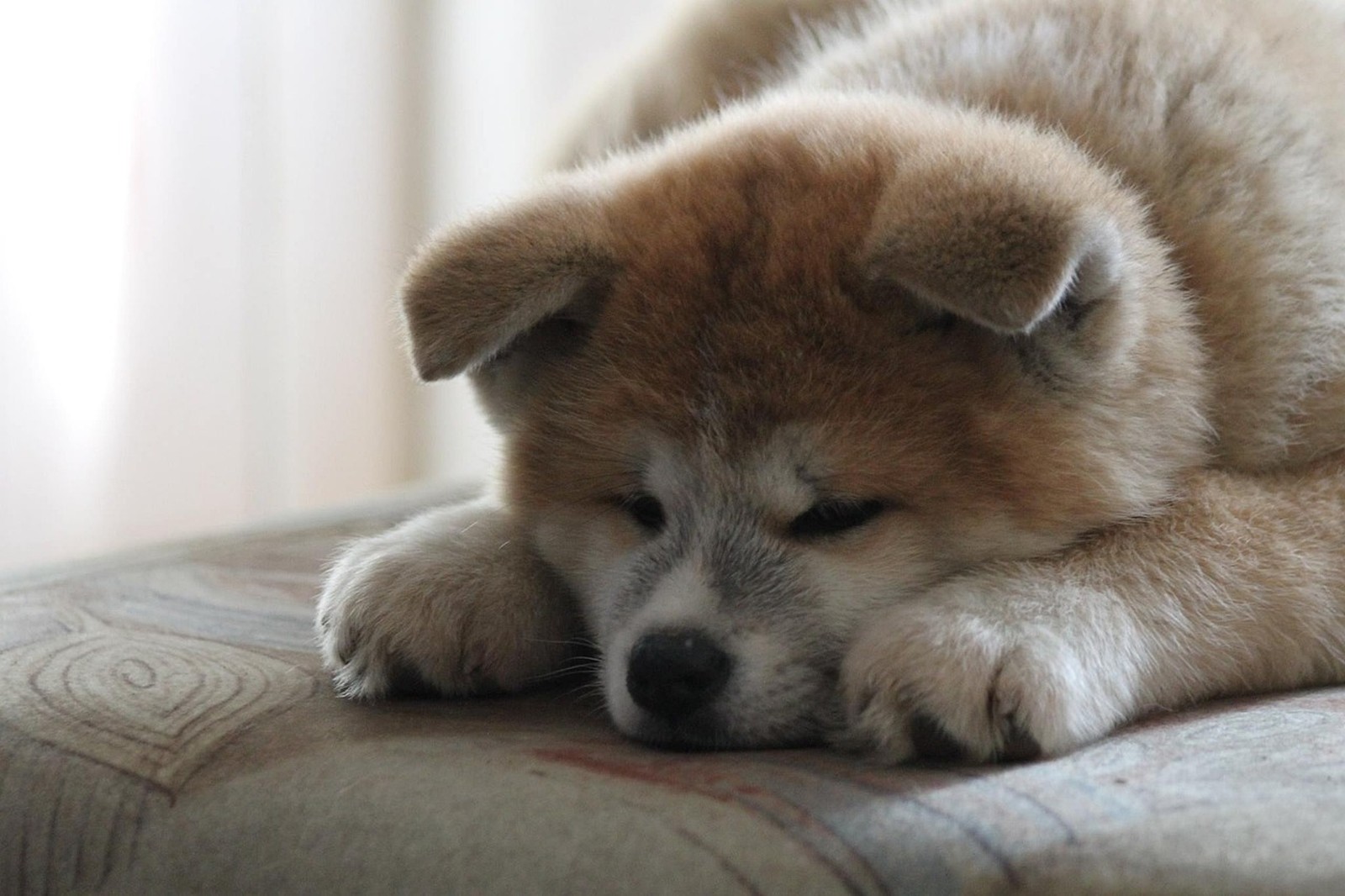
Akitas are typically loyal, dignified, and naturally reserved with strangers, and they grow into large, powerful adults. You are not trying to turn one into a dog who adores every guest. The realistic goal is a dog who finds visitors predictable and uninteresting, can settle near them without tension, and can be comfortably managed when a busy gathering is too much.
Build the Ritual Before You Need It
Start in the early socialisation weeks, while the puppy is still taking the world in stride. The pattern to teach is simple and always the same: a knock or the doorbell sounds, the puppy looks toward the door, you reward the puppy for turning back to you, and the puppy settles on a familiar mat placed well away from the entrance. Practise first with no visitor at all, pairing recorded doorbell and knocking sounds, played quietly, with food on the mat. Then use one calm, briefed helper, and only later real guests.
Keep the mat spot at a distance where the puppy can watch without feeling cornered, and let the puppy leave it and go to another room whenever it chooses. A puppy who can retreat rarely needs to escalate.
Brief Your Visitors Like It Matters, Because It Does
Most setbacks come from people, not the puppy. Visitors should ignore the puppy on arrival: no reaching, looming, direct staring, or scooping it up for cuddles, however appealing that is. Once the puppy is settled, a visitor can drop a treat near the mat without looking at or leaning toward the puppy, then go back to ignoring it. Children visit only under close supervision, seated and quiet, and never follow the puppy if it moves away.
Rotate your helpers: men and women, people with hats, coats, walking sticks, and deliveries at the door, each in short, uneventful doses. Variety teaches the puppy that strangers in general are background, not a special event to guard against.
Teach the Supporting Skills Separately
The visitor ritual rests on skills built at other times. A reliable place cue on the mat, a hand-target the puppy can be guided with, and being comfortable behind a baby gate or on a lead indoors all need practising on ordinary days, with food rewards, so they are fluent before guests arrive. Practise handling and vet-style examinations at home too, because a large guarding-prone dog who accepts touch from its own people is far easier to keep safe throughout life.
Watch adolescence honestly. Many Akita puppies who were sociable at four months become more selective and territorial as they mature, and that is the breed expressing itself, not your training failing. Tighten management as size and confidence grow: lead or gate during arrivals, no free access to the front door, and separate room time for parties, repair visits, or anything loud.
Management Is Permanent, Not a Phase
Even a well-raised adult Akita deserves a plan for every gathering: who holds the lead, where the dog settles, which door stays shut, and when the dog simply stays elsewhere with a chew. If you ever see hard staring at guests, stiffening over food or resting places, growling that is increasing, or guarding of people, stop the practice sessions and get a qualified behaviourist involved early, while the dog is still young and the habits are shallow. For consistency, KinsLe's Care Teams lets you assign the daily mat practice and visitor-routine jobs to family members, each marked with a timestamp when done, so every person in the house runs the ritual exactly the same way.