
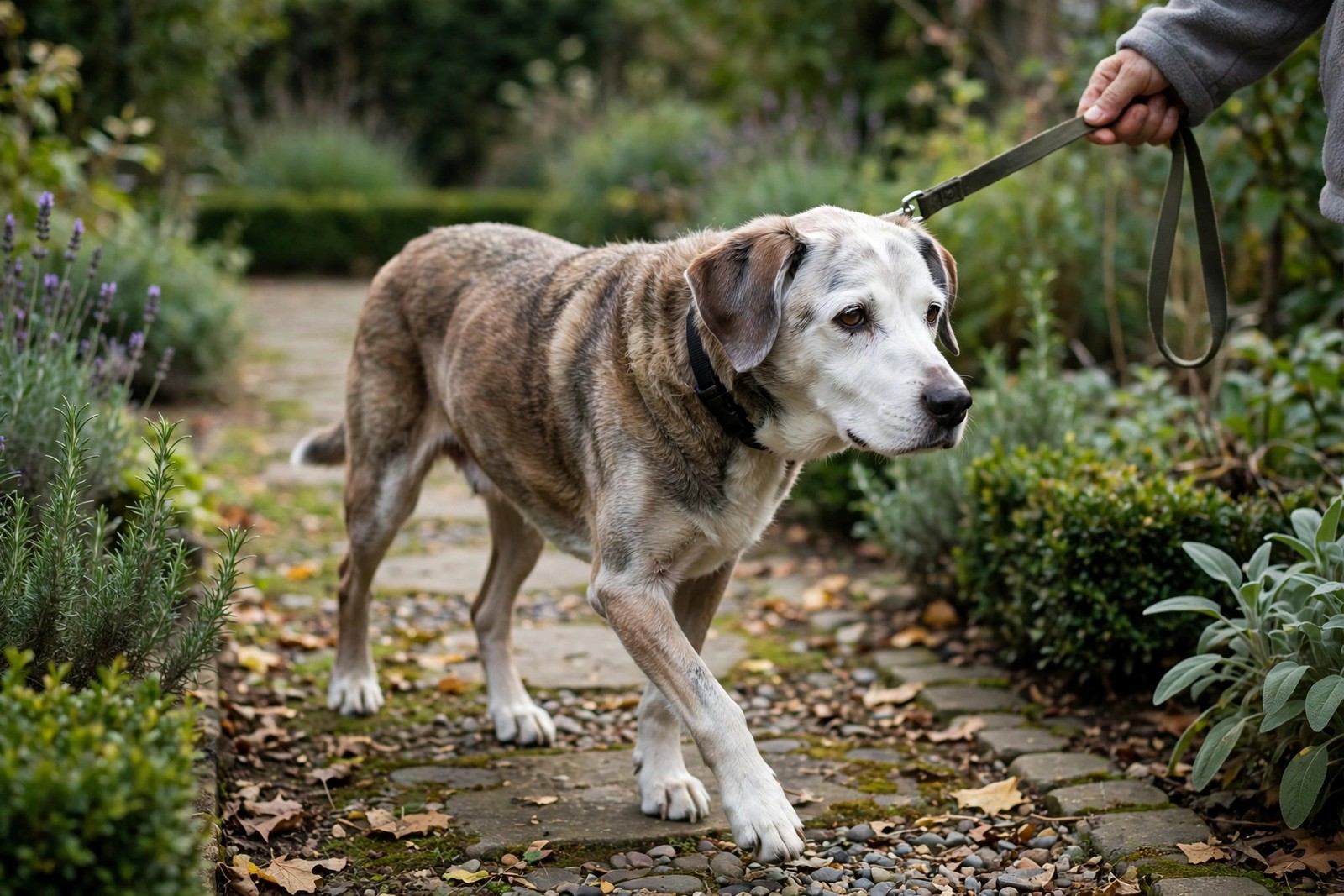
Help an adopted senior dog settle in by slowing everything down: a quiet, comfortable base with easy access to water and the door, very predictable routines, short gentle walks, and the freedom to choose when to explore or ask for affection. For an older dog, a new home is not an adventure to rush through — it is a change to absorb at their own speed.
Build a base that respects an older body
Set up your senior's main area where the household is calm, not where the action is loudest. The bed matters: choose something supportive and low enough to step onto without jumping, placed away from drafts. Keep floors navigable — runners or rugs over slippery wood or tile give aging joints the grip they need to move confidently. Put water within easy reach, and make the route to the door for toilet trips short and step-free where possible, or add a ramp if there are a few unavoidable steps. A dog who can meet their own basic needs without strain settles faster than one who has to ask, wait, and struggle.
Make the days predictable
Routine is the language senior dogs trust most. Feed at the same times, in the same spot. Walk the same short route at the same hours. Keep greetings, visitors, and new experiences spaced out rather than stacked into one big first weekend. Predictability also helps you: when every day looks similar, a change in appetite, sleep, or mobility stands out early, instead of being lost in the noise of a chaotic schedule.
Let the dog set the social pace
Some seniors move in like they have always lived with you; others spend the first week watching from their bed. Both are fine. Sit nearby and read. Let the dog close the distance for petting, and stop when they move away. Avoid looming, hugging, or picking the dog up unless necessary — older bodies can be sore, and a startled senior may snap where a younger dog would wriggle away. Children should be coached to let the dog approach them and to leave a resting senior strictly alone.
Gentle exercise, generous rest
Short, unhurried walks with plenty of sniffing time suit most seniors far better than distance goals. Sniffing is mental exercise that tires a dog pleasantly without taxing joints. On some days, a garden wander and a chew may be plenty; rest days are a feature of senior care, not a failure of it. Watch for lagging, heavy panting, or stiffness afterward, and shorten the route accordingly — and if mobility changes noticeably or your dog seems painful, check in with your veterinarian rather than pushing through.
Share the routine when family helps
Consistency falls apart when a helpful relative guesses at feeding amounts or medication timing. If family helps out, KinsLe's Care Pass shares your senior's feeding and medication routine through a temporary, scoped link — the recipient needs no account or app to see exactly what your dog needs. Give one named helper time-boxed, scoped access through the Care Pass on KinsLe, limited solely to this older dog's meal amounts and medicine timing for the days that helper steps in.