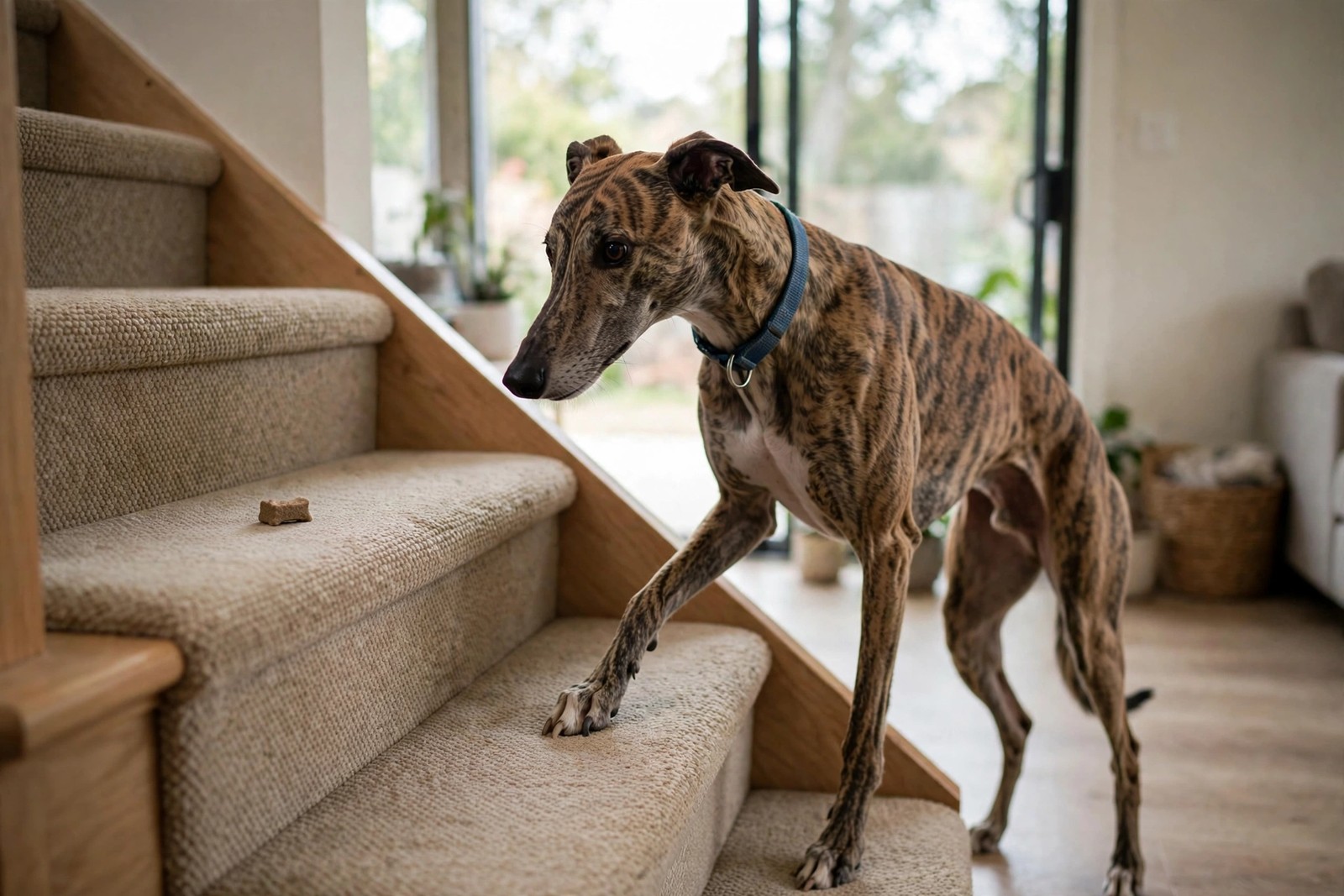
An ex-racing Greyhound has usually lived in kennels with flat ground, solid doors and a predictable routine. Stairs, glass, mirrors, slippery floors and sudden household sounds are not things he is refusing to understand; he has simply never met them. Treat each one as a separate small lesson, spread across days, and let him watch, sniff and retreat as often as he needs. A Greyhound who is allowed to go slowly at first typically settles into house life with surprising confidence.
Stairs, One or Two Steps at a Time
Greyhound bodies are built for flat-out running, not climbing: long legs, a deep chest and little practice at placing hind feet on narrow treads. Start with a short, carpeted flight if you have a choice, because carpet gives grip that wood or laminate does not. Place a treat on the first step and let him stretch for it with his hind feet still on the floor. Over several short sessions, reward one step up, then two, then a pause and a careful turn or a continued climb, whichever he offers calmly. Go down even more slowly than you went up, walking beside him at his shoulder so he does not launch himself from halfway. Never drag him by the lead or carry him unless he is genuinely stuck, and practise at quiet times rather than when visitors are arriving and the staircase is busy.
Glass Doors and Other Invisible Barriers
A dog who has only known solid kennel doors can walk straight into a patio door or a full-length glass panel, because nothing in his experience says clear means closed. Before he arrives, place removable stickers or strips of tape at his eye level across every glass door, low window and glass panel he will pass, and keep them there until you have watched him turn away from the glass reliably. Open and close the doors in front of him so he sees the panel move, and call him through only when the door is fully open. Apply the same thinking to mirrors, which can startle a dog who reads the reflection as another dog in the room: let him investigate at his own pace rather than leading him up to his own reflection face-first.
Household Noises, Introduced Singly
Do not switch everything on at once to get it over with. Introduce one sound at a time, at a distance or at low volume, and pair it with food so the new noise predicts something good. Let him hear the washing machine from another room with the door ajar before he stands beside it on a full spin cycle. Play the television quietly at first, because sudden shouting, doorbells and barking from a screen can all arrive in the same minute. Save the vacuum until he is settled with the smaller sounds, and begin with it switched on in a closed room while he eats elsewhere in the house. If he freezes, leaves the room or refuses food, the step was too big: increase the distance, lower the volume, and try again another day rather than repeating the exposure until he shuts down.
Build the Rest of House Life Around Sleep and Routine
Ex-racers are professional resters, and a quiet bed in a low-traffic corner, away from the staircase and the glass doors he is still learning, gives him a base to observe the house from. Keep feeding, walks and toilet trips on a steady rhythm while the lessons continue, supervise early trips outside, and expect house training to need the same patient, step-by-step treatment as everything else, even in an adult dog. Write down which stairs he can manage, which sounds still worry him, and what helped, so everyone in the house teaches him the same way. KinsLe's Transferrable Profiles brings his rescue history, known routines and settling notes into his new profile intact, so the people teaching him indoors start from his real background rather than guesswork.