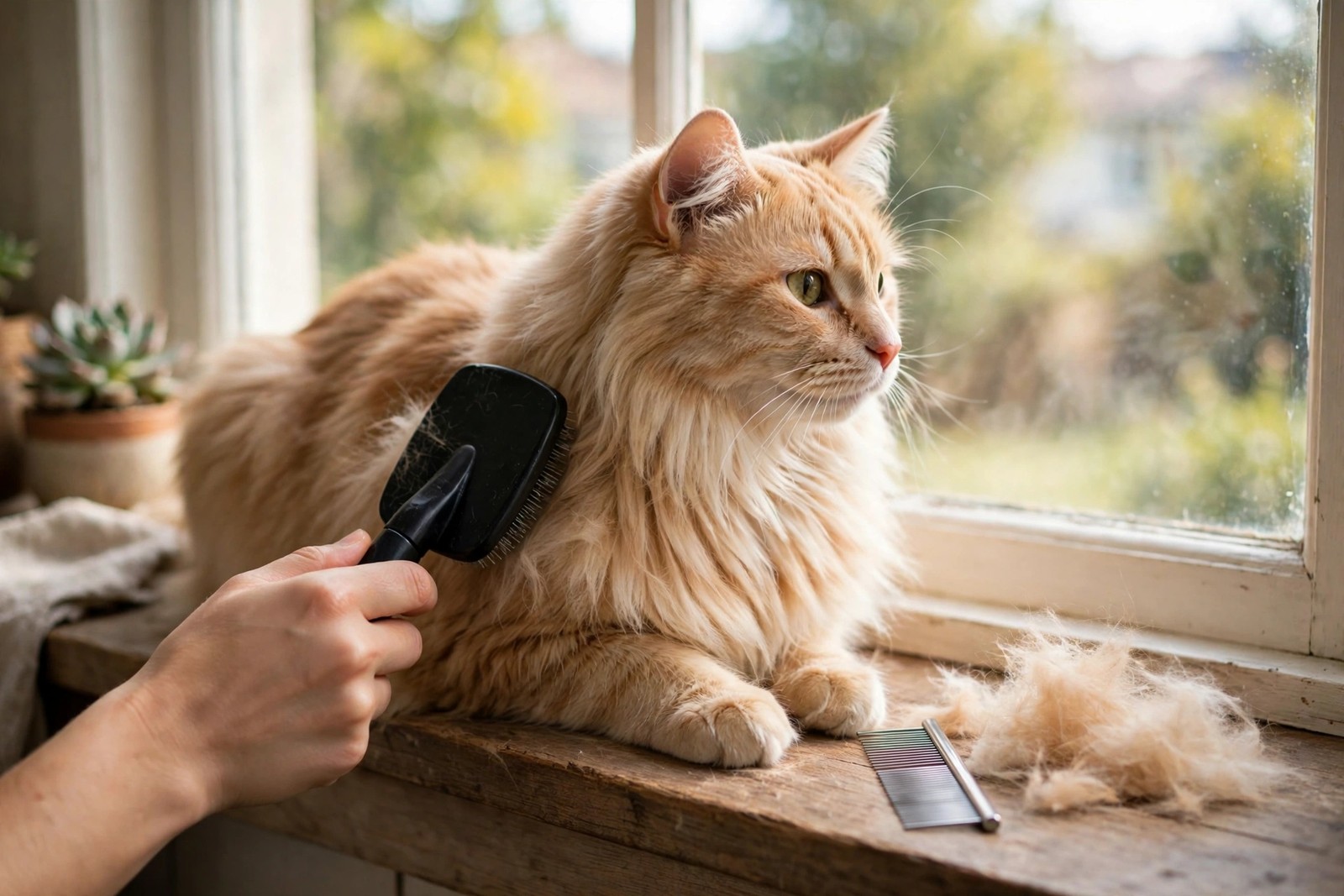
A hairball starts as ordinary grooming. Your cat's tongue is covered in tiny backward-facing barbs that pull loose hairs free — and send them down the throat. Most swallowed hair passes through, but some collects in the stomach until it is brought back up. Brushing cannot stop your cat washing, but it can sharply reduce how much loose fur is available to be swallowed in the first place.
Match Frequency to Coat Length and Season
Longhaired cats, and cats with dense double coats, need daily brushing when hairballs are a problem, because their loose undercoat builds up fast and mats hold shed hair against the skin. Shorthaired cats usually do well with one or two sessions a week. Whatever the coat, step up the frequency in spring and autumn shedding periods, when the brush will tell you plainly that far more fur is coming away than usual. A useful test is the comb: after brushing, run a fine-toothed comb gently through the coat, and if it still lifts a lot of loose hair, that coat needed another few minutes.
Work in the direction of growth with a slicker brush to lift the undercoat, then follow with the comb to check the dense areas — behind the ears, the armpits, the belly, and the back of the hind legs. Clear the brush as you go, because a brush packed with fur stops removing anything and just slides over the coat.
Technique That Removes Fur Without a Fight
Brush when your cat is settled, not mid-play, and start with the areas she enjoys — cheeks, chin, and shoulders for many cats — before moving to the belly and hindquarters, where tolerance is lower. Use short, light strokes rather than pressing down; repeated pressure irritates skin and is the usual reason cats begin to avoid the brush. Watch for overstimulation signals such as skin rippling, tail thumping, ears rotating back, or a sudden head turn toward your hand, and stop before a swat rather than after.
If your cat dislikes being brushed, build up from thirty seconds a day paired with a treat, rather than attempting a full groom once a week. Several calm, incomplete sessions remove more fur across a week than one stressful marathon, and they preserve the habit you actually need.
Know When It Is Not Just a Hairball
Occasional hairballs in a longhaired cat can be normal, but frequent retching, repeated vomiting, coughing that produces nothing, loss of appetite, constipation, diarrhoea, or a cat who retches without bringing anything up all deserve a veterinary visit. Those signs can point to problems beyond swallowed fur, including skin, digestive, or breathing issues, and no amount of brushing should delay getting them checked. Tell the vet how often episodes happen and whether anything is produced; that pattern is genuinely useful information.
Also mention grooming itself at the visit if your cat suddenly produces many more hairballs than usual, because excessive self-grooming driven by itchy skin or stress can be the real cause, and brushing alone will not fix why the fur is being licked off in the first place.
In KinsLe, Care Teams can schedule daily or weekly brushing according to coat type, note the start of heavy shedding, and record how often hairballs actually occur, giving you an honest picture of whether the new routine is working.