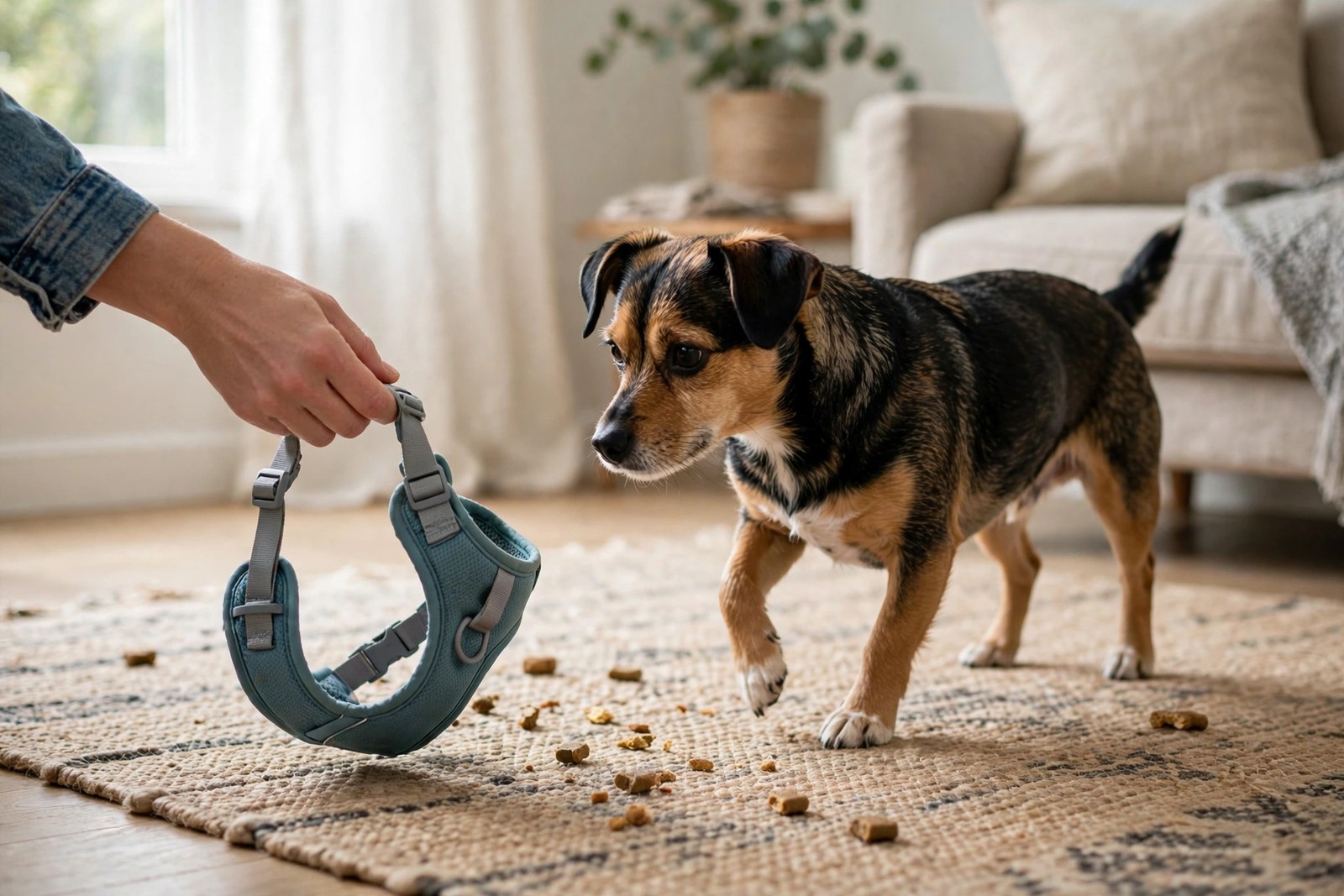
Running away at the sight of a harness is a learned prediction, not stubbornness: somewhere along the line the old harness came to mean being grabbed, having something pulled over his head, a clip pinching skin, or walks that overwhelmed him. A new style helps only if you also retire the old routine, because the dog is afraid of the whole ceremony, not just the straps.
First, Check What He Is Actually Avoiding
Before training, look for physical clues. Run your fingers where the old harness sat and check for rubbed or tender skin, mats caught in buckles, or straps that pressed behind the front legs. Note what the old style demanded: over the head, legs lifted and threaded, clips closed right against the coat. Choose the new style to remove that demand where you can, for example a step-in design for a dog who hates things over his head, or a neck clip for a dog who dislikes leg handling, and fit it so two fingers fit under every strap without the harness sliding around.
If he flinches when a particular area is touched even with no harness in sight, get that checked by a vet before assuming this is purely a training problem.
Rebuild the Association in Small Steps
Do this work separately from walks, a few minutes at a time, several times a day, using the old collar or another familiar route for actual outings meanwhile if he accepts one calmly. Leave the new harness lying on the floor during play and meals, and reward every voluntary look, sniff, and step toward it. When he is relaxed around it, touch it briefly to his shoulder and pay with food, then drape it for a second, then longer, watching his body throughout.
Introduce the sounds separately: click the clips open and shut across the room while treats appear, moving gradually closer over sessions. Then fasten the harness indoors for a few seconds, release, and throw a small party of games and food. Build wear time in the house, then the garden, then a short, easy walk on a route he already enjoys, only moving on when the previous step looks boring to him. Loose body, soft eyes, and choosing to come back for more are your green lights; freezing, lip licking, tucked tail, or moving away mean the step is too big.
Choice Is the Method, Not a Bonus
Wherever the design allows, invite him to participate: hold the harness low and still and let him push his own head through or step in, rather than descending on him with it. Keep your body side-on and unhurried, work in an open space rather than a hallway he cannot leave, and if he walks off, let the session end. A dog who discovers the harness never forces anything is a dog whose fear has nothing left to feed on.
Never chase him round the furniture, corner him, or hold him still to wrestle straps on 'just this once'. Each capture confirms his theory and makes the next session start further back. Expect days to a few weeks of this ladder for a dog with an established fear, and celebrate the boring middle steps, because boring is the goal.
Keep Every Walker on the Same Ladder
Progress unravels if one person practises patiently and another grabs and clips because they are late for a walk. Agree the current step in writing and let nobody improvise beyond it. KinsLe's Care Teams supports exactly that for harness practice: assign the short daily sessions to whoever walks him, record which step you reached, and let the timestamped completions show the whole household that the ladder is being climbed in order.