
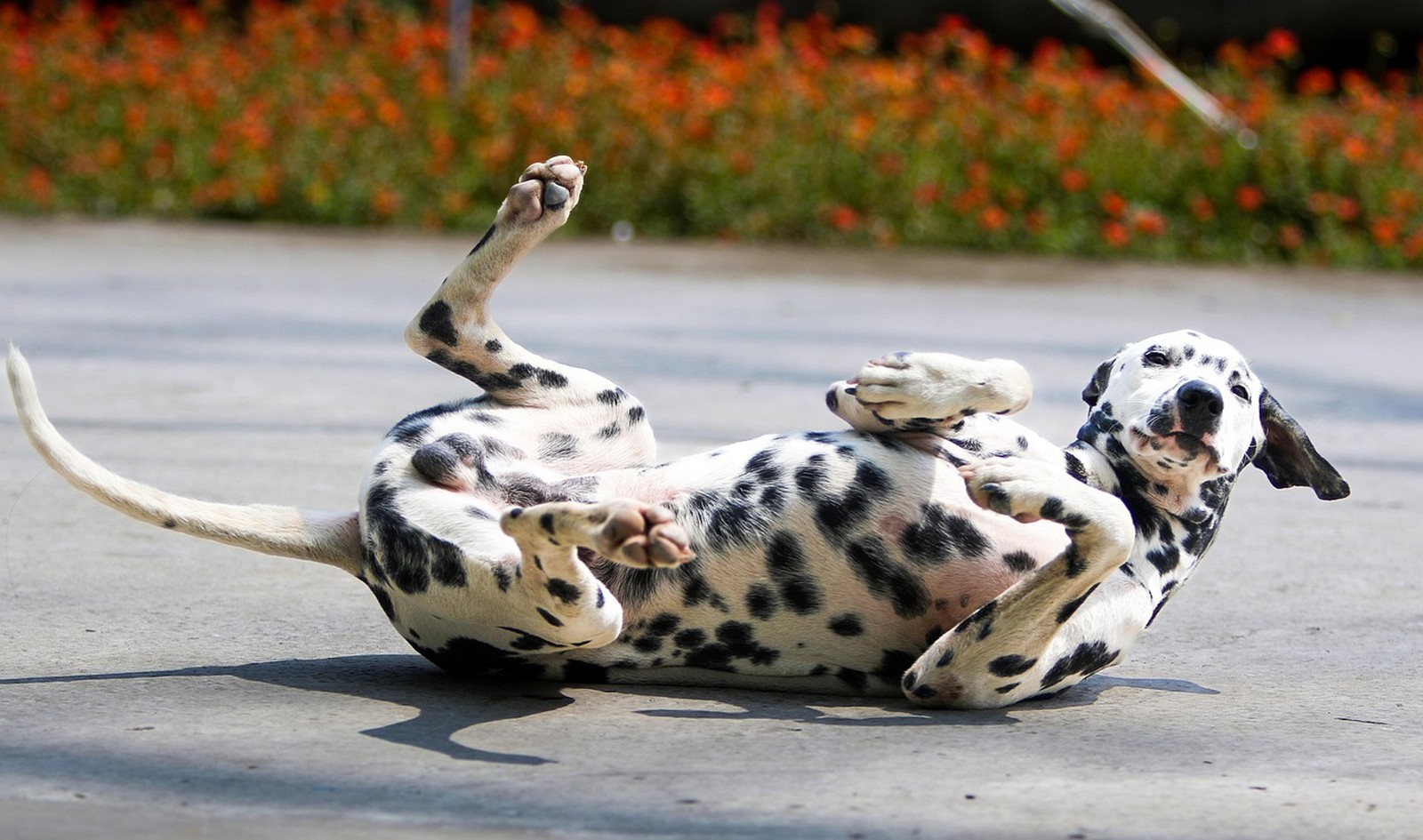
Every owner knows the shoulder-drop that starts it: your dog sniffs something invisible to you, dips one shoulder, and commences a joyful, full-body grind into the worst smell on the walk. By the time you arrive she is wearing it proudly, neck and collar first. Disgusting as the result is, the behaviour is ancient, deliberate, and, from a dog's perspective, entirely sensible.
Why the Smelliest Thing Wins
No single explanation is proven, and the honest answer combines a few inherited motives. Scent masking is the oldest theory: a hunter who smells of the environment, or of another animal's droppings, carries less of its own scent on the wind and can get closer to prey. Communication runs the other way: wild canids returning wearing a strong new scent bring the group information about carrion, prey, or territory they encountered, and packmates investigate the smell on the returning animal's coat. Then there is simple sensory pleasure. Dogs live by smell the way we live by sight, and a powerful odour may be genuinely delightful to roll in, closer to trying on a striking perfume than to anything grubby. What it is not is spite, revenge for a bath, or poor training. Favourite targets are consistent across dogs: fox, badger, and deer droppings, dead fish and birds, rotting matter, and worms and compost smells after rain.
Prevention on the Walk
You will rarely outrun the shoulder-drop, so prevention is about reading ground and dog together:
- Learn her regular rolling spots, such as a particular field corner or beach patch, and shorten the lead and raise your pace before you reach them, not after the sniffing starts.
- Watch for the pre-roll sequence, intense sniffing in one small spot, a paw scrape, the shoulder dip, and interrupt at the sniff with a cheerful let's-go and a treat for moving on.
- Build a real leave-it at home with low-value distractions first, paid with high-value treats, so the cue has strength before you test it against fox droppings.
- Give the nose legal work on the same walk: long sniffing stops in grass, scatter treats to find, and changes of route, so scent itself is not scarce and contraband.
If she does connect, stay flat and practical rather than furious; a huge reaction teaches her only to roll faster and further away next time.
The Clean-Up, and When Rolling Means Something Else
Rinse the worst off outdoors if you can, then bathe with a dog shampoo, working the neck, shoulders, and collar, which holds the smell longest and may need its own wash or a soak. Some smells need a second wash a day later rather than one heroic scrub. Rolling aimed at her own skin is different from rolling in finds: a dog who rolls and also scratches, rubs her face and ears on furniture, or has red, yeasty-smelling skin may be itchy rather than scent hunting, and that pattern belongs in front of your vet. For the true scent roller, accept the instinct and manage the geography, because a dog prevented at her favourite spots and rewarded for moving on will still dream in smells, and KinsLe Care Teams keeps the aftermath fair by assigning the hose-down and collar wash after mucky walks to a rotating family member.