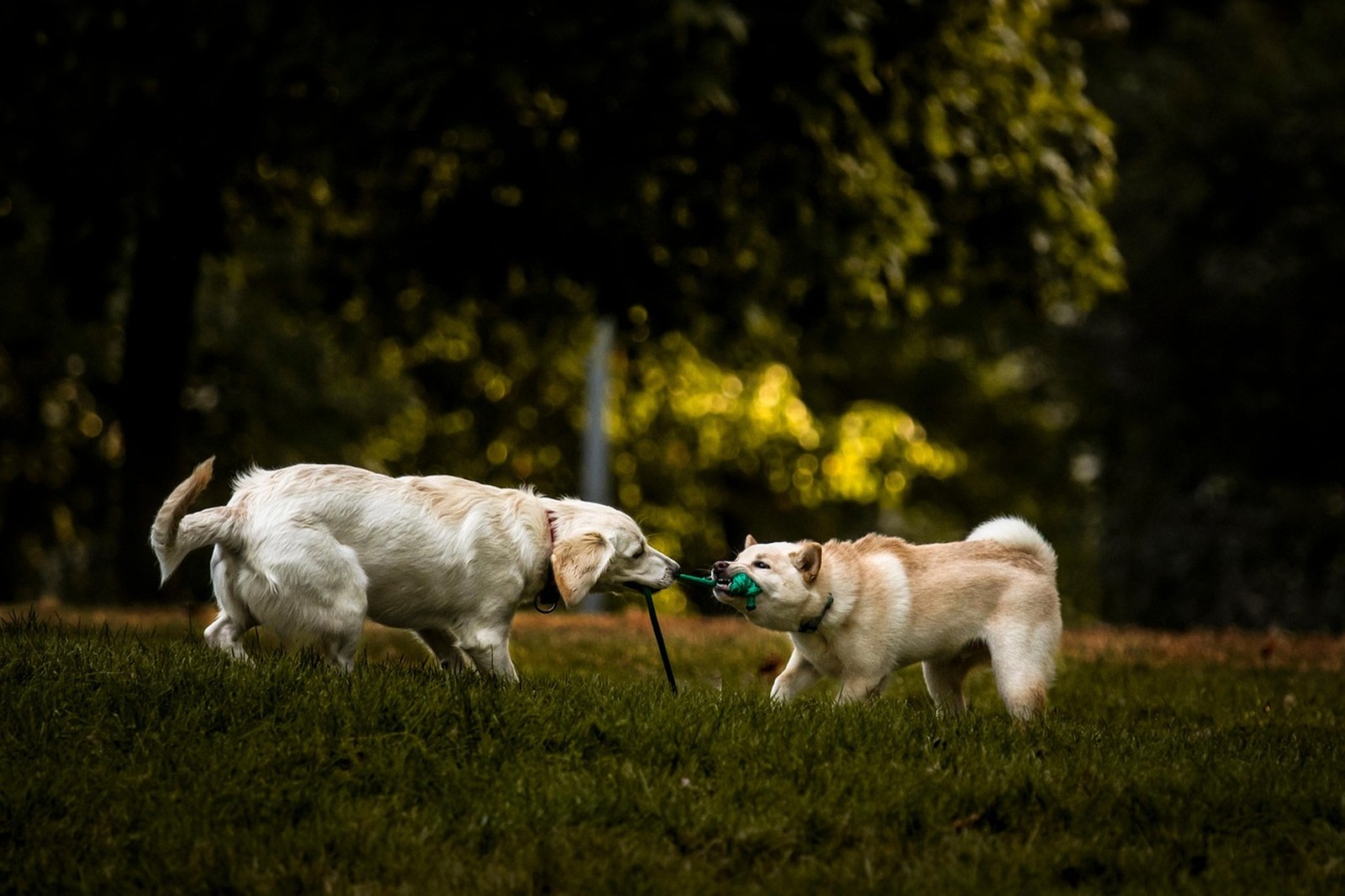
Fights over toys between dogs who live together look sudden, but they usually follow a pattern: one particular ball, chew, or squeaky toy becomes valuable enough to defend, the other dog does not back down quickly enough, and voices, teeth, and panic fill the gap. Because housemates meet dozens of times a day, a toy grudge can poison the whole relationship, so the answer starts with separation and management, not with letting them work it out. Only once each dog has solid individual skills, a drop, a recall away from prized items, and a history of calm around toys, does careful joint play come back.
Why toys cause fights that other things do not
A toy concentrates several triggers in one object. It moves, it squeaks, it carries the other dog's scent, and it can be possessed, carried, and guarded in a way that a shared sofa or garden cannot. Resource guarding itself is normal canine behaviour, a way of keeping hold of something valuable, but it escalates when the second dog is a persistent competitor in the same small territory and when past scuffles have taught both dogs that the other will not yield. Watch for the pre-fight signals that owners often miss: a dog going still over a toy, hovering with a hard stare, body-blocking access, or accelerating from play into stiff, silent chasing.
Manage the house so fights cannot happen
Pick up every toy, chew, and food puzzle that has ever been contested and store them out of reach. From now on, toys come out for individual dogs in separate spaces, behind a gate or in different rooms, and go away again before the dogs reunite. Feed the dogs apart too, including treats and long-lasting chews, because a household tense about toys is usually tense about edible treasures as well, even if food has not yet caused a visible fight. Rotate individual toys so each dog still gets rich play and chewing time; separation should cost them conflict, not enrichment, or frustration will find another outlet.
Train each dog separately, then together at a distance
Work one dog at a time on a cheerful drop: offer a low-value toy, trade it for an excellent treat, and return the toy often so dropping predicts good outcomes rather than loss. Build a recall away from a thrown toy in the garden, paying heavily, until turning away from a prized item is each dog's practised habit rather than a test of obedience in the moment. Then practise parallel calm: both dogs on leads or either side of a gate, each with a handler, settling and doing simple rewarded behaviours while a boring toy sits visible but unreachable, so toys in the other dog's presence stop predicting a contest.
Joint play returns last, briefly, with low-value toys in duplicate, two balls rather than one treasure, in a large space, and it ends at the first stiffening, not after the argument.
When this needs professional eyes
Get a behaviourist involved promptly if fights have drawn blood, if one dog seeks the other out to start trouble without a toy present, if guarding spreads to people, beds, or doorways, or if the dogs cannot relax together even with toys removed. Ask your vet to check both dogs too, because pain and illness lower tolerance and a sore dog may defend resources he previously shared happily. Until that assessment happens, keep the dogs fully separated whenever they cannot be actively supervised; a management failure that allows one more serious fight makes every later step harder.
Toy storage, separate play, and supervised sessions only work if every person in the house follows them, which is why KinsLe organises the rota through Care Teams, with toy-time supervision and storage duties assigned and timestamped for each dog.