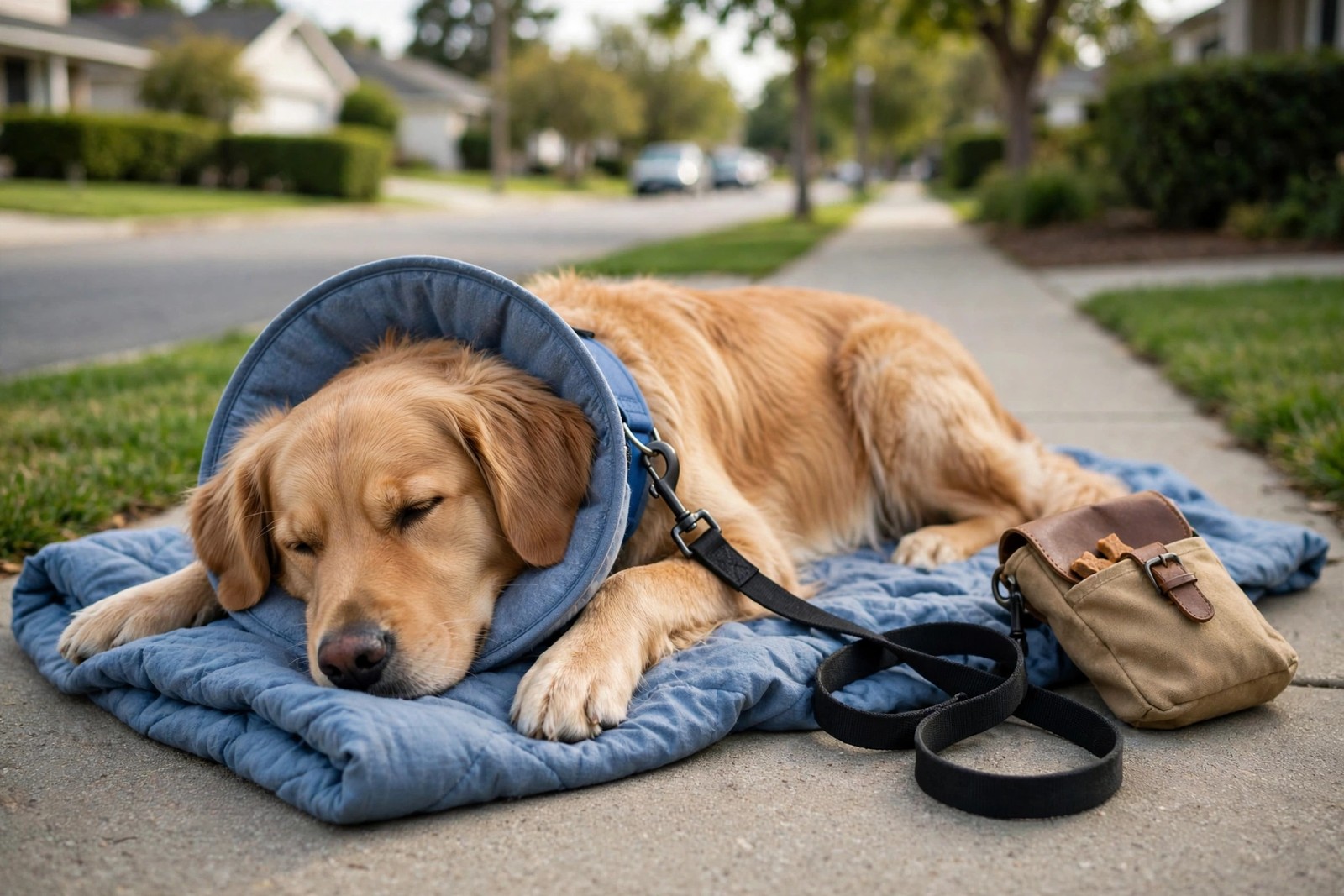
The clinic's written discharge instructions govern his recovery, so read them before you settle him and follow them exactly. A routine procedure still involves an anaesthetic, a wound or treatment site for many dogs, and a body that needs quiet to repair itself. Home care is mostly environmental: rest, warmth, gentle supervision and honest reporting when something drifts off the expected path.
Setting Up the Recovery Corner
Prepare the space before you collect him, because a groggy dog should walk into a finished arrangement. Choose a warm, draught-free spot on the ground floor with bedding he knows, water within easy reach and a short, step-free route to a toilet area. Move food bowls to the corner so he does not cross the house for meals. Keep other pets and excited children separated for the first days, using a gate or a closed door rather than constant verbal management. If the clinic has supplied a protective collar or suit, fit it as directed before he has the chance to reach the wound, and check the fit with two fingers at the neck.
Brief everyone in the household on the discharge rules before he comes home, because a recovery undone by one well-meant game of fetch or one lifted restriction at the weekend is a common and preventable setback. Put the discharge sheet somewhere visible, such as the fridge door, until the recheck has passed.
The First Twenty-Four Hours
Expect sleepiness, unsteady legs and a small appetite while the anaesthetic clears, and let him sleep as much as he wants. Offer water first, then a light portion of food if the discharge sheet advises feeding that evening. Take him out on a lead for toilet trips, supporting him with a towel under the belly if the clinic showed you how and he is wobbly. Keep the house calm and dim in the evening, and sleep nearby if he is unsettled, because company is often the only comfort a post-procedure dog asks for. Note the times he eats, drinks and toilets, since the clinic's first question on any follow-up call is usually about those basics.
Daily Checks Through the Recovery
Look at the wound daily in good light for increasing redness, swelling, discharge or any opening of the edges, and compare it with the day before rather than with an ideal picture. Watch his comfort when rising, lying down and toileting, and note appetite and energy as a trend. Follow the clinic's instructions on exercise precisely: lead toilet trips only, until they say otherwise, however bright he seems. Internal healing runs behind outward energy, and a dog who feels well on day three can still undo stitches with one enthusiastic jump. Keep the protective collar on at all times the clinic directs, including overnight, because night-time licking is when wounds are usually damaged.
When to Call the Clinic Sooner
Phone the same day about worsening discomfort, repeated vomiting, refusal to eat beyond the period the discharge sheet describes, bleeding, or a wound that changes for the worse. Describe your log rather than offering a summary from memory, because times and quantities help the team decide whether he needs to be seen. Ask before giving anything the clinic has not prescribed, including anything left over from a previous pet. Keep the discharge sheet, the log and the recheck date together in his KinsLe Pet Passport, so the follow-up visit reviews his real recovery instead of a recollection.