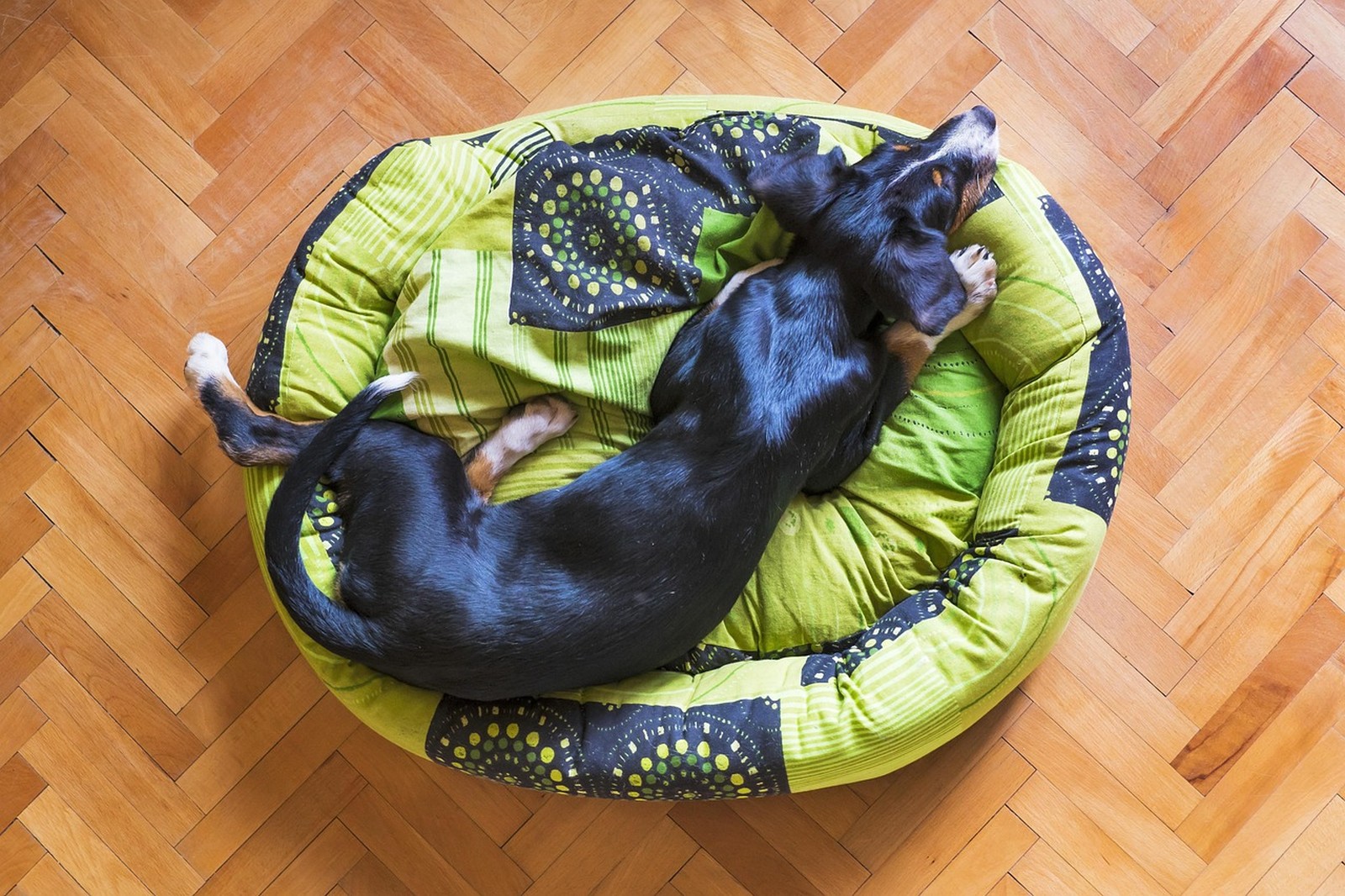
Dogs do not object to geography; they object to a broken contract. If your dog has slept beside your bed for months or years, the bedroom is where sleep happens, and a bed that suddenly appears in the kitchen is just a cushion in the wrong story. The transition works when the new spot is introduced as the next chapter of the same routine, not as exile.
Move in Stages if You Possibly Can
The kindest method is also the slowest: shift the bed a little at a time. A few nights just outside the bedroom door, on the landing or in the hallway, then into the final room if it is further away, a metre or a doorway at a time. Keep the bedding itself unchanged during the move, however overdue a wash it is, because the smell of the old bed is the strongest argument that this is still her bed. When the bed reaches its final room, add the comforts that make a sleeping place convincing: out of draughts, away from radiators and the noise of appliances cycling at night, with a blanket she can arrange and, in cooler rooms, a cover she can burrow under.
If a sudden move is unavoidable, perhaps a new baby or building work, compensate with extra staging inside the new room: spend relaxed time there in the evening, feed her evening chew there, and let her fall asleep there during the day before asking for a whole night.
Run the Same Evening, Every Evening
Dogs settle into sequences. Build a short, identical wind-down that ends at the new bed: a final toilet trip, a drink, a small chew or lickable treat given on the bed itself, lights lowered, and the same words in the same tone, such as 'bedtime, settle down'. Sit nearby reading for the first nights if that helps, then withdraw in small increments, a chair further away, then outside the door, then gone. The aim is a dog who is slightly bored by the routine, because boredom at bedtime is exactly what sleep is made of.
Daytime matters too. A dog who has exercised, played, and been mentally occupied during the day, and who has napped in the new spot voluntarily, brings a genuinely tired body to bed. Avoid rough play in the last hour, which leaves dogs fizzy rather than sleepy.
Answer Protest Boringly, and Only Once
Some whining, scratching, or pacing on the first nights is normal communication, not defiance. Respond once, calmly: check she does not need the toilet, that nothing is frightening her, and that she is warm and well, then settle her with the usual words and leave without play, apology tours, or negotiation. Repeated coming and going, or one person relenting at 3 a.m. and readmitting her to the bedroom, teaches her that persistence works and reliably makes the next night louder. That intermittent reward is the single most common reason this transition stalls.
If distress is intense, continuous panting, drooling, howling, or trying to break through doors, slow the whole plan down, move the bed back a stage, and talk to your vet or a behaviourist, because separation anxiety is a different problem from a changed sleeping place and needs its own treatment.
Share the Nights Fairly, and Consistently
Decide between everyone in the house who does the bedtime routine and who answers a night check, because a dog quickly learns which person is the soft touch. Write it down and stick to the rotation for the two or three weeks the change usually takes to feel normal. KinsLe's Care Teams is built for this kind of rota: you can assign the evening routine and the single night check to a named person each night, and the timestamped record shows the plan was followed, which protects the dog from well-meant inconsistency.