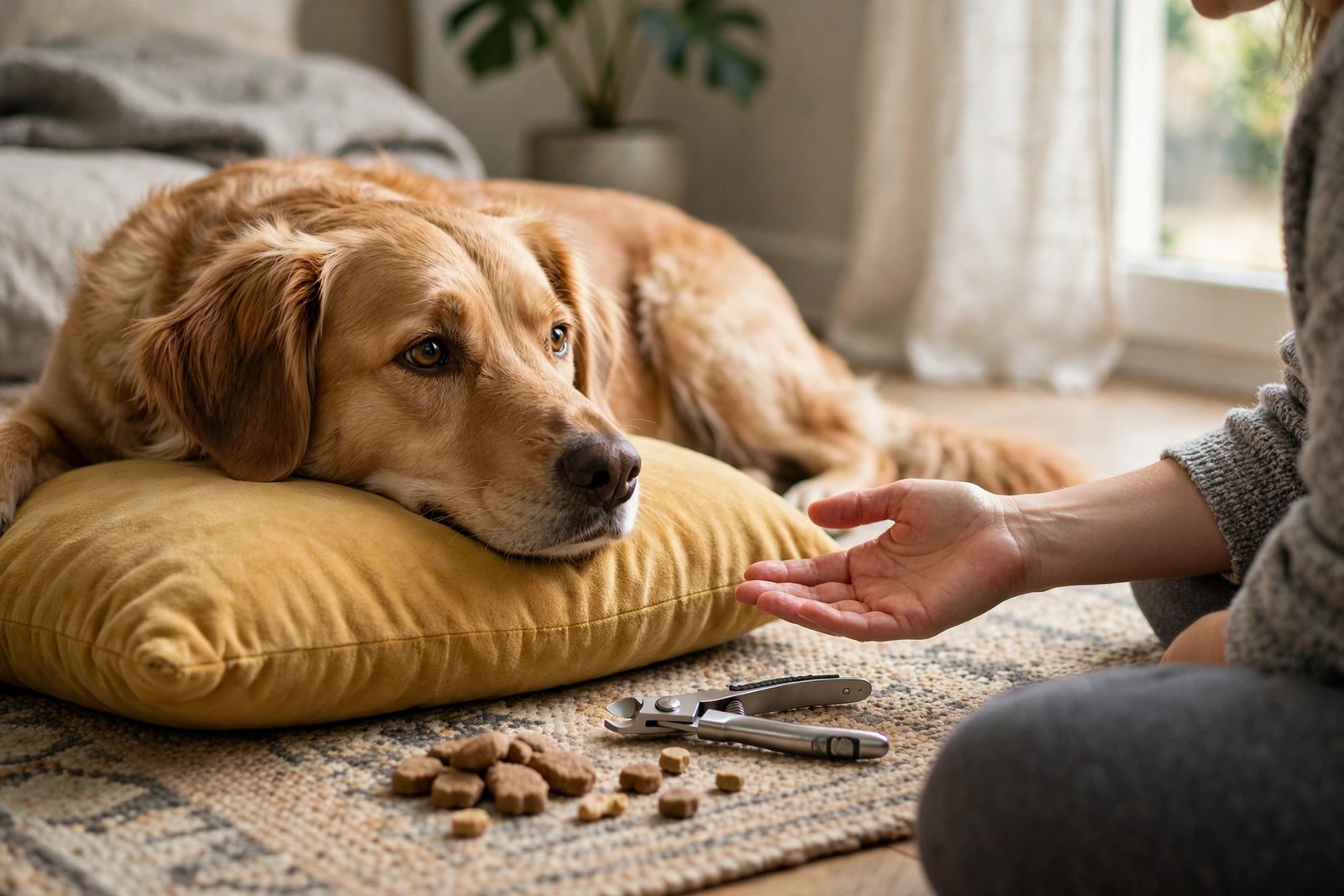
A dog who stays still for nail trims is not a dog who has given up; he is a dog who has learned that staying pays and leaving works. That distinction shapes the whole plan. Instead of cornering him and finishing quickly, you build a consent-based setup where his position is the signal: chin resting on a cushion, or body settled on his mat, means he is opting in. When he lifts his chin or steps off the mat, the tools go down and the session pauses or ends.
Choose one spot and one position and use them every time, so the setup itself becomes familiar. Practise simply getting into position and being fed there for several sessions before any clipper appears. A dog who trots to his mat happily when he sees the treat pot is already halfway to a calm trim.
The Ladder: Paw Touch, Sound, One Tiny Trim
Work the steps in this order and do not skip ahead. First, touch a paw briefly, feed, and let go, building toward holding the paw and spreading the toes gently for a second or two. Many dogs accept paw handling readily once it reliably predicts food and release, so spend real time here rather than treating it as a warm-up.
Next, add the clipper sound without trimming anything: squeeze the clippers in the air near him, feed, and repeat until the click draws a hopeful look instead of a flinch. Only then attempt ONE tiny trim, taking just the sharp tip from a single nail, followed by generous feeding and a proper break. One nail done calmly teaches more than four nails done under protest.
Across later sessions, grow from one nail to a few, then to a full paw, and only eventually to all four paws in one sitting. Back nails often need less frequent attention, so front paws can carry the early training. If he tenses, licks his lips repeatedly, or pulls the paw away hard, you have moved too fast; return to the last easy step and finish there.
A Scratch Board as a Bridge
While the ladder climbs, a scratch board keeps front nails shorter without any trimming at all. Fix abrasive sheet material firmly to a board, reward him for digging at it with his front paws, and let him file his own nails down through play. Alternate paws by shifting the board's position or rewarding digs on each side.
The board does not reach the back nails or the dewclaws, so it is a bridge rather than a replacement. It buys you weeks of unhurried training time, which matters, because rushed timelines are what push owners back toward holding a dog down. Keep board sessions short and cheerful, and stop the game while he still wants more.
When to Get Help Instead of Pushing On
Some dogs carry panic about nail care that patient steps alone do not dissolve, particularly if they have been hurt by a trim cut too short in the past. If he screams, snaps, or shakes through even the paw-touch stage after patient practice, ask your veterinarian or a groomer experienced with fearful dogs for help rather than escalating at home. Professional support might mean trims done at the clinic while your home training continues at its own pace.
Never pin him, have someone hold him down, or push through panic to finish the job. Each forced trim makes the next one harder and risks a bite from a dog who has learned that quieter signals fail. Splitting the job across days is always acceptable: two nails on Tuesday and two more on Thursday still gets every nail trimmed. Recording which nails are done, and at which ladder stage, inside KinsLe keeps Care Teams helpers from duplicating a paw or skipping the dewclaws by accident.