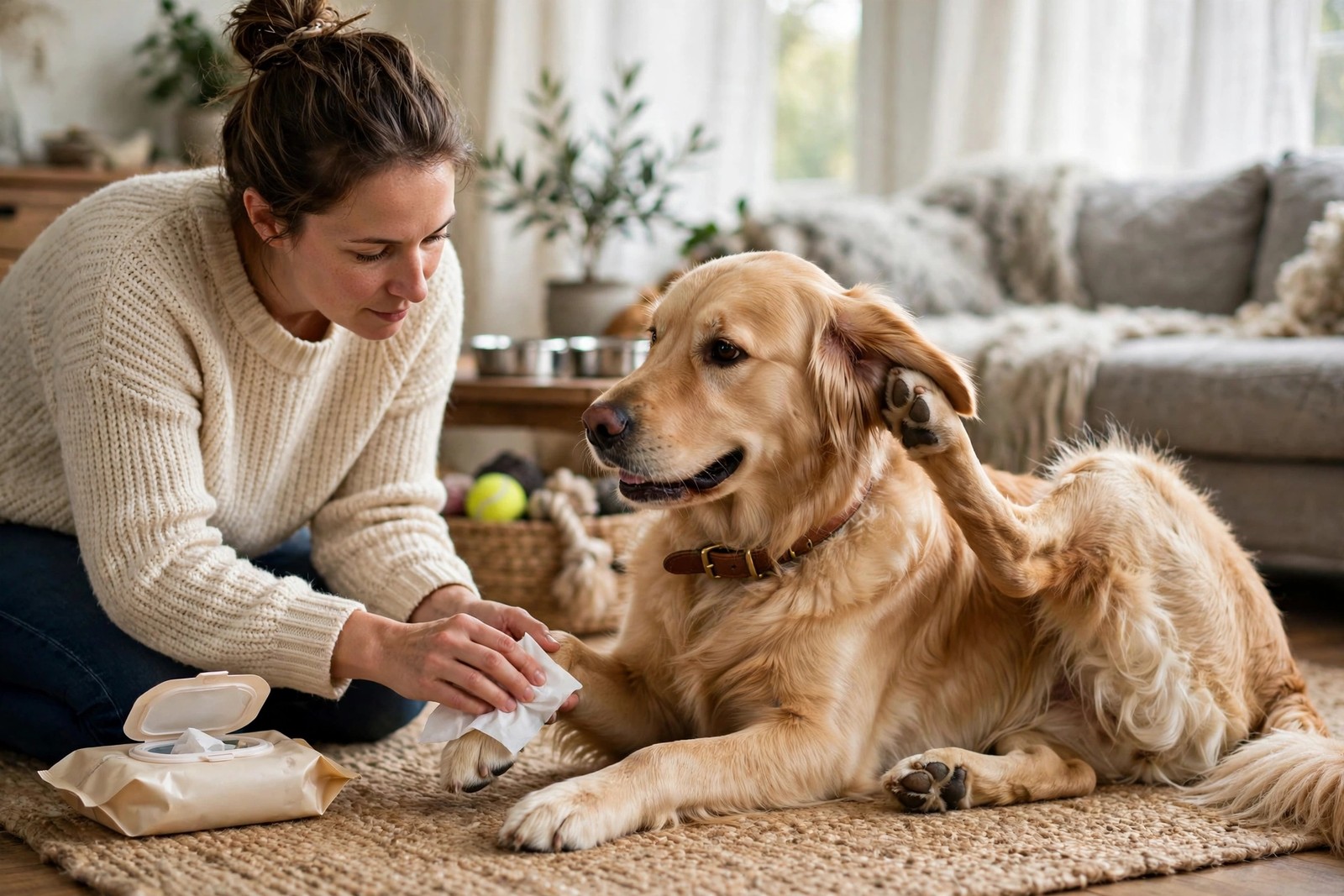
Between vet visits, home care is about reducing what lands on his skin and spotting what makes him worse. The vet leads the medical side of a seasonal allergy plan and reviews how the itchy weeks are going. Your contribution is exposure reduction, skin protection and a diary good enough to reveal patterns, because what you observe across a season shapes the vet's next decisions.
Rinsing Pollen Off After Walks
During high-pollen weeks, rinse his paws with plain water after walks, or wipe paws, belly and muzzle with a damp cloth if a rinse is impractical. Pollen clings to the coat and transfers to bedding and carpets, so a quick clean at the door reduces the load he carries around the house all evening. Dry between his toes afterwards, because dampness between the pads irritates skin that is already sensitive. On days when pollen counts are high and he flares noticeably, keep walks shorter and favour pavements or woodland over long grass if his diary shows grass exposure makes him worse. Note what you did and how the evening went, since that pairing is the diary's real value.
Bathing and Bedding, on the Vet's Terms, and Environmental Pollen Reduction
Bathe him only as often, and with the product, your vet has advised for his skin, because over-bathing and unsuitable products strip the coat and can deepen itch rather than relieve it. Ask the vet to confirm the bathing rhythm at each seasonal review, since it may change with his skin's condition. Wash his bedding weekly during the itchy season in hot water where the fabric allows, and vacuum his favourite resting spots frequently to lift pollen and dust out of the environment. Wipe hard floors rather than dry-sweeping near his bed, because sweeping lifts particles back into the air he breathes and sleeps in.
Rotate his resting spots towards rooms you can keep cooler and less dusty during peak pollen days, and rinse his outdoor toys and balls, which collect pollen in the garden and return it to his mouth and coat. Small environmental reductions across many surfaces add up across a whole itchy season.
Preventing Scratching From Becoming Damage
Itch that he scratches unchecked becomes broken skin, and broken skin changes what the vet needs to treat. Use the collar, T-shirt or cover the vet recommends when you cannot watch him, particularly overnight. Check hot spots daily: ears, armpits, groin, paws and the base of the tail are the places seasonal itch usually bites hardest. Keep nails trimmed so scratching does less damage. Distract a building scratch with a game, a chew or a sniffing activity where you can, and note what time of day his itch peaks, because that timing helps the vet judge what he is reacting to.
The Itch Diary and the Vet Review
Record a simple itch score each evening, with the day's walks, weather, bathing and any flare treatment the vet has prescribed. Photograph any patch he works on repeatedly, dated, so change across weeks is visible. Bring the diary to every review and describe honestly where home care slipped, because the vet adjusts the plan around real life rather than perfect compliance. Never add human medicines or home remedies presented online as cures, since some are unsafe for dogs and all of them confuse the picture the vet is reading. His itch diary and seasonal review notes live in his KinsLe Pet Passport, ready for the first itchy week of next season.