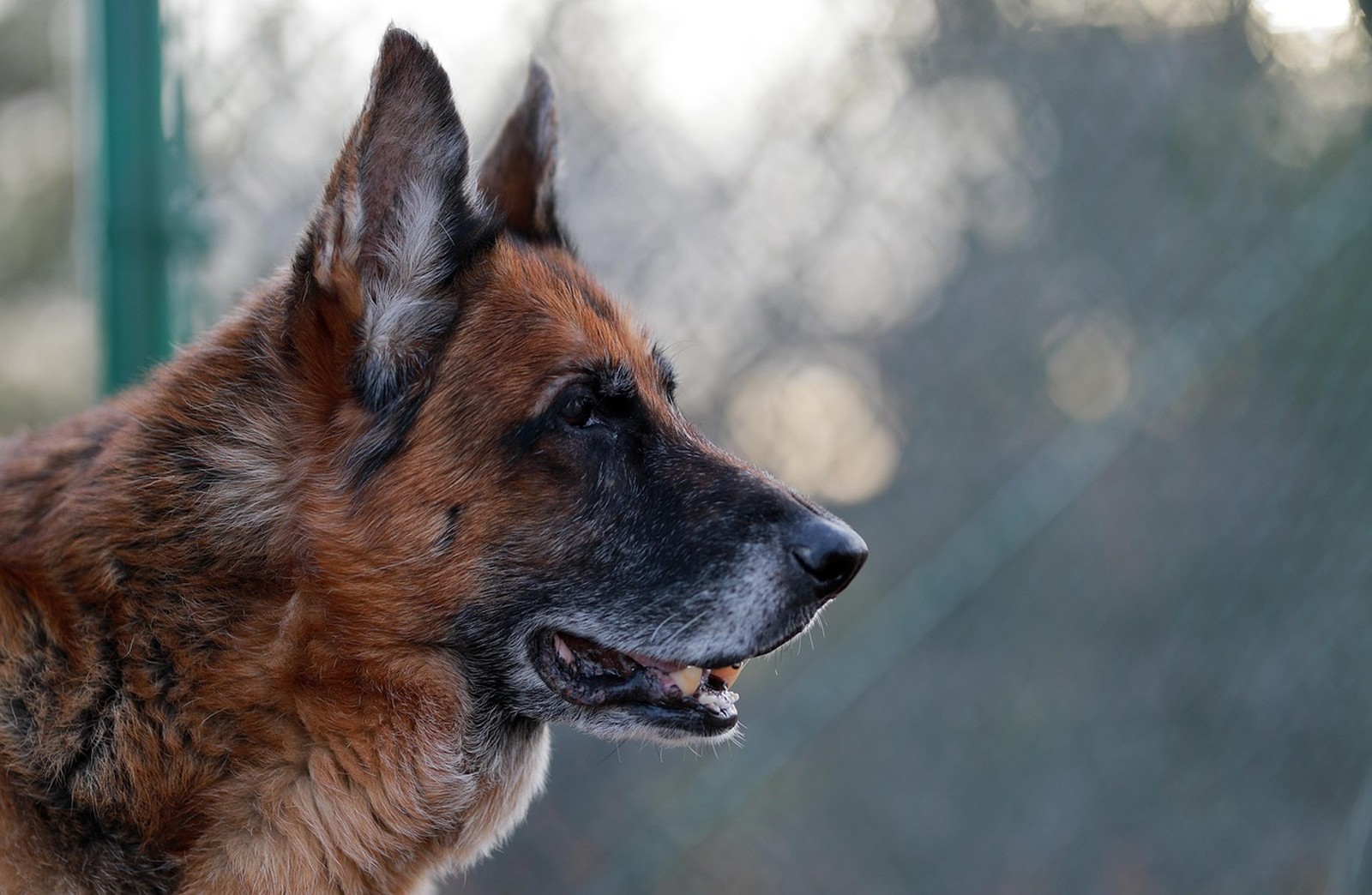
What the Older Dog Actually Needs From This
Acceptance is rarely the problem people imagine. Most older dogs do not need to love the puppy; they need their life to stay recognisably theirs — their bed unbothered, their walks unchanged, their rest protected from a small, relentless playmate with no manners yet. Puppies are exhausting company: they bite in play, climb on sore joints, steal chews, and cannot yet read the warnings a senior dog gives. When introductions go wrong, it is almost always because the puppy was allowed unlimited access and the older dog's polite signals — turning away, moving off, a low growl — were ignored until he felt he had to shout.
The First Meeting and the First Days
Meet on neutral ground: a short parallel walk in a quiet place, dogs at a distance on leads, letting them register each other without face-to-face pressure, then walk home together. Indoors, the puppy lives mostly behind a pen or gate at first, with the older dog free to observe, approach, or ignore entirely. Short, supervised together-time in the garden, ending before the puppy gets frantic, teaches both dogs that sharing space is calm and brief. Separate feeding from day one — meals are where tolerance snaps fastest — and give the older dog first access to greetings, the sofa spot he has always had, and you.
Managing the Puppy So the Senior Never Has To
Your job is to be the puppy's off-switch so the older dog never has to escalate. Enforce puppy naps in the pen through the day — overtired puppies are at their most pestering — and interrupt climbing, ear-chewing, and relentless play invitations yourself, redirecting the puppy to a toy or a training game. Teach the puppy a reliable recall away from the older dog early, and pay it generously. If the older dog growls, thank him: a growl is honest information, and punishing it removes the warning, not the feeling. Separate the dogs when you cannot supervise, every time, until the puppy is older and genuinely mannerly — which is measured in months, not weekends.
Guarding the Senior's Health and Status
A senior who is stiff, sore, losing sight or hearing, or newly grumpy deserves a vet check as part of this process, because pain shortens tempers and a puppy bouncing on arthritic hips hurts. Keep his solo walks — he still needs outings at his pace without the puppy ricocheting around him — and keep one daily thing that is only his, whether that is a gentle game, a grooming session, or the evening spot beside you. Feed him where the puppy cannot muscle in, and make sure his chews and rest are delivered behind the barrier too, so the puppy's arrival has cost him nothing he valued.
How Acceptance Usually Unfolds
Expect indifference first, then tolerance, and — often, once the puppy matures and calms — genuine companionship: shared sunbathing, parallel sniffing on walks, the older dog politely teaching the youngster the house's ways. Setbacks around the puppy's adolescence are normal and are handled by returning to more structure, not by deciding the dogs hate each other. The whole project runs smoothly only when every person in the house enforces the same barriers, nap times, and no-pestering rule, and KinsLe Family Sharing keeps both dogs' profiles, the introduction plan, and each dog's routine visible to everyone, so the puppy gets one consistent upbringing and your older dog gets the same protected peace from every pair of hands.