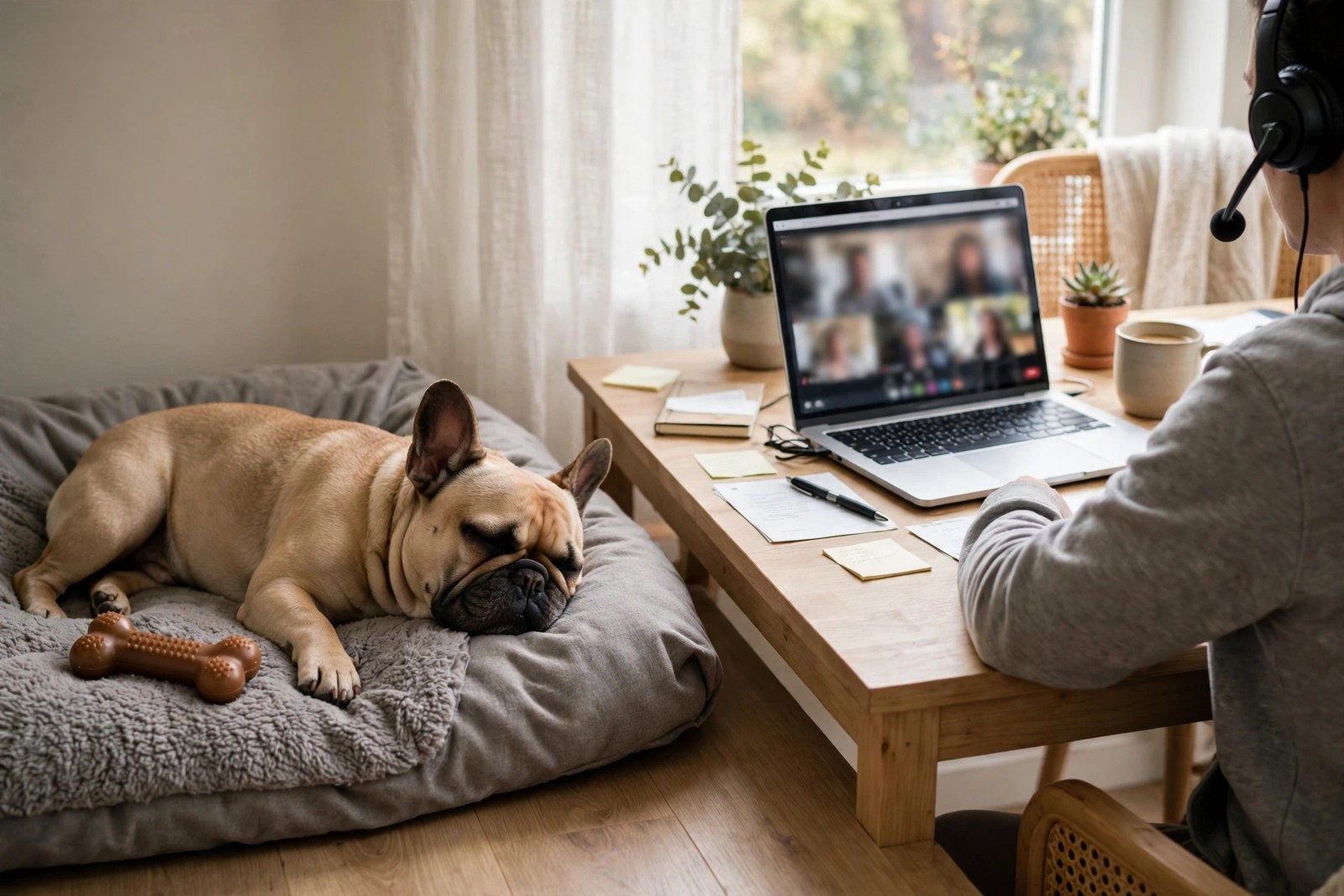
Voices from a laptop are a strange puzzle for a dog: people talking in the room with nobody to smell, greet or read, often at the exact moment you go still, stare at a screen and stop providing entertainment. Barking at the voices is part alert, part protest, and part a bid for the interaction that just switched off. The fix is to make calls a rehearsed routine with its own station, its own pay and its own warm-up, rather than an interruption your dog has to improvise around.
Set Up a Call Station Before You Need It
Place a comfortable bed within sight of your desk, close enough that your dog feels included, far enough that a bark is not delivered into your microphone. Build the bed's meaning outside calls first: send your dog there, feed calm behaviour, let a chew happen there, and release before boredom starts, so the bed already predicts good, quiet things. Add the call props in stages: the bed plus your laptop open, the bed plus you talking to the screen, the bed plus a ringtone played quietly. Before real meetings, run the warm-up every time: a walk or a garden play, a toilet break, water topped up, and only then the bed, so you are not asking a full-bladdered, under-exercised dog to perform stillness for an hour.
Desensitise the Laptop Voices
Recorded voices are your training partner because you can control their volume. Play talk radio, a podcast or a recorded call through the laptop speakers at a level your dog notices but shrugs at, and pay settled behaviour on the bed while it plays. Raise the volume a little across sessions, not within one, and include the awkward sounds real calls contain: laughter, several voices overlapping, a doorbell chime from someone else's house, your own name being called. Practise with three practice calls a week of ten minutes each, sitting at your desk and miming a meeting, so your body language, the voices and the bed all appear together the way they will in real life. If your dog barks during practice, lower the volume next rep rather than scolding; the bark is information about the level, not defiance.
Rehearse Fake Calls, Then Grade the Real Ones
Once ten quiet minutes look easy, stretch practice calls by a few minutes at a time and hand over a long chew at the start, reserved for calls alone, so the opening seconds of a meeting predict the best occupation of the day. Grade real calls by difficulty: a one-to-one with a calm colleague first, a larger meeting later, and the loud team call last. Keep your dog on the bed with the chew for the portion they can handle, then release them quietly to another room with a family member before they reach their limit, rather than waiting for the bark that ends the experiment. Finishing early while calm teaches far more than enduring until failure.
Handle the Call That Goes Wrong Anyway
Some days the delivery driver, the doorbell and the meeting will collide. Have a mute-first reflex: mute, settle your dog with the chew or lead them calmly out, then return, instead of talking over escalating barking while your dog practises the full performance. Afterwards, note what tipped it: a missed warm-up walk, a call that ran long, a voice that sounded like a visitor at the door. Those notes shape the next week's practice far better than frustration does, and repeated failure at the same trigger tells you exactly which sound to rehearse next at low volume.
With KinsLe's Care Teams, meeting days stop resting on your memory alone: assign the pre-call walk and toilet break to whoever is home, schedule the three weekly practice calls as duties, and each one is timestamped when done, so your dog arrives at your next real meeting exercised, rehearsed and ready to settle.