
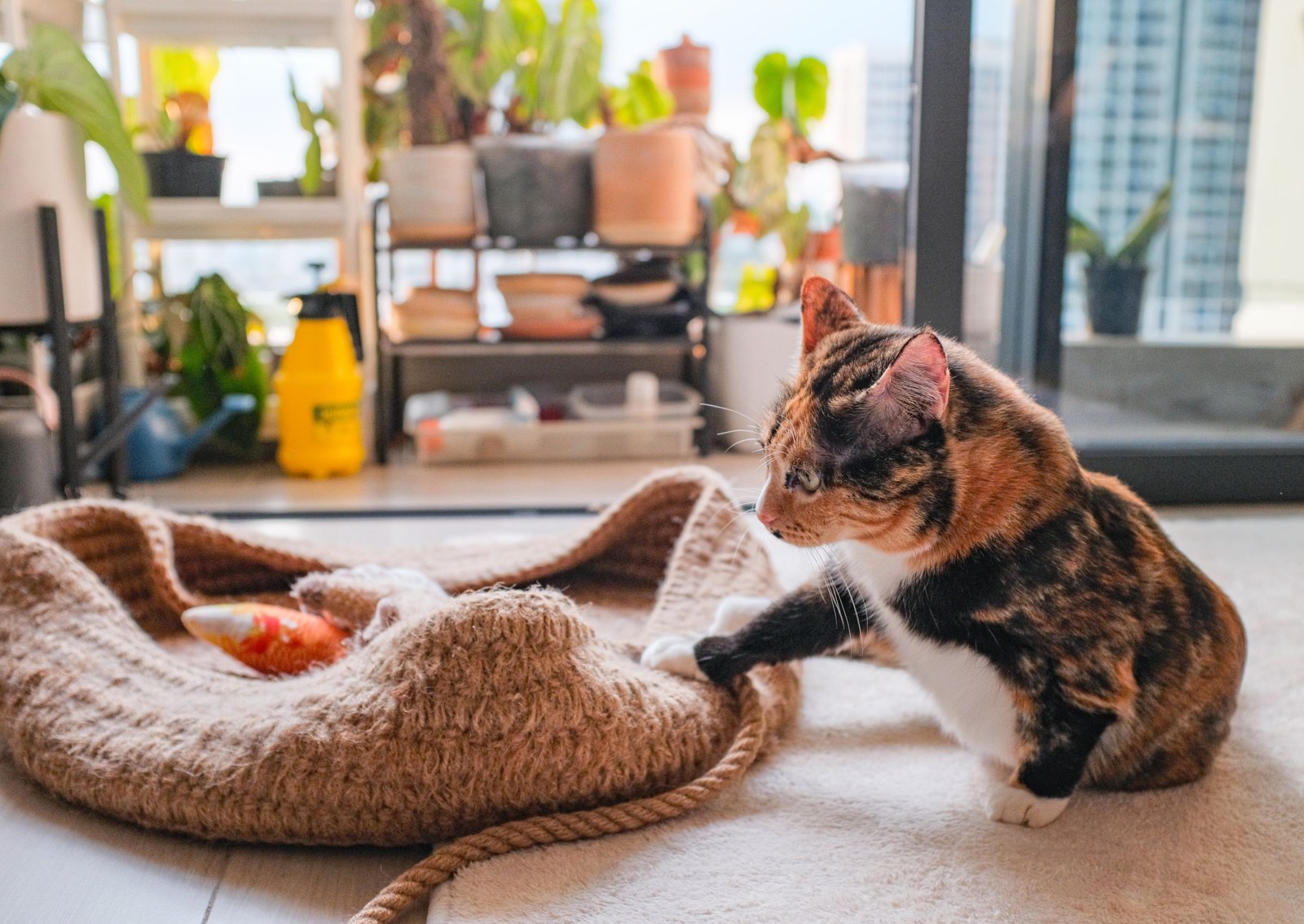
Yes — an overweight cat can lose weight safely, but it has to happen slowly, with measured food, a veterinarian-set target, and no crash dieting or skipped meals. Cats are not small dogs on a diet plan. Cutting food too sharply can make a heavy cat seriously ill, especially if they stop eating altogether, so steady, boring consistency is the safest approach.
Start With a Vet Check and a Real Target
Before you change a single scoop, book a vet visit. Your veterinarian will weigh your cat, assess body condition — how easily ribs can be felt under a thin layer of fat, whether there's a visible waist from above and the side — and rule out medical reasons for weight gain or reasons weight loss might be slow. Ask for two numbers: a target weight and a daily calorie goal. Without those, it's easy to underfeed one cat and overfeed another, because a large-framed Maine Coon mix and a petite domestic shorthair should not be aiming for the same bowl.
Measure Everything, Including Treats
The most common reason diets fail is not the main food — it's the unmeasured extras. Use a kitchen scale or the same measuring cup every time, and feed set portions rather than free-feeding from a constantly topped-up bowl. If your cat grazes, try scheduled meals so you actually know what went in.
Add Play Before You Cut More Food
Movement matters, and for indoor cats it rarely happens on its own. Build two or three short play sessions into the day — ten minutes with a wand toy before breakfast and dinner works well because it mimics hunt, catch, eat. Laser pointers can frustrate some cats, so end laser games with a tangible toy or a meal.
Make the house work harder too: scatter a few kibbles to find, use a puzzle feeder for part of the meal, and place water and litter in spots that encourage gentle walking rather than camping beside the bowl all day. A former lap cat like a round British Shorthair may start with only a few pounces — that's fine. Build up gradually.
Safety Rules That Are Not Optional
Never starve a cat into losing weight, and never let an overweight cat go a full day without eating. If your cat refuses the new plan, vomits repeatedly, becomes lethargic, or stops eating, contact your veterinarian promptly rather than waiting it out.
Be extra careful in multi-cat homes. The cat on a diet will happily eat the other cat's food, and the thinner cat may get shortchanged. Feed separately, pick bowls up after meals, and consider microchip feeders if stealing is persistent.
Keeping the Whole Household on the Plan With Care Teams
A diet collapses when one person feeds the plan and another sneaks an extra scoop out of sympathy. KinsLe's Care Teams help prevent that by letting you assign feeding duties with set portions, so everyone in the home can see who fed what and when, with timestamped completions. The midnight feeder and the early riser no longer double-feed by accident, and play sessions can be assigned just like meals. When the plan is visible to the whole team, the cat gets consistency instead of mixed messages. Portions stay exact when set amounts and play duties are recorded for each feeder in the Care Teams log on KinsLe, leaving no room for a sympathetic second serving.