Muscle loss in a senior cat shows up as a bonier spine and hips under your hand, thinner back legs, and a cat who hesitates before jumps she once made without thinking. Some loss comes with age itself, as older cats digest protein less efficiently and move less, but in a cat over ten it should never be written off as simply getting old. It is a sign to investigate first, then feed, then move — in that order.
Rule Out the Medical Drivers First
Several common senior conditions consume muscle while a cat may still look round around the belly. An overactive thyroid speeds the body up and burns tissue despite a good appetite, kidney disease reduces appetite and protein handling, diabetes alters how the body uses fuel, dental pain quietly stops a cat finishing firmer food, and arthritis cuts the activity that keeps muscle alive. Your vet will usually examine your cat, weigh her, and suggest blood and urine tests to look for these causes; treating whichever one is found is a key step in slowing the loss. Book the visit promptly if muscle loss comes with increased thirst, a ravenous or vanished appetite, vomiting, or rapid change over a few weeks. Do not start supplements or a new diet in place of that workup — they cannot substitute for finding the cause.
Feed Protein She Will Actually Eat, in Full
Once your vet knows what they are treating, diet becomes the main tool. Senior cats need highly digestible, good-quality animal protein and enough total calories; an older cat eating dainty half-meals of a food she tolerates is often quietly under-eating. Wet food suits many seniors: it is easier for sore mouths, carries extra water, and its stronger smell tempts weaker appetites, especially served slightly warmed and in small, frequent meals rather than one large portion. If your vet recommends a senior or therapeutic diet for a diagnosed condition, that advice outranks general guidance. Weigh food portions for a week or two if intake is unclear, clear away stale leftovers so every meal is fresh, and tell your vet before adding any supplement, since some clash with kidney or thyroid management.
Keep Her Moving, Gently and Daily
Muscle that is not used is lost, so build movement into the day at a level sore joints can accept. Two or three play sessions of a few minutes, with a wand toy dragged slowly along the floor rather than leapt after, exercise the back legs without demanding jumps. Scatter a few pieces of her meal to find, use a low food puzzle she can paw at sitting down, and arrange the home so daily life still involves walking and a manageable climb: a ramp or a low step up to her favourite windowsill, litter trays and bowls reachable without stairs where possible, and non-slip mats on hard floors her back legs slide on. Stop any session when she turns away — the aim is regular gentle effort, repeated daily, not exhaustion.
Measure, So You Know Whether It Is Working
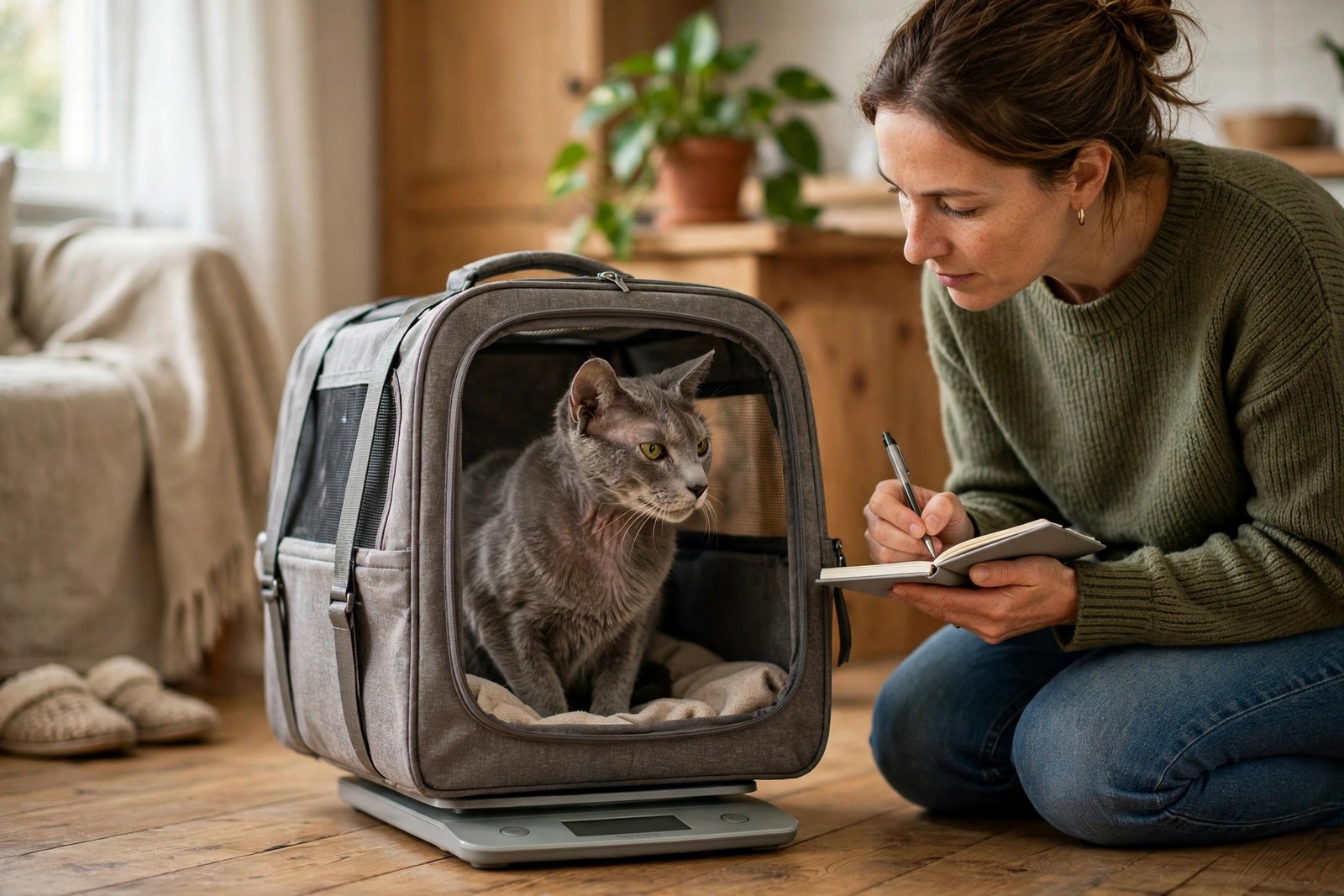
Weigh your cat every few weeks on the same scales, ideally in a carrier she accepts, and note the number alongside what she is eating and whether she is jumping, climbing stairs, and grooming her back as usual — grooming reach is a quiet early indicator. Photographs from above and the side each month show shape change that daily handling misses. Bring the record to every appointment, because a trend across three visits guides your vet far better than a single weight.
That record-keeping is exactly what KinsLe's Pet Passport is for: your senior cat's weights, test results, and diet notes travel together in one packet, ready for every vet visit and for anyone caring for her in your absence.