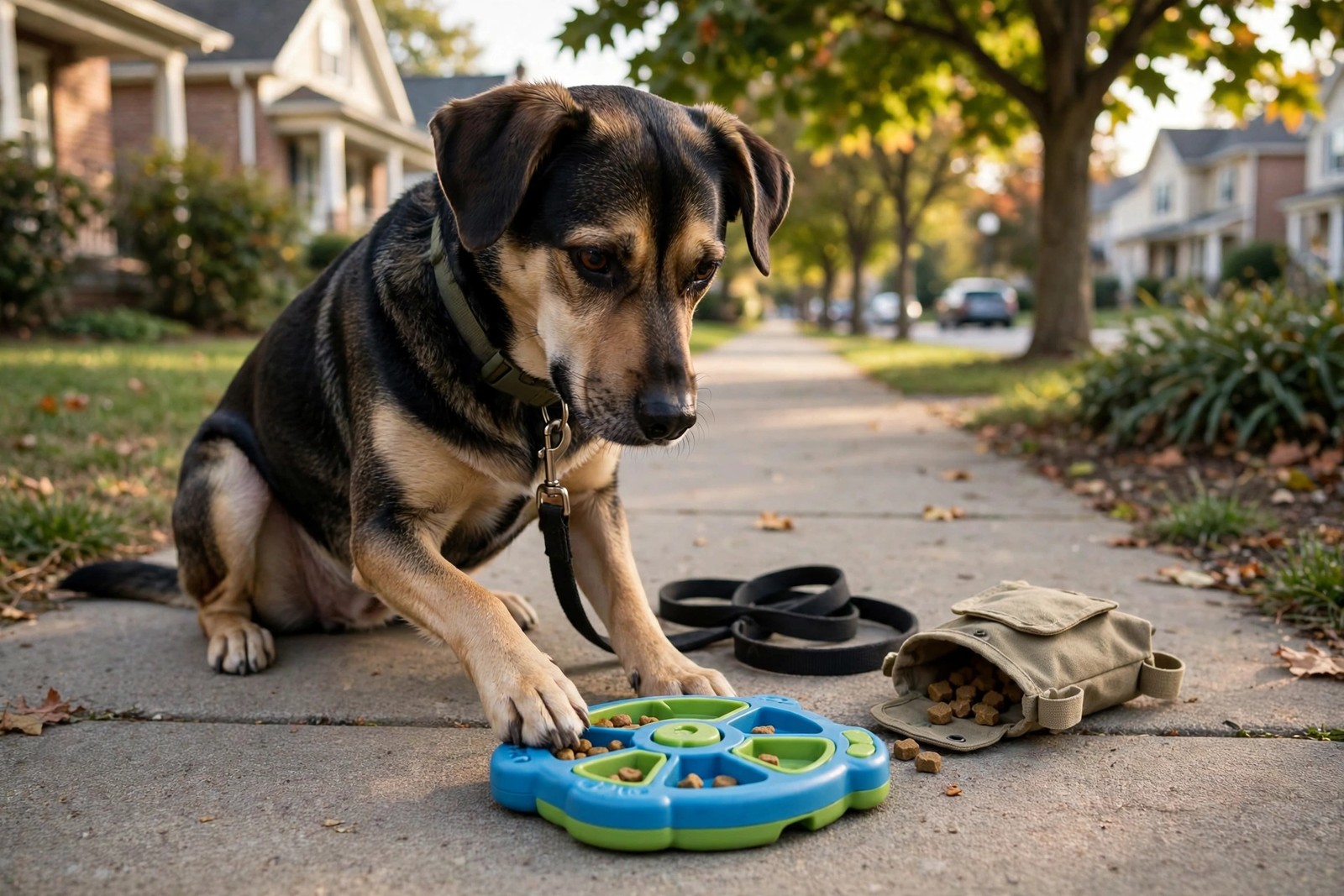
A dog meeting a food puzzle for the first time does not need a challenge — he needs a win he can smell. Start on the ground rather than with a gadget: scatter a handful of favourite treats through short grass or across a snuffle mat and let his nose do the finding, then graduate to a puzzle with its lids, sliders or flaps already half-open and something high-value visible inside. Stay close for the first sessions, help before frustration builds, and end while he is still enjoying himself. Use part of his normal meal ration as the prize so puzzle time does not quietly become a second dinner, and supervise until you know whether your dog is a solver or a demolisher.
First Sessions: Easy Wins, Then One Notch Harder
Judge difficulty by his body language, not by the level printed on the box. A dog who is learning sniffs, nudges, glances up for reassurance and goes back in; a dog who is losing whines, paws harder, picks the puzzle up or walks away. Drop back a stage whenever you see the second pattern, because success teaches while frustration only rehearses giving up. Raise the difficulty in single steps over days: close one flap fully before you close them all, and hide food in fewer compartments before you hide it in all of them. Let him master each step until it looks boring. Short sessions of a few minutes, once or twice a day, build the habit faster than one long weekly battle with an advanced toy.
Fitting Puzzles Into the Day's Food
Puzzle food is still food, so count it. Measure the portion that goes into the toy out of his daily ration rather than adding treats on top, and favour his ordinary kibble, or a small amount of something fragrant, when he needs extra motivation on a new puzzle. Rinse and dry washable puzzles after use, since old food residue in hinges and seams turns stale and can put a dog off a toy he previously loved. Retire anything cracked or chewed into sharp edges, and keep puzzles put away between sessions so they stay an event rather than furniture he ignores.
One Plan for Everyone Who Feeds Him
If more than one person feeds your dog, the puzzle plan only holds when everyone runs it the same way: the same puzzle order, the same difficulty step, and the same rule that he is helped before he gets stuck. Mixed approaches — one person making it easy, another jumping him straight to the hardest toy — quietly stall progress that looked promising. Agree who sets up the puzzle on which days, and note which step he has reached so the next person starts where he actually is, not where they assume he is. KinsLe's Care Teams turns that rota into assigned duties, handed to whoever feeds him that day; each person is notified of their task, and a finished session is logged with its completion time, so the evening feeder can see the lunchtime puzzle already happened.